



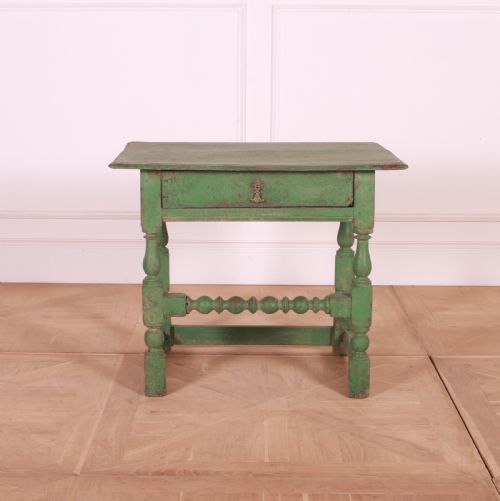

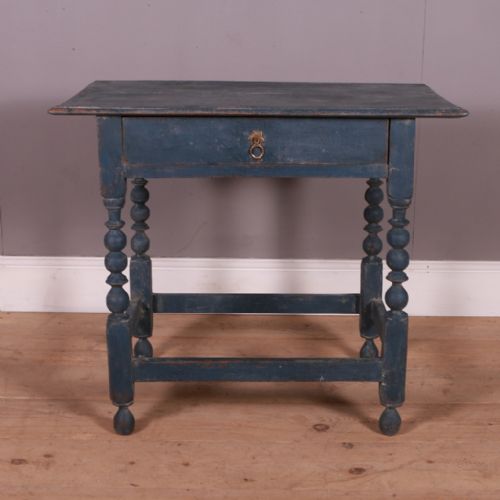

Georgian Bobbin Leg Table
A georgian bobbin leg table offers practical surfaces with turned supports, suiting everyday use in period and modern rooms alike.
Georgian Bobbin Leg Table
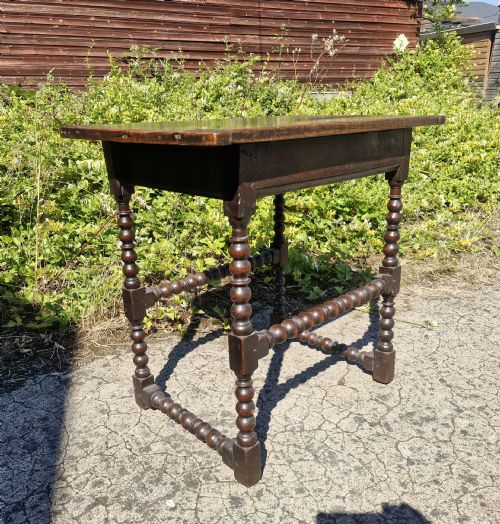
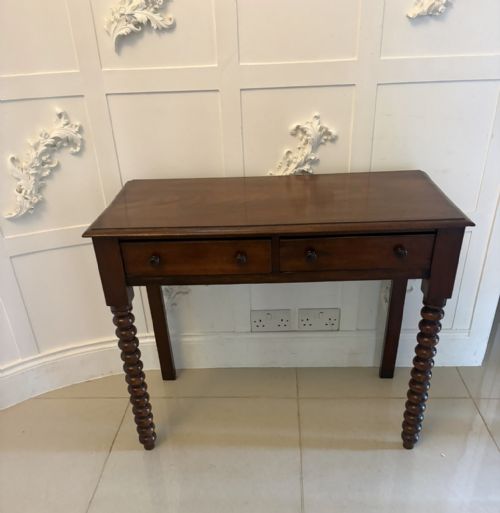
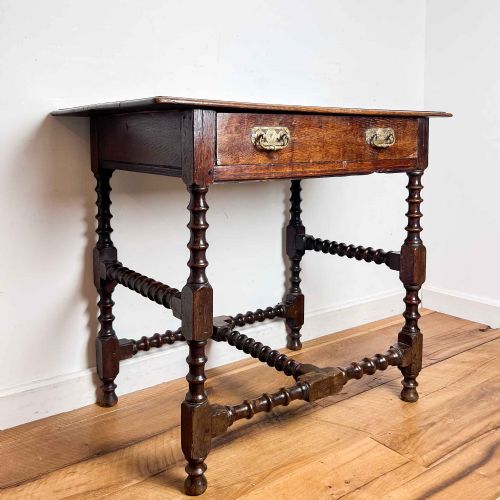
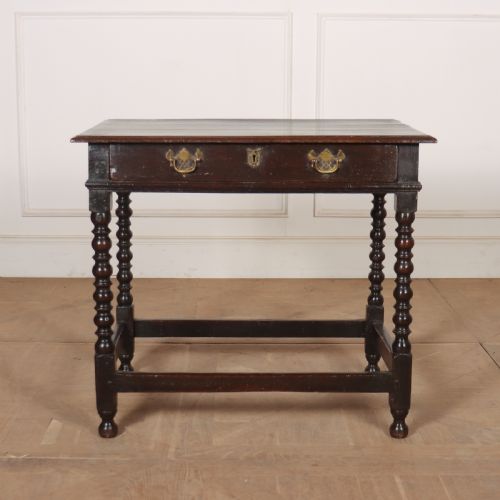
A georgian bobbin leg table is typically encountered as an oak, elm, or mahogany side, lamp, or dining table originating from the eighteenth century. These pieces reflect English provincial and country workshop traditions, spanning side tables, gateleg formats, and smaller refectory styles.
Buyers seeking this phrase most frequently meet side tables and lamp tables fashioned from native timbers like oak and elm. They combine straightforward utility with distinct turned details, serving equally well beside a sofa or as a central feature in a hallway.
How they were made
Joiners relied on solid native timbers such as oak, elm, pine, and mahogany, often combining woods within a single piece for tops and frames. Surfaces sometimes received a coat of paint, preserving the timber while adding character.
The defining turned components were shaped on a lathe to create the characteristic spool or bobbin profile before being integrated into sturdy frame constructions using traditional peg and mortise joints.
What varies in quality
Quality rests primarily in the timber selection and the crispness of the turning on the legs. Refined proportions and the honest integration of older timbers with later elements dictate the standing of individual examples.
Subtle differences in the depth of colour, the integrity of the structural joins, and the presence of secondary woods like elm or pine separate standard utilitarian pieces from more accomplished provincial work.
The Georgian Bobbin Leg Table Glossary
- Bobbin leg
- A support turned on a lathe to resemble a string of beads or bobbins, characteristic of seventeenth and eighteenth century vernacular furniture. This form provides both structural strength and decorative rhythm.
- Gateleg table
- A drop-leaf table with hinged legs that swing out to support the opened leaves. It offers a compact footprint when folded.
- Refectory table
- A long dining table traditionally used in communal dining halls. Provincial iterations often employ sturdy oak and elm construction.
- Side table
- A small functional table designed to stand against a wall or beside seating. These frequently feature a single drawer.
Georgian Bobbin Leg Table: Frequently Asked Questions
Where do I put a small table?
These tables fit easily into hallways, beside living room seating, or as lamp stands in quiet corners. Their modest proportions make them adaptable to various rooms.
Because they offer practical surface space without dominating a floor plan, they integrate smoothly into both period interiors and modern settings.
How do I clean the wood?
Dust the surface regularly with a soft, dry cloth to prevent dirt accumulation. Avoid modern silicone polishes that can build up over time.
Applying a traditional beeswax occasionally helps nourish older timber and maintains a natural, soft sheen without harming the historic finish.
Are these tables sturdy enough?
Most pieces were built by provincial joiners using solid native timbers like oak and elm to withstand daily domestic use. Their sturdy frame construction ensures reliable stability.
While centuries of use bring minor wear, sound traditional joinery means they remain fully functional furniture rather than decorative museum objects.
What woods were used?
Joiners primarily utilised native English hardwoods such as oak, elm, and mahogany, occasionally incorporating pine or painted wood. Different timbers were often mixed within the same frame.
This practical approach to material availability gives each piece its distinct local character and varied surface texture.