

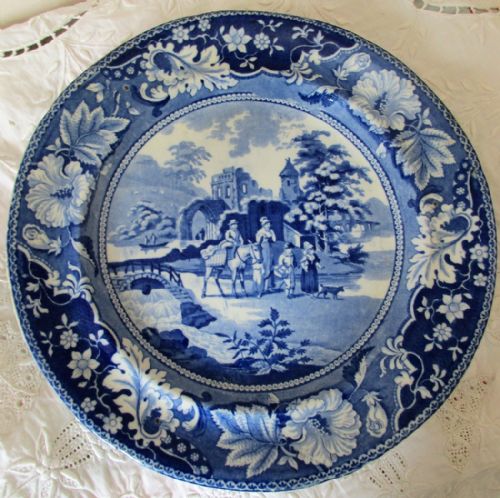
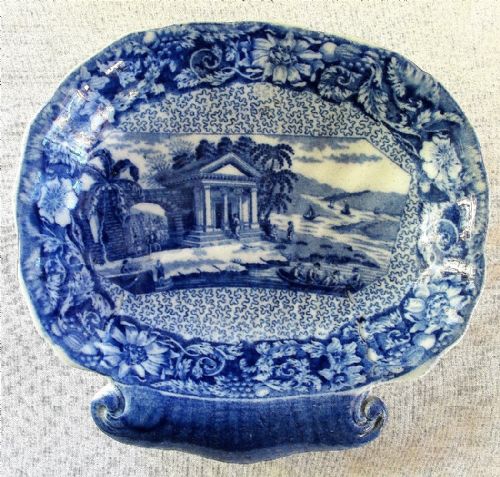
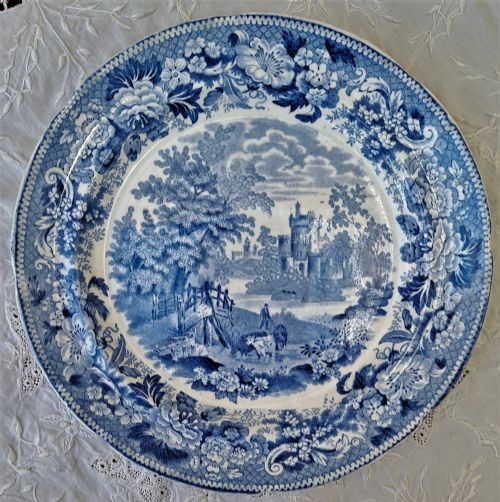
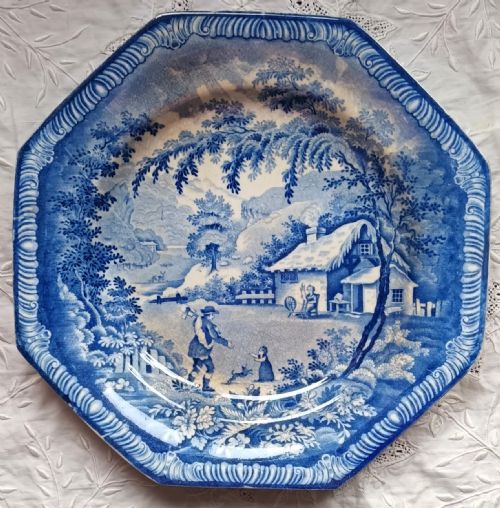


Georgian Blue Printed Earthenware
Georgian blue printed earthenware brings dense, narrative cobalt scenes onto domestic pottery from the Regency and Georgian periods.
Georgian Blue Printed Earthenware
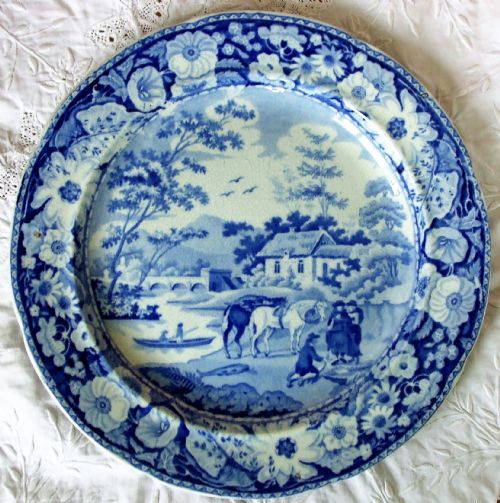
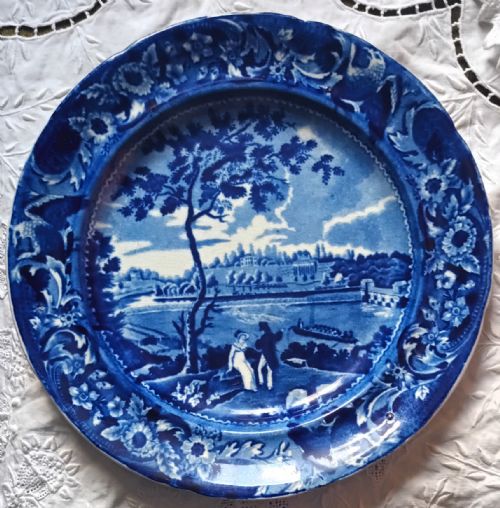
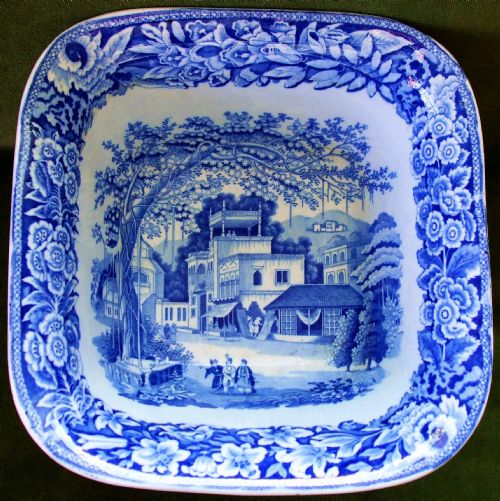
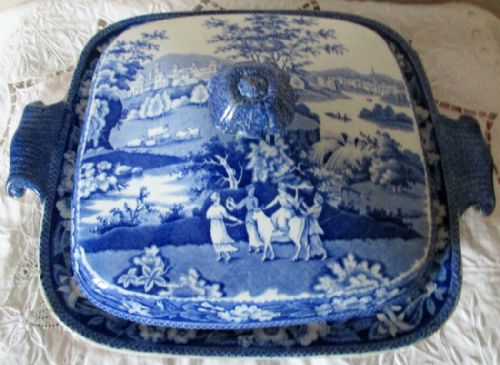
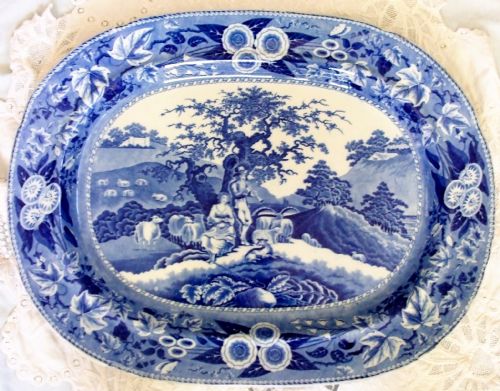
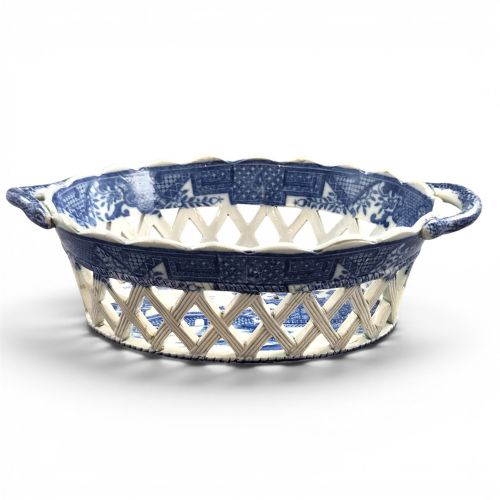
Georgian blue printed earthenware encompasses utilitarian and decorative vessels made during the 19th century, Georgian, and Regency periods. Buyers seeking georgian blue printed earthenware find tableware ranging from plates and meat platters to vegetable tureens, footbaths, and chestnut baskets.
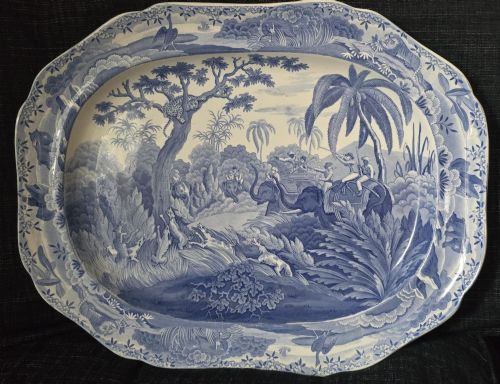
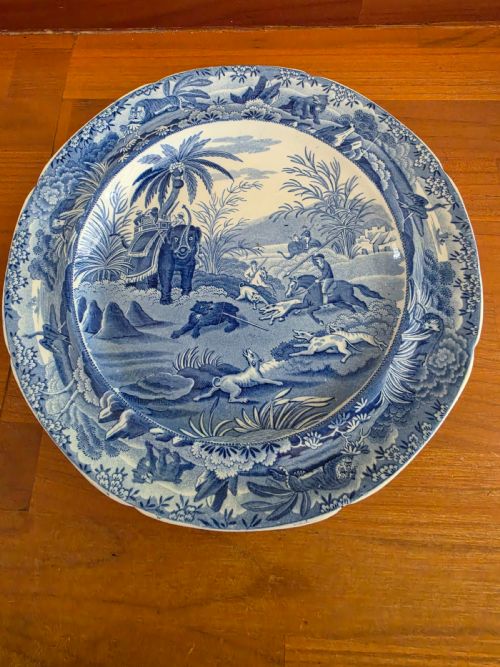
The objects frequently display topographical, historical, or classical patterns transferred onto ceramic bodies. Platters, jugs, and serving dishes dominate the selection, often carrying named patterns like Hexham Abbey, Returning Woodman, or Boston State House.
Production centres largely in Staffordshire potteries, utilising earthen bodies finished with pearlware glazes or standard lead glazes. Pieces vary from small child's plates to large serving platters and one-gallon jugs.
Materials and Technique
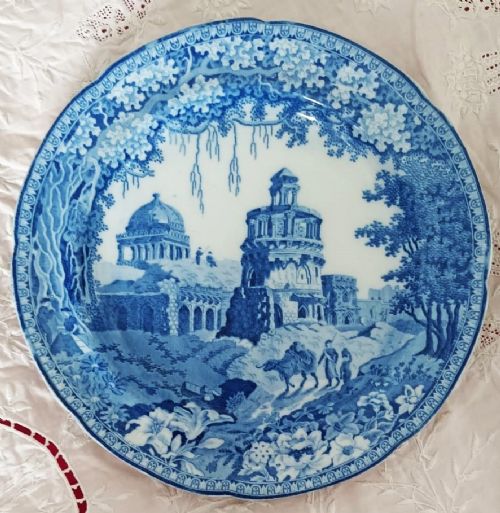
Potters shaped ceramic and pearlware bodies before applying cobalt pigment via transfer printing. This method allowed intricate designs such as classical ruins, pastoral scenes, and Chinoiserie motifs to be stamped onto earthenware surfaces with precision.
A protective layer of lead glaze or pearlware glaze was applied over the dried pigment before firing. This glaze provided a glossy finish that deepened the cobalt blue tones and sealed the porous ceramic body underneath.
Georgian Blue Printed Earthenware Retail Price Guide 2026
Typical asking prices for georgian blue printed earthenware among the pieces listed under this phrase on Sellingantiques today, from the lower quarter to the upper quarter. They describe what is for sale here now, not the wider market.
Listings feature 19th-century earthenware bodies finished with pearlware glazes, cobalt pigment, and lead glazes.
Design and Execution
Quality rests upon the clarity of the transfer print and the depth of the cobalt pigment against the white ceramic ground. Superior examples maintain sharp pictorial lines without blurring or smudging across complex compositions.
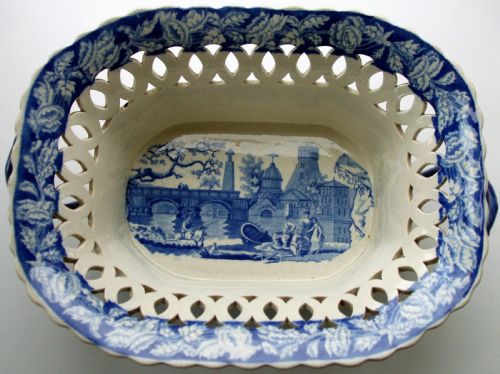
Form complexity also dictates distinction, separating standard flat plates from reticulated chestnut baskets, handled sauce tureens, and footbaths. Master potteries achieved finer potting and more even glaze distribution over elaborate moulded surfaces.
Zacharia Boyle·Brameld and Co·William Adams·John Rogers and Son·Spode·J and R Clews·J and R Riley·Stubbs·Thomas Lakin·Don Pottery·Mason
The Georgian Blue Printed Earthenware Glossary
- Pearlware
- A refined type of earthenware featuring a thin glaze with a slight bluish tinge, developed to mimic Chinese porcelain.
- Transfer printing
- A decoration technique where a design is engraved on a copper plate, inked with cobalt pigment, and transferred to pottery via tissue paper.
- Chestnut basket
- An openwork or pierced ceramic vessel designed for serving chestnuts or fruit at the dining table.
- Tureen
- A deep covered serving bowl used for soups, sauces, or vegetables during formal meals.
- Footbath
- A large ceramic vessel intended for washing feet or for cooling wine bottles at grand tables.
Georgian Blue Printed Earthenware: Frequently Asked Questions
What is pearlware?
Pearlware is a refined earthenware body developed in the late 18th century. It utilised a transparent lead glaze containing a small amount of cobalt to create a pale bluish hue.
This glaze sat in the recesses of the pottery and made the underlying ceramic appear whiter, successfully competing with imported Chinese porcelain.
How did transfer printing work?
Potters engraved a copper plate with the desired pattern, applied cobalt pigment, and pulled an impression onto thin tissue paper. This paper was pressed onto the biscuit fired earthenware to transfer the ink.
The paper was washed off before glazing and firing, locking the detailed pictorial design permanently beneath a glossy surface.
Were these pieces used daily?
Many items served practical functions in Georgian and Regency dining rooms, ranging from meat platters and vegetable tureens to large jugs and footbaths. Households utilised them for serving meals and managing dining hospitality.
Finer decorative baskets and scenic plates also displayed wealth and fashionable taste during formal gatherings.
How do I identify a maker?
Makers often marked their earthenware on the underside with printed names, impressed stamps, or pattern titles associated with specific potteries. Examining the style of the transfer print, such as distinct border motifs, also helps attribute pieces to factories like Spode or Wedgwood.
Many historic patterns were recorded and linked to specific Staffordshire firms through archival documentation.