



Georgian Blown Glass Stemware
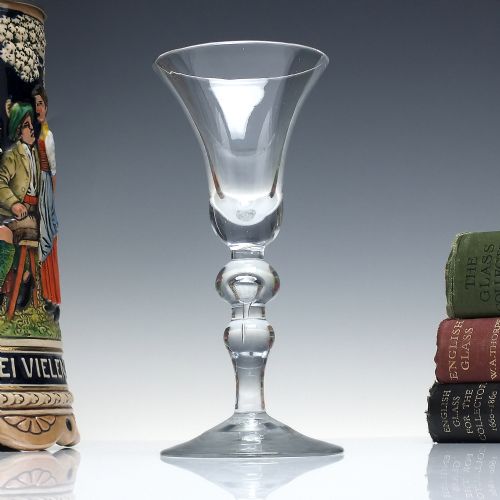
Georgian blown glass stemware brings tactile weight to the table through thick lead metal and organic bubbles trapped deep inside the shank.
Georgian Blown Glass Stemware
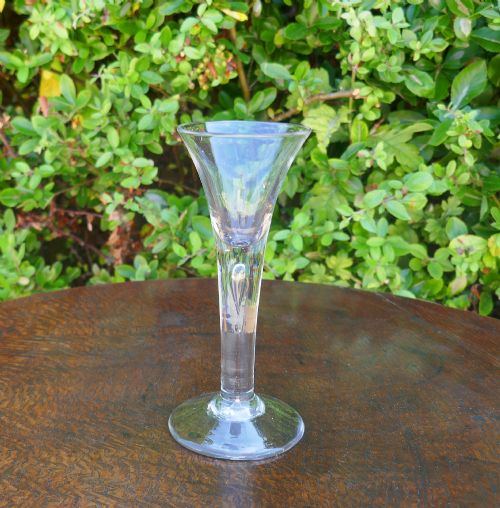
When you search for georgian blown glass stemware, you encounter vessels shaped for drinking wine, cordials, ales, and drams across the eighteenth and nineteenth centuries. The majority of pieces on this page stem from the Georgian era, spanning heavy baluster wine glasses to slender pedestal champagne flutes and small rummers.
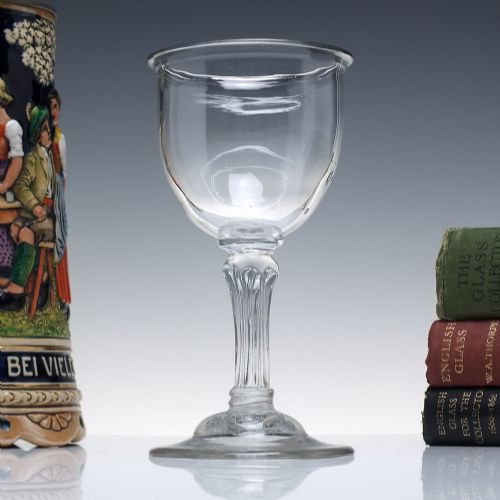
Forms shift from early baluster stems with substantial air tears to later coloured variations in peacock blue, turquoise, and green. You also find specialised drinking vessels such as dwarf ale glasses, etched gin glasses, and folded foot cordial glasses.
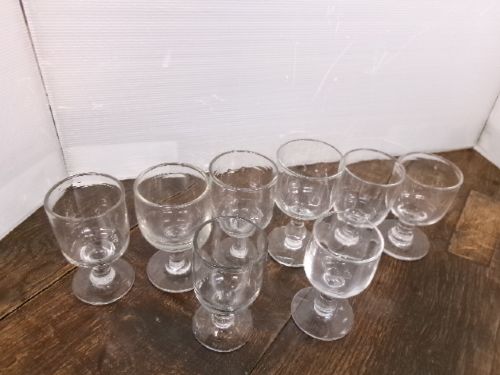
While the core of the selection remains eighteenth-century clear lead metal, the inventory extends into nineteenth-century Scottish opaque twists and matching sets of small rummers. Each piece displays the distinct irregularities of manual production rather than uniform machine moulding.
Materials and technique
Makers formed these drinking vessels using clear lead glass, flint glass, and hand-blown glass gathered from the furnace on a metal blowpipe. Workmen manipulated the hot metal using hand tools to draw out stems, shape bowls, and apply folded feet for stability.
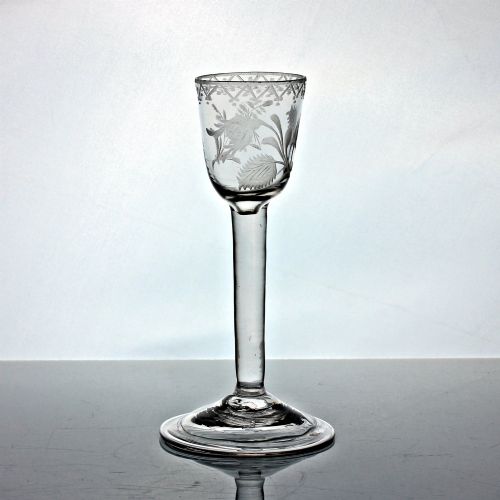
Internal optical effects were achieved deliberately during manipulation, creating air tears, bubbles within the stem, and complex twists. Certain bowls received surface decoration through nut moulding or light wheel etching.
Listings span the eighteenth and nineteenth centuries, featuring lead glass, flint glass, and hand-blown glass in clear and coloured variations.
Assessing quality
Quality rests upon the visual density of the metal, the balance of the bowl to the stem, and the crispness of optical effects like air twists. A well-proportioned baluster glass demonstrates superior handling at the knop and a reassuring heft in the hand.
The sophistication of the internal bubbles or twist formations distinguishes standard domestic vessels from more ambitious studio output. Surface finish and colour saturation also dictate the visual presence of the piece on the table.
The Georgian Blown Glass Stemware Glossary
- Air tear
- An elongated bubble trapped inside the stem of a drinking glass during the blowing process. These elongation marks add optical movement to otherwise plain metal.
- Baluster
- A heavy, swelling stem shape characteristic of early eighteenth-century drinking vessels. It provides a sturdy grip and substantial visual weight.
- Folded foot
- A rim turned underneath the base of a glass to create a thicker, smoother edge. This technique increases durability at the point of contact with the table.
- Lead glass
- A heavy glass composition containing lead oxide that increases refractive index and softness for cutting. It forms the foundation of heavy eighteenth-century drinking vessels.
- Opaque twist
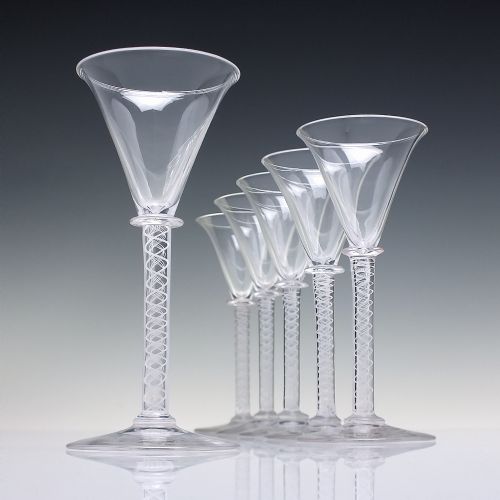
- A decorative stem element formed by drawing out threads of white or coloured enamel glass within clear metal. These threads create intricate internal lace patterns.
Georgian Blown Glass Stemware: Frequently Asked Questions
Can I drink from these glasses?
You can use these pieces for dining and entertaining, provided you handle them with care due to their age and historical value.
Hand-blown vessels add a tactile quality to wine drinking that modern machine-made glass simply cannot replicate.
What is an air twist stem?
An air twist is a decorative element created by drawing out internal bubbles into spiral threads running down the length of the stem.
This technique requires great skill from the glassblower to maintain uniform thickness throughout the spiral.
Why are some glasses heavy?
The inclusion of lead oxide in the batch increased the overall weight and brilliance of the metal, which was favoured by makers of the period.
This substantial weight helped prevent tipping on uneven tavern or dining tables.