
Georgian Bedroom Storage Cabinet
A georgian bedroom storage cabinet brings timeless timber and deep drawer capacity to a room, offering practical clothes storage grounded in eighteenth-century proportions.
Georgian Bedroom Storage Cabinet
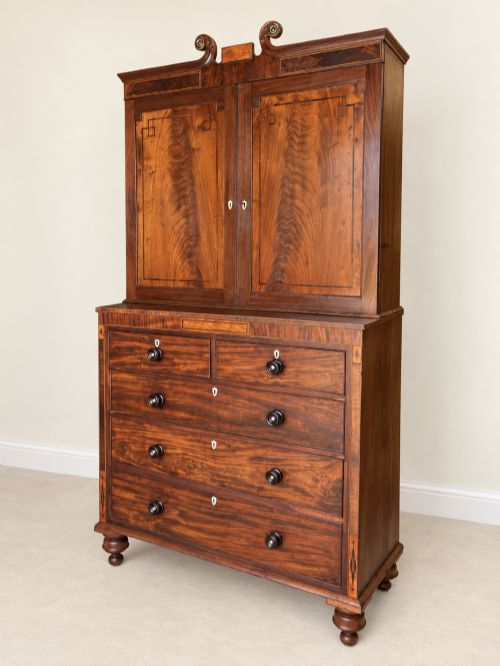
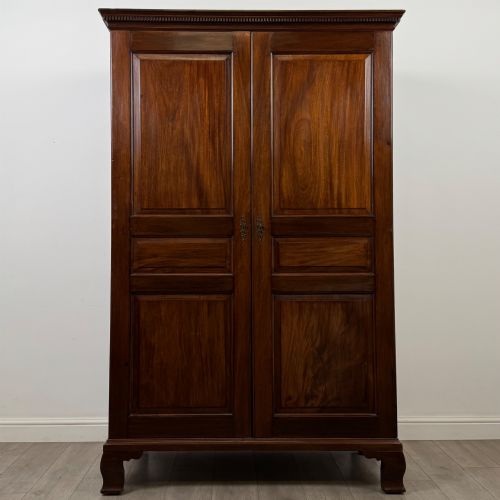
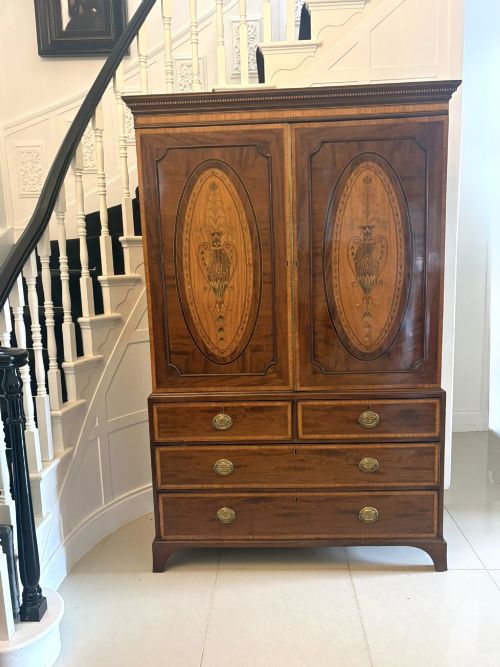
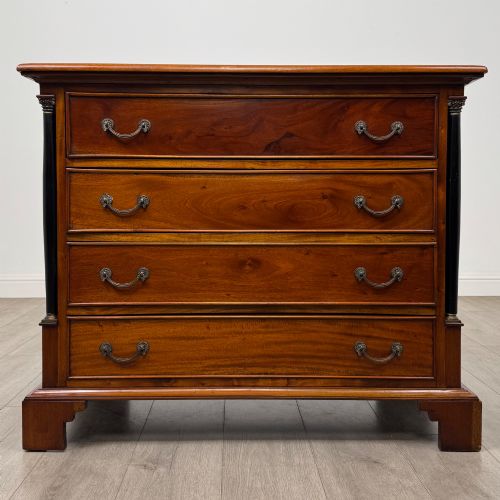
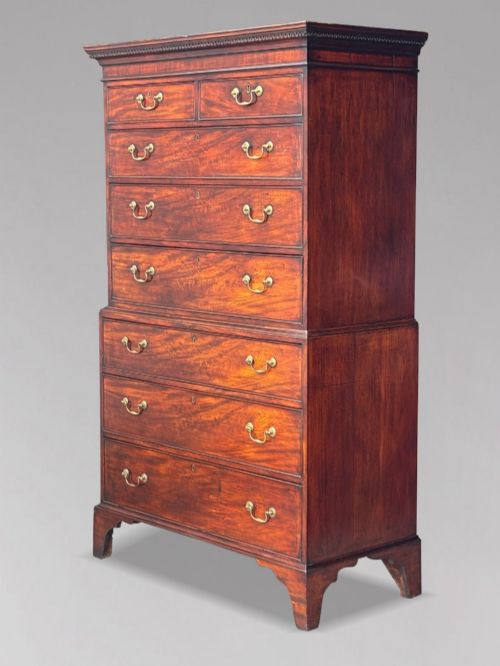
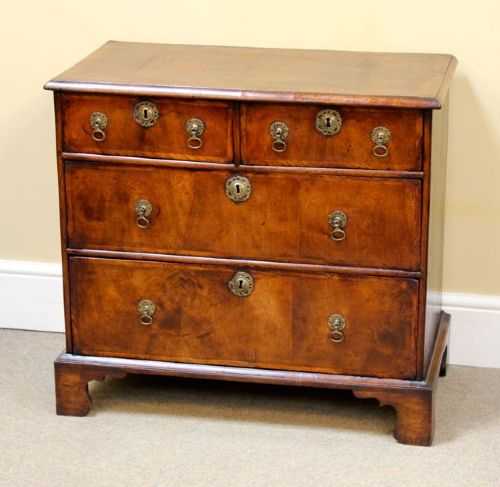
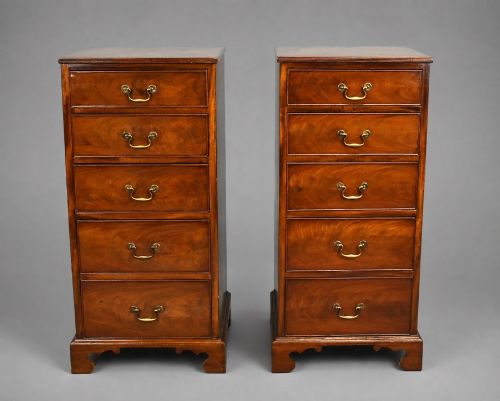
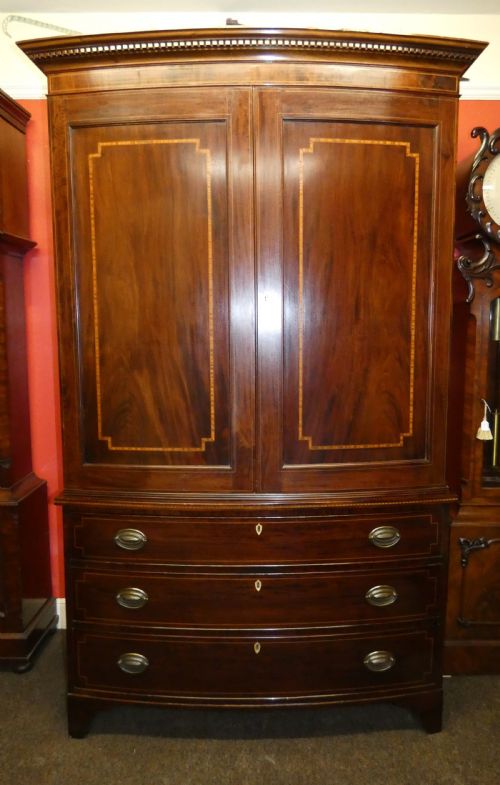
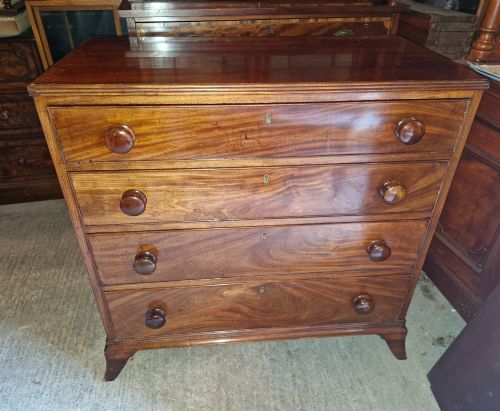
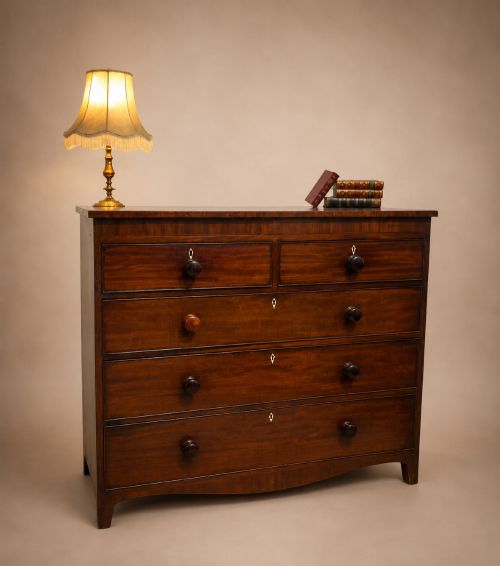
A georgian bedroom storage cabinet encompasses a range of traditional forms, most notably mahogany chests of drawers, linen presses, wardrobes, and bedside cabinets.
The pieces span the Georgian era and the George III period, alongside later revivals from the nineteenth and twentieth centuries.
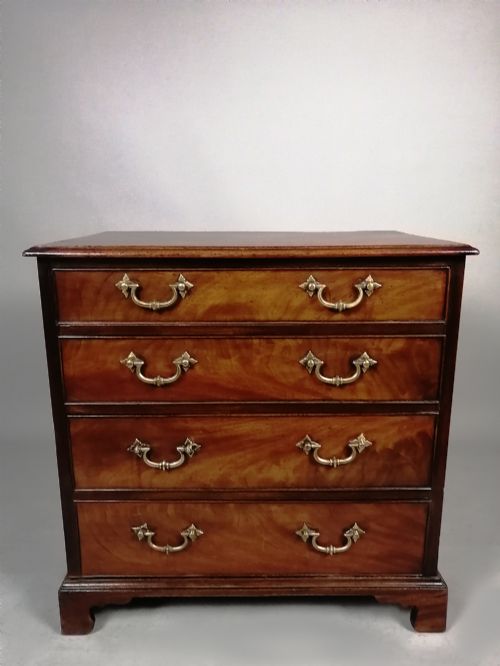
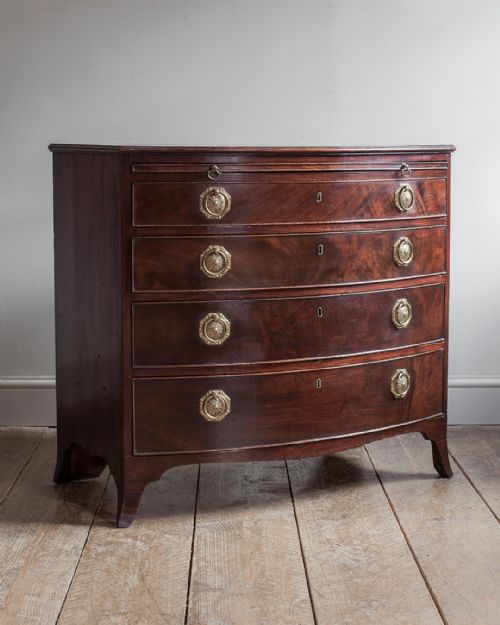
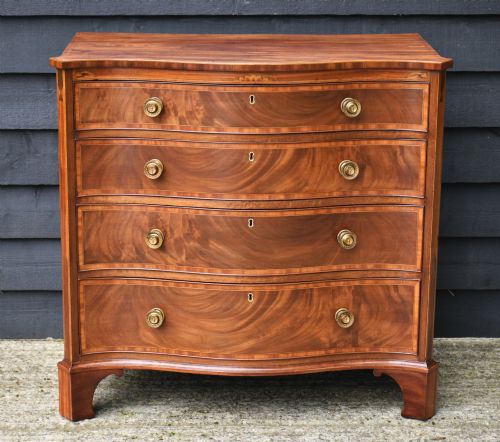
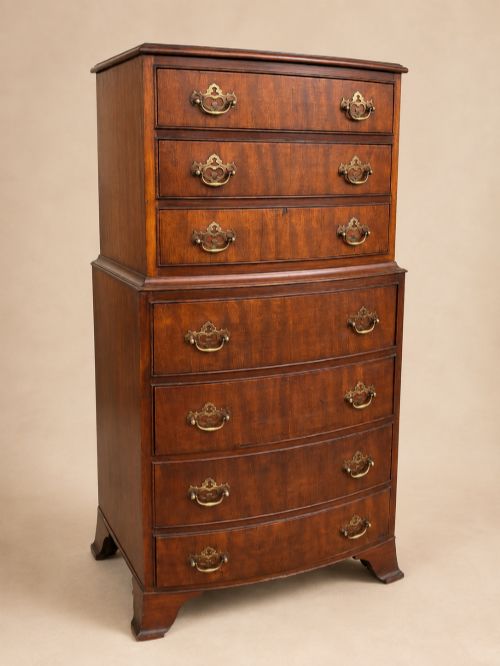
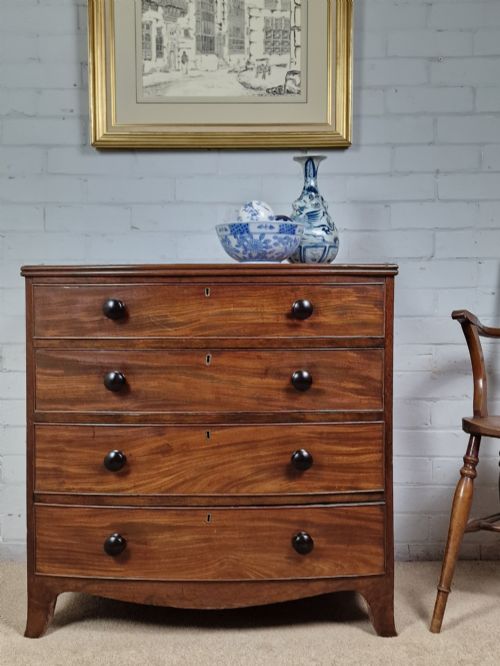
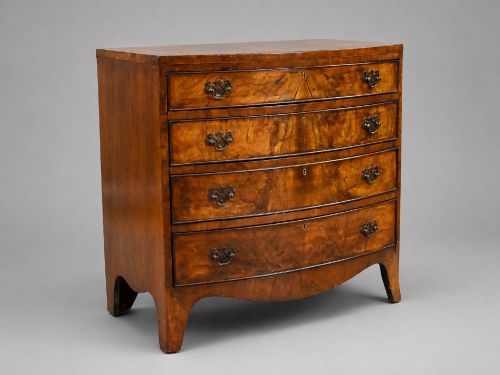
Buyers will most frequently encounter mahogany chests of drawers, alongside tallboys, bowfront variants, and enclosed linen presses.
Materials and Construction
Cabinet makers relied heavily on solid mahogany, walnut, and oak, frequently applying flame mahogany veneer and satinwood inlay to primary display surfaces.
Structural elements often incorporated pine for secondary framing, while hardware typically featured cast brass handles and escutcheons.
Listings feature pieces spanning the Georgian period, the Regency era, and later Edwardian and twentieth-century revivals.
Craftsmanship and Proportion
Superior examples distinguish themselves through the choice of figured timber, such as burr walnut or select Cuban mahogany, matched neatly across drawer fronts.
Refined cabinet work shows in crisp blind fretwork cornices, precise cockbeading around drawers, and subtle serpentine contours that demand advanced woodworking skill.
The Georgian Bedroom Storage Cabinet Glossary
- Chest on chest
- A tall storage unit comprising one chest of drawers stacked directly upon a slightly larger lower chest, also known as a tallboy.
- Linen press
- A large wardrobe-style cabinet featuring upper doors enclosing sliding trays for folded textiles, placed above a base fitted with drawers.
- Bowfront
- A curved cabinet front that swells outward in the centre, softening the linear geometry of traditional bedroom furniture.
- Blind fretwork
- Carved ornamental woodwork applied to a flat surface in geometric or Chinese Chippendale fret patterns without piercing the wood.
- Cockbeading
- A narrow rounded moulding projecting around the edges of drawer openings to frame the drawer fronts and protect the edges.
Georgian Bedroom Storage Cabinet: Frequently Asked Questions
What is the difference between a chest of drawers and a linen press?
A chest of drawers provides stacked horizontal storage drawers from top to bottom for general garments.
A linen press combines upper cupboard doors housing sliding shelves with a chest base for hanging or folded textiles.
How do I identify a George III piece?
George III furniture typically dates from the later eighteenth century, characterised by high-grade mahogany timbers and classical proportions.
Look for refined details such as bracket feet, cockbeaded drawer edges, and restrained string inlay rather than heavy Victorian carving.
Where were bedside cabinets used?
Bedside cabinets and night tables served as compact enclosed storage beside sleeping quarters during the Georgian period.
They kept chamber items and personal belongings out of sight behind small doors or above lower drawers.
Are walnut and mahogany both period timbers?
Walnut dominated finer English case furniture in the early eighteenth century before mahogany gained preference for its durability and rich grain.
Later revival periods in the nineteenth and twentieth centuries revisited both hardwoods in traditional styles.