

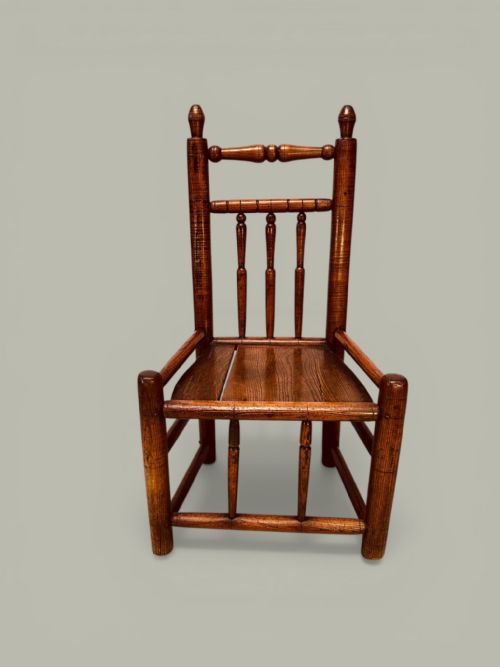


Georgian Ash Turned Chair
A georgian ash turned chair brings sturdy vernacular character to a room, built from honest local timber with time-worn rustic grace.
Georgian Ash Turned Chair
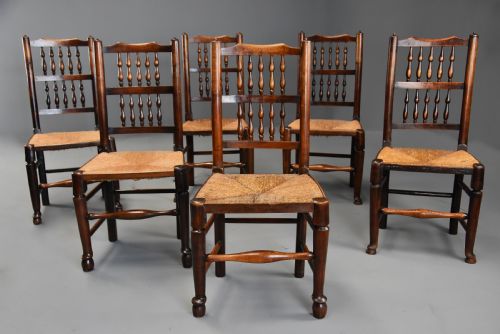
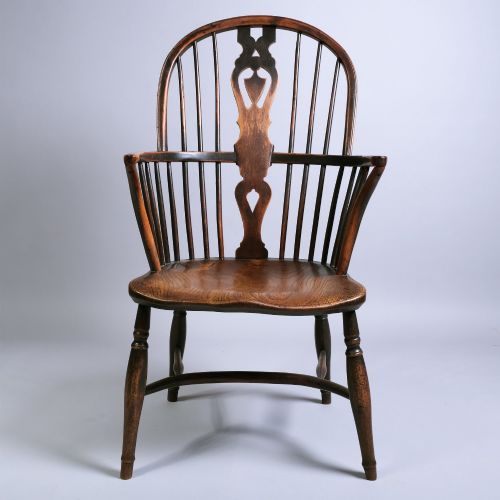
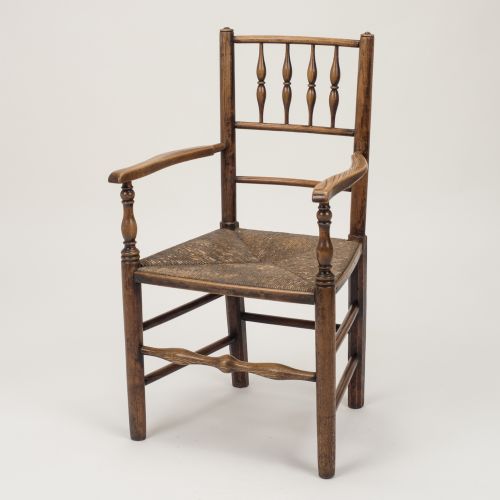
A georgian ash turned chair is a staple of English country furniture, combining robust regional traditions with practical domestic seating. These pieces range from simple spindle backs and rush-seated armchairs to more developed hoop back and low back Windsor forms.
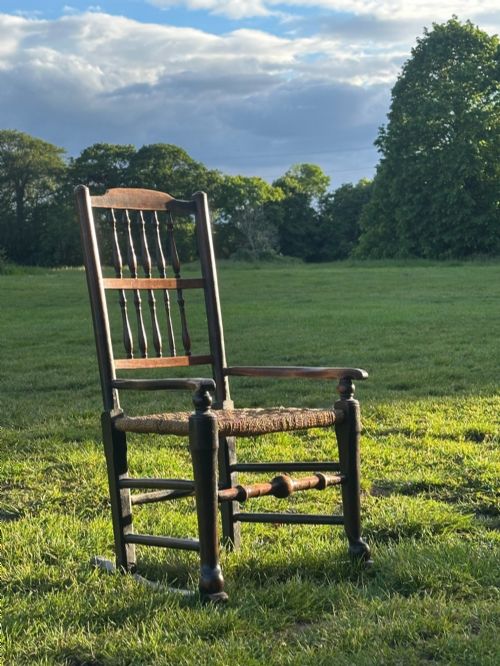
The selections encountered here span the eighteenth and nineteenth centuries, carrying labels like English country, rustic vernacular, and primitive country. Buyers meet armchairs, dining sets, side chairs, and rocking chairs shaped by local joiners for everyday use.
Makers drew on native timbers to build seating that prioritised resilience over formal courtly display. Their forms reflect regional variations across districts like Lancashire, Cheshire, Sussex, and Suffolk, each adding distinct regional turning and framing details.
How they were made
Ash forms the structural framework and turned spindles, valued for its strength and flexibility, while elm provides stable, durable seats that resist splitting. Yew appears in select hoop backs, bringing rich grain patterns to the bentwood bows.
Joinery relies on traditional turning techniques, steam bending, and wedged tenon joints to secure the components without modern hardware. Rush seating provides a woven, tactile platform that softens the rigid timber construction.
Several chairs bear the unmistakable bruises of centuries of elbows, knees, and hearthside warmth.
What varies in quality
The distinction between ordinary utility seating and finer examples lies in the balance of proportions and the refinement of the turned spindles. Well-balanced armchairs display confident tapering in the legs and arms, whereas lesser pieces can feel clumsy or heavy.
Patina and surface preservation dictate the visual weight of the wood, with untouched waxed finishes outperforming heavily stripped or modernly varnished surfaces. The integrity of the original construction, from the joints to the woven rush or timber seats, preserves the character built up over centuries.
The Georgian Ash Turned Chair Glossary
- Ash
- A tough, pale native hardwood used extensively for the turned uprights and spindles of country chairs.
- Elm
- A durable timber prized for solid chair seats because its interlocking grain prevents splitting under heavy use.
- Rush
- Dried marsh grass woven tightly to create a supportive, traditional seat base.
- Windsor
- A chair type featuring a solid wooden saddle-shaped seat into which the legs and back spindles are independently wedged.
- Vernacular
- Everyday objects made by local tradesmen using regional materials and traditional methods rather than high-style metropolitan designs.
Georgian Ash Turned Chair: Frequently Asked Questions
How do I care for an ash and elm chair?
Keep these timber chairs away from direct heat sources and sudden humidity shifts to prevent the wood from drying out or splitting. Feed the surface occasionally with a traditional beeswax to maintain the dry, honest lustre of the timber.
Avoid harsh modern cleaning sprays or soaking the woven rush areas with water during routine maintenance. Gentle dusting with a dry cloth is sufficient to preserve the surface patina accumulated over generations.
Can I use these chairs for daily dining?
Most of these vernacular chairs were built for hard daily use and remain structurally robust enough for regular sitting. Their sturdy ash and elm construction handles everyday dining room demands quite comfortably.
Check the joints and wedged components periodically to ensure everything remains tight. Pairing them with a sturdy farmhouse table creates a practical and enduring seating arrangement.
How can I tell an eighteenth century chair from a nineteenth century one?
Eighteenth century examples often show softer wear patterns, subtler hand-turning in the spindles, and specific regional construction traits linked to local workshops. They carry a distinct sense of earlier domestic life through their proportions and tool marks.
Nineteenth century pieces tend towards slightly more standardised turning while retaining traditional country forms like the Windsor or spindle back. Comparing the joinery details and the depth of the timber patina helps clarify the timeline.