

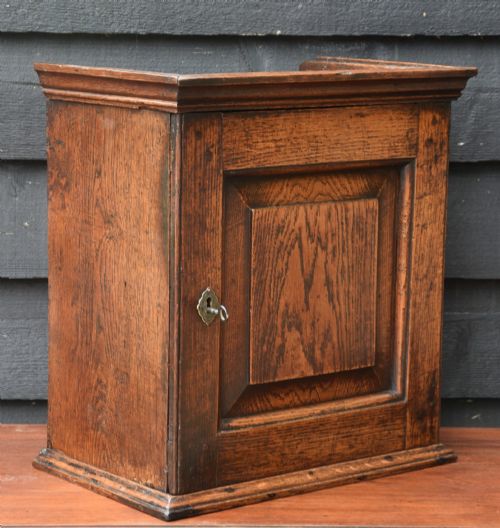
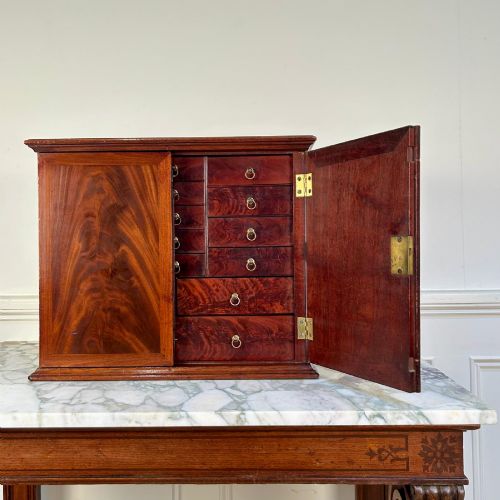
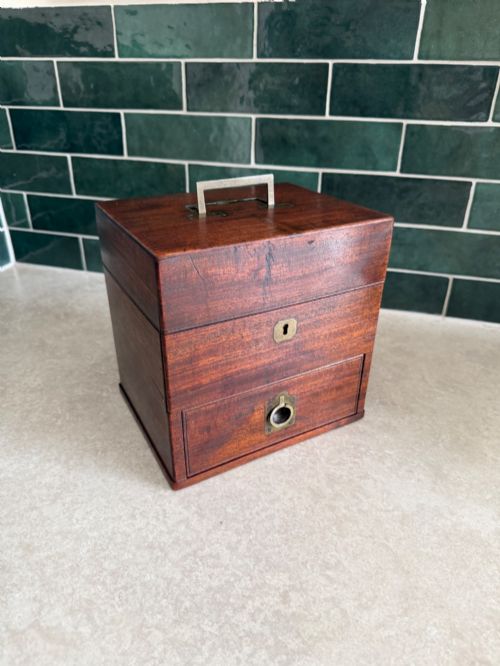
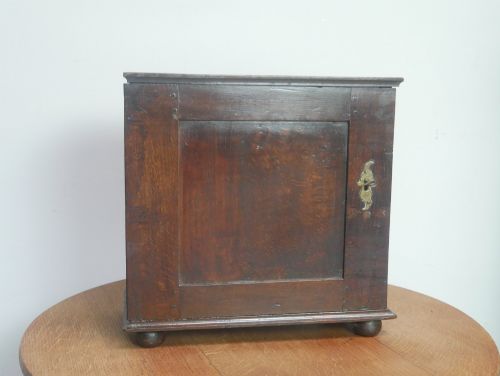
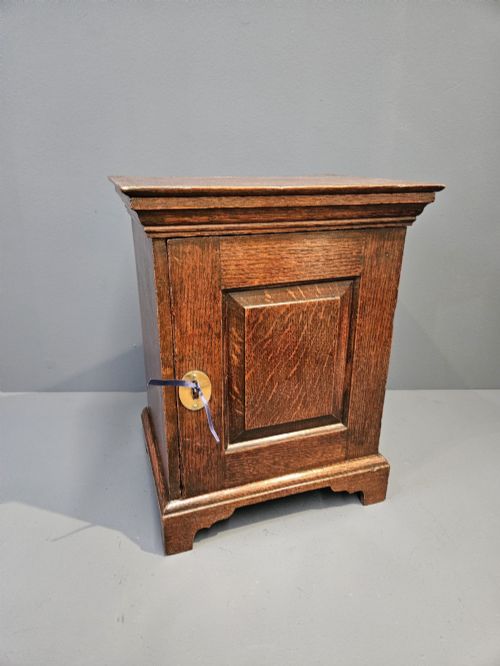

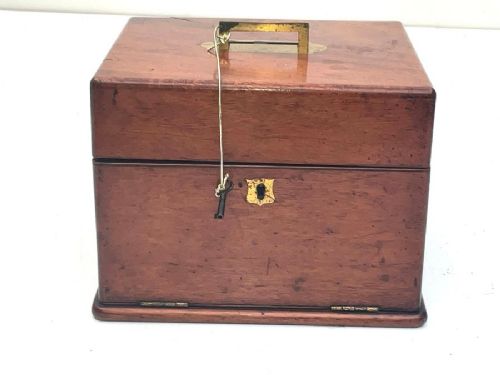
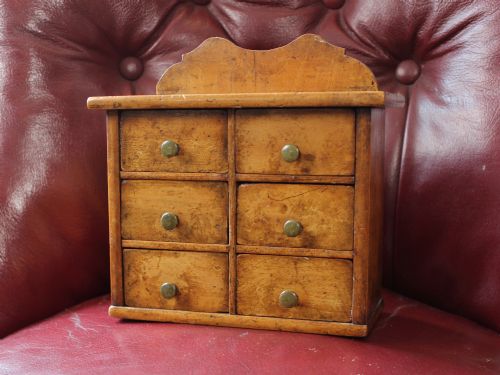
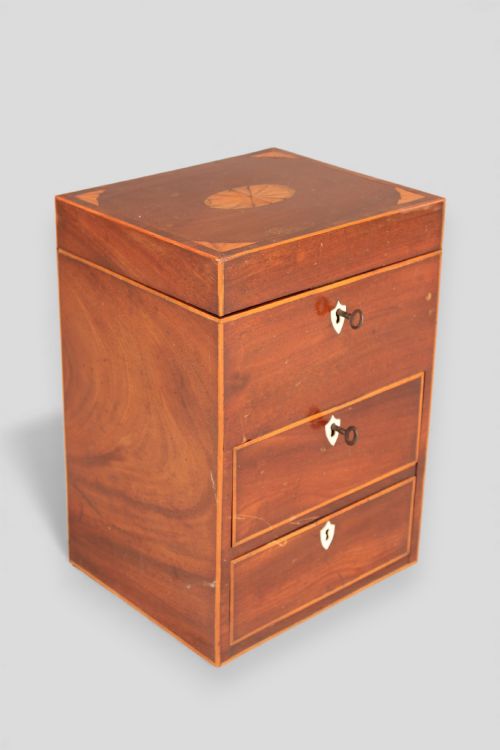


Georgian Apothecary Box
A georgian apothecary box is a portable medicine chest built for travel or home use, prized for its clever internal compartments and surviving medical bottles.
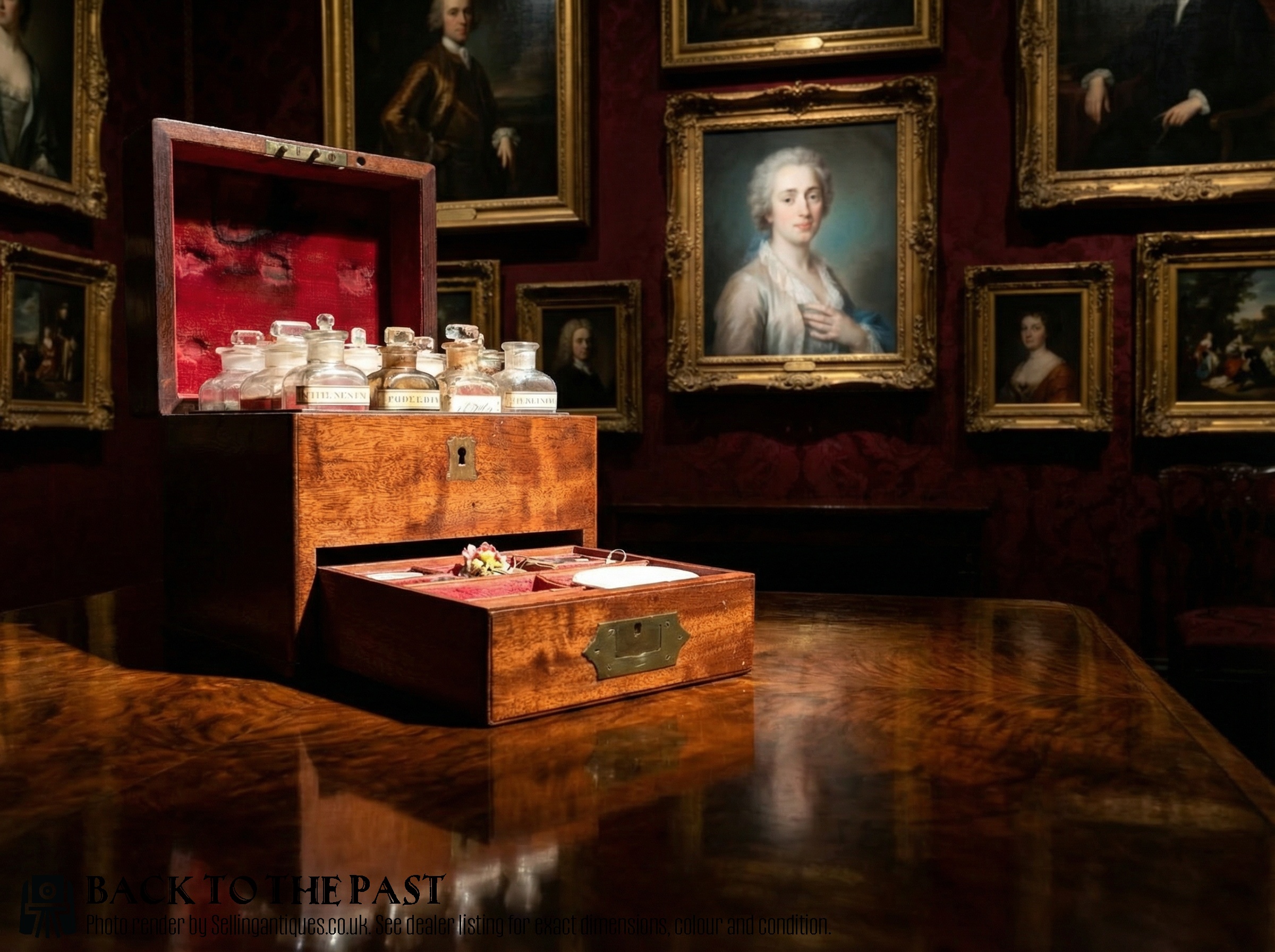
Georgian Apothecary Box
A georgian apothecary box is a fitted wooden chest designed to hold medical remedies, glass bottles, and dispensing equipment safely in one secure place. These pieces range from compact miniature campaign chests to larger tabletop cabinets with lockable drawers.
The versions most commonly met on this page date from the nineteenth century, including the Regency period and around eighteen hundred. They reflect a time when households and travelling physicians relied on portable pharmacies for daily medical needs.
Inside, these boxes typically feature custom recesses for bottles, small scales, and mortar equipment. Many retain original glass bottles, ceramic jars, and paper labels detailing past remedies.
How they were made
Makers constructed these cabinets primarily in mahogany, often utilising brass for corner brackets, carrying handles, and secure locks. The exterior wood shows careful joinery designed to withstand travel without splitting.
Interiors were lined or fitted with velvet, creating snug compartments to protect fragile glass bottles during transit. Paper labels and ceramic elements completed the internal layout, keeping powders and liquids organised.
Georgian Apothecary Box Retail Price Guide 2026
Typical asking prices for georgian apothecary box among the pieces listed under this phrase on Sellingantiques today, from the lower quarter to the upper quarter. They describe what is for sale here now, not the wider market.
Some miniature campaign boxes packed an entire Victorian pharmacy into a space barely larger than a novel.
What varies in quality
Quality in a georgian apothecary box rests on the completeness of its original contents and the precision of its internal fit. Boxes retaining their original glass bottles and intact paper labels stand apart from those with later replacements.
The execution of brass hardware and the cleverness of concealed drawers also separate standard pieces from finer examples. Superior specimens show seamless joints in the mahogany and robust locking mechanisms that still function smoothly.
The Georgian Apothecary Box Glossary
- Apothecary box
- A portable wooden chest fitted with compartments for storing medicinal bottles and dispensing tools. These boxes were essential for doctors and affluent households.
- Campaign box
- A sturdy portable chest designed for military or travel use, typically featuring flush brass handles and reinforced corners. They prioritised durability and space efficiency.
- Mahogany
- A dense, reddish-brown tropical hardwood favoured by cabinetmakers for its strength and rich grain. It resists warping well, making it ideal for travel chests.
- Regency
- An English design period spanning the early nineteenth century, known for classical restraint and clean lines. Pieces from this era often feature understated brass mounts.
Georgian Apothecary Box: Frequently Asked Questions
What was inside an apothecary box?
These boxes held an assortment of glass bottles for liquids and powders, scales for measuring doses, and small mortars for mixing remedies. Many also included pill tiles and small drawers for secondary instruments.
Surviving examples often retain original bottles with remnants of paper labels indicating historical contents.
How do I date an apothecary box?
Dating relies on timber choice, hardware style, and construction methods visible in the dovetail joints and drawer linings. Regency and Georgian examples generally feature solid mahogany and restrained brass inlay rather than heavy ornamentation.
Makers often integrated hidden compartments or specific lock types that correspond to manufacturing standards of the nineteenth century.
Are the glass bottles usually original?
Some boxes retain their complete set of original blown glass bottles, while others contain later replacements or missing elements. Collectors look for bottles that fit the exact contours of the internal wooden dividers.
Original bottles frequently bear distinct pontil marks and subtle variations from hand-blowing.
How should I clean the velvet lining?
Velvet interiors require gentle brushing with a soft, dry tool to remove dust without disturbing fragile fibres. Moisture should be avoided entirely to protect the underlying wood and paper elements.
Allowing natural ventilation helps freshen old fabric without risking water damage to the surrounding mahogany.