



Victorian Medicine Chest
These robust victorian medicine chest examples are compact sanctuaries of nineteenth-century domestic healthcare, prized for their ingenious compartmentalised interiors.
Victorian Medicine Chest
A victorian medicine chest is a utilitarian timber box or small cabinet designed to store medical supplies securely at home or on travels. These pieces emerge from the nineteenth century in forms ranging from simple apothecary boxes to campaign cases and small drawer chests.
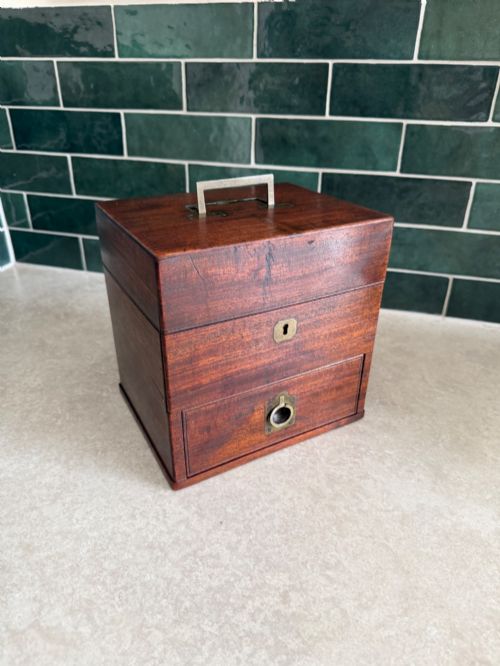
You will most frequently meet mahogany and other polished wood boxes on this page, often fitted with brass hardware and lockable compartments. Some examples include original glass bottles and internal paper labels indicating their nineteenth-century origins.
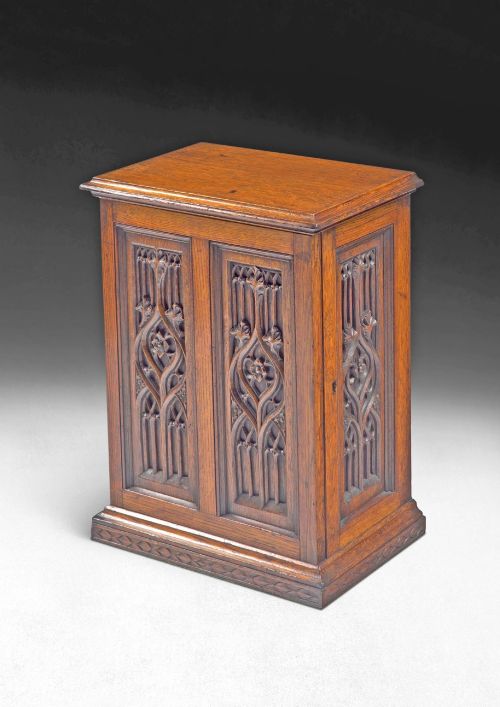
The objects span simpler utilitarian apothecary boxes and more elaborate display cabinets featuring inlaid wood or burr walnut. Domestic variants served families and doctors alike, reflecting the medical routines of the period.
How they were made
Cabinet makers constructed these pieces primarily in mahogany, walnut, and other dense woods to withstand regular handling and travel. Brass fittings such as drop handles, escutcheons, and corner brackets reinforce the joints and protect the edges.
Internal layouts require precise woodworking to house fragile glass bottles safely within snug partitions, sometimes lined with velvet or leather. Lockable mechanisms utilise brass keyplates and tight tolerances to secure contents against accidental spilling.
Victorian Medicine Chest Retail Price Guide 2026
Typical asking prices for victorian medicine chest among the pieces listed under this phrase on Sellingantiques today, from the lower quarter to the upper quarter. They describe what is for sale here now, not the wider market.
Secret drawers hidden beneath false bottoms in these chests occasionally still harbour long-forgotten paper remedy notes.
What varies in quality
The distinction between standard examples and superior pieces rests on the integrity of the internal fittings and the completeness of the original glass bottles. Surviving paper labels and intact departmental partitions elevate the character of a box considerably.
Timber selection and cabinetwork detail separate basic utility boxes from finer campaign cases and polished display cabinets. Fine grain patterns in mahogany or burr walnut, alongside robust brass hardware, indicate careful initial manufacture.
The Victorian Medicine Chest Glossary
- Apothecary box
- A fitted wooden chest designed specifically for holding medicinal bottles, scales, and powders securely. These boxes often feature concealed drawers and secret compartments.
- Campaign box
- A portable piece of furniture reinforced with brass corners and flush handles for ease of transport during travel. They are built to withstand the rigours of movement.
- Escutcheon
- A flat plate of brass surrounding a keyhole that protects the surrounding wood from wear. It adds a functional decorative element to the exterior.
- Burr walnut
- A prized timber veneer showing swirling growth patterns created by tree burls. Cabinet makers utilised this decorative wood on finer nineteenth-century surfaces.
Victorian Medicine Chest: Frequently Asked Questions
What went inside a victorian medicine chest?
These chests typically held glass bottles containing tinctures, powders, and essential remedies for household ailments. Many also accommodated small scales, pestles, and measuring glasses.
Interior compartments kept fragile containers separated and upright during transit or everyday use. Some specialised boxes even included veterinary treatments or doctor's supplies.
How do I date a victorian medicine chest?
Dating relies on examining the timber, construction methods, brass hardware styles, and any surviving paper labels inside. Nineteenth-century pieces often display hand-cut dovetails and specific bottle shapes characteristic of the era.
Makers' marks or chemist labels can sometimes narrow down the decade of production. Comparing the complexity of the locking mechanism also offers clues to the manufacturing period.
Were these chests meant for travel?
Many examples were built for portability, featuring brass carrying handles and robust construction to endure journeys. Campaign variants specifically catered to travellers and military officers requiring medical provisions on the move.
Other larger cabinet forms stayed fixed on tabletops or inside permanent domestic dispensaries. Portable boxes relied on secure latches and snug internal partitions to protect glass contents.
How do I care for the wood and glass?
Maintain polished wood surfaces with gentle cleaning using appropriate wax to preserve the nineteenth-century finish. Avoid placing chests in direct sunlight or damp environments to protect both timber and internal paper elements.
Glass bottles benefit from careful, dry cleaning with soft cloths to avoid damaging any surviving original labels. Secure any loose internal dividers before moving the chest to prevent internal damage.