
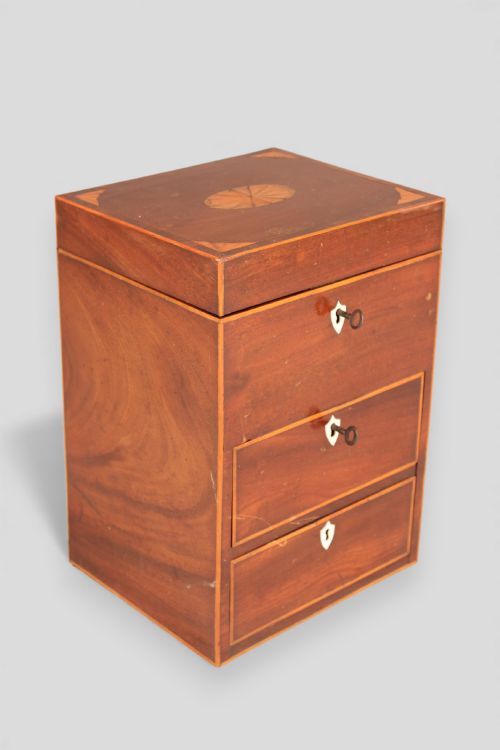


Mahogany Collectors Box
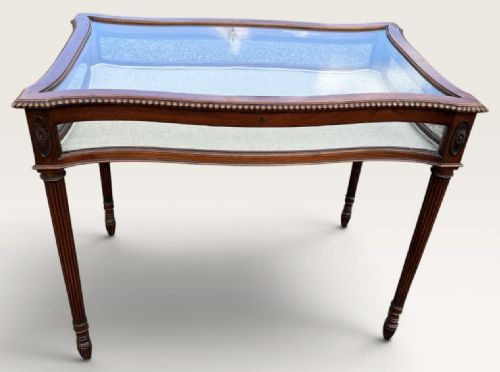
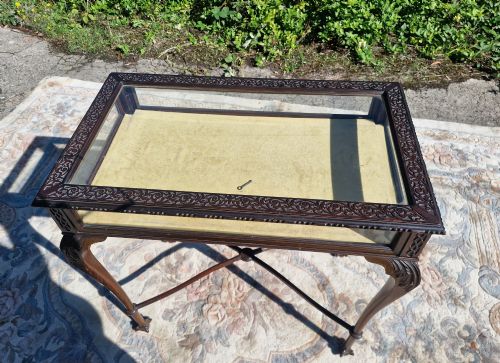
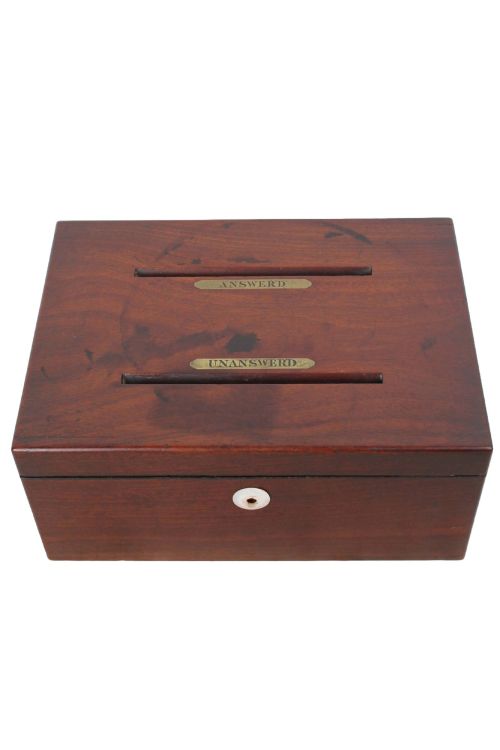
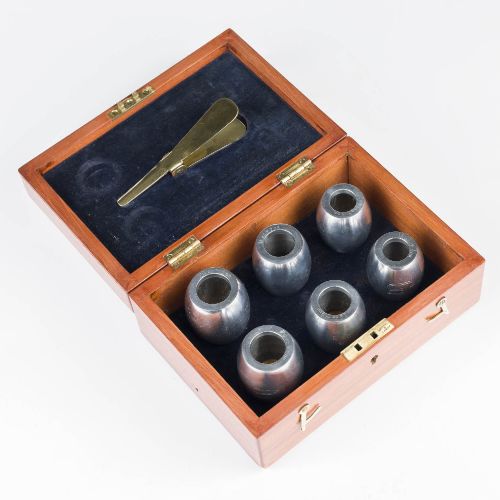
These mahogany collectors box examples range from tabletop display tables and multi-drawer specimen cabinets to miniature chests and fitted instrument cases.
Mahogany Collectors Box
A mahogany collectors box serves to house, organise, and display small precious items, scientific specimens, or personal valuables. When you search for a mahogany collectors box, you encounter pieces spanning the Georgian, Victorian, and Edwardian eras.
The surviving forms vary widely across these periods, encompassing bijouterie display tables with glazed tops, multi-drawer specimen and slide cabinets, apothecary chests, and miniature bow-front chests of drawers. Many originate from domestic country houses, workshops, or scientific practices of the nineteenth and early twentieth centuries.
Victorian and Edwardian iterations dominate the selection, often combining structural timber frames with glass viewing panels, brass hardware, and fitted internal compartments. Regional variations include Anglo-Indian military forms alongside standard English cabinetwork.
Evaluating the Build
Quality reveals itself in the density of the timber grain, the tightness of the drawer dovetails, and the crispness of any inlaid decoration. Superior examples maintain smooth drawer action and original brass or bone hardware without modern replacements.
The complexity of the interior arrangement also sets better pieces apart, such as multi-tiered microscope slide cabinets with numerous fitted trays rather than simple single-compartment storage boxes.
Materials appearing across the inventory include solid mahogany, brass hardware, velvet linings, and occasional mother of pearl inlay.
De Grave Short And Co
The Mahogany Collectors Box Glossary
- Bijouterie table
- A glass-topped display table designed to showcase small ornaments, jewellery, or curiosities at viewable height. These often feature hinged or glazed lids opening from above.
- Miniature chest of drawers
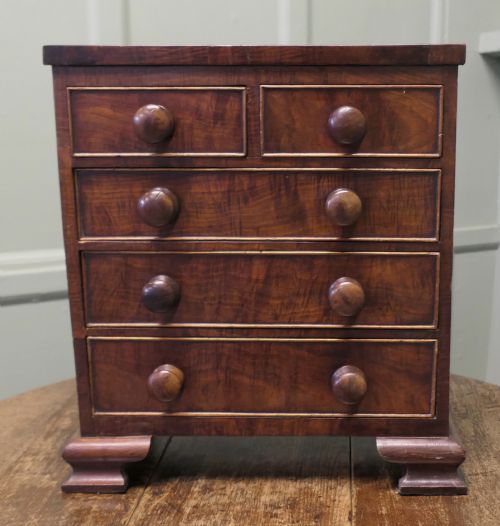
- A small-scale chest, sometimes created as an apprentice piece or a detailed desk accessory, featuring working drawers configured in standard cabinet proportions.
- Specimen cabinet
- A multi-drawer storage unit intended for natural history collections, fossils, or microscope slides, keeping fragile items protected in shallow bays.
- Apothecary box
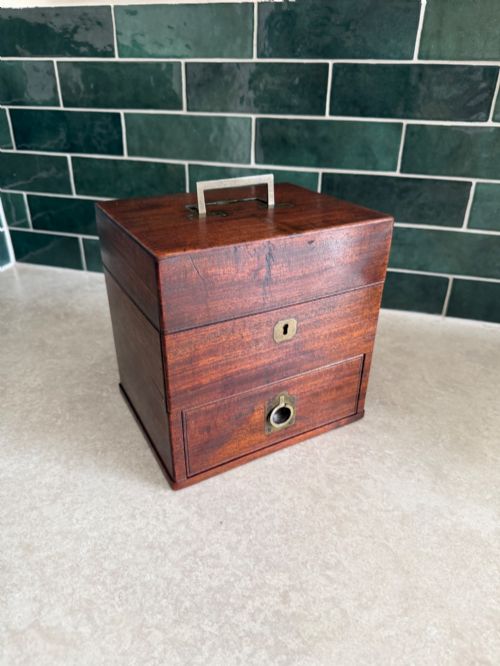
- A fitted wooden chest containing medicine bottles, scales, and related medical implements, usually secured by a brass lock and key.
- Escutcheon
- A flat plate surrounding a keyhole, frequently fashioned from brass, bone, or mother of pearl to protect the timber surround from wear.
Mahogany Collectors Box: Frequently Asked Questions
What were mahogany collectors boxes originally used for?
These boxes housed specialised items ranging from microscope slides and geological specimens to medical instruments, watches, and personal jewellery. Owners relied on them to keep delicate objects organised, protected from dust, and easily viewable.
Many styles reflect professional trades, such as watchmakers and apothecaries, while others served domestic purposes in Victorian drawing rooms and studies.
How do I date a mahogany collectors box?
Dating relies on observing construction methods, timber choice, hardware styles, and overall aesthetic design markers corresponding to Georgian, Victorian, or Edwardian periods. For instance, hand-cut dovetails and specific brass drop handles often indicate earlier nineteenth-century manufacture.
Archival clues like maker labels inside drawers or specific lock stamps also help narrow down the production era.
Are these boxes suitable for modern display?
Their compact dimensions and glass-topped or multi-drawer formats make them practical for exhibiting modern collections of small curiosities, coins, or jewellery in contemporary interiors. Tabletop display models place objects at an accessible viewing height.
Placement away from direct sunlight and excessive humidity helps preserve the original timber finish and internal velvet or fabric linings.
What is the difference between a specimen cabinet and a bijouterie table?
A specimen cabinet consists of multiple stacked drawers designed to slide out horizontally for the private storage of scientific samples or small collections. In contrast, a bijouterie table is a raised piece of furniture featuring a glazed top designed to display decorative objects openly from above.
Both utilise mahogany framing, but their functional layout targets different forms of presentation.