

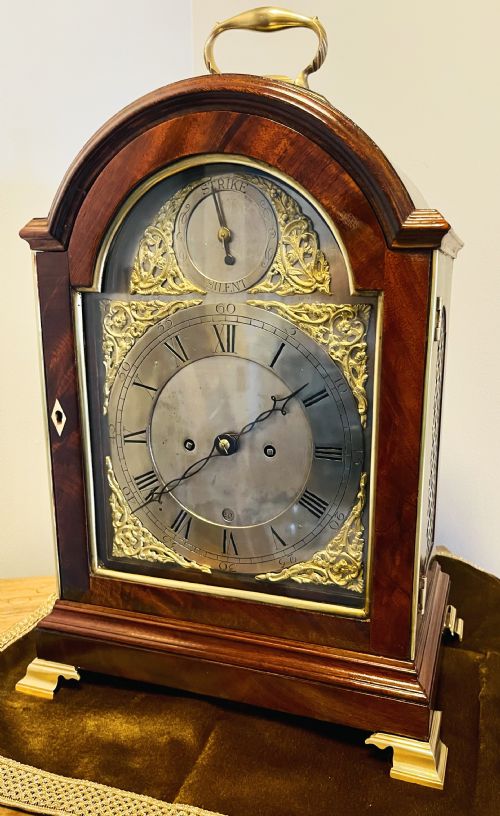
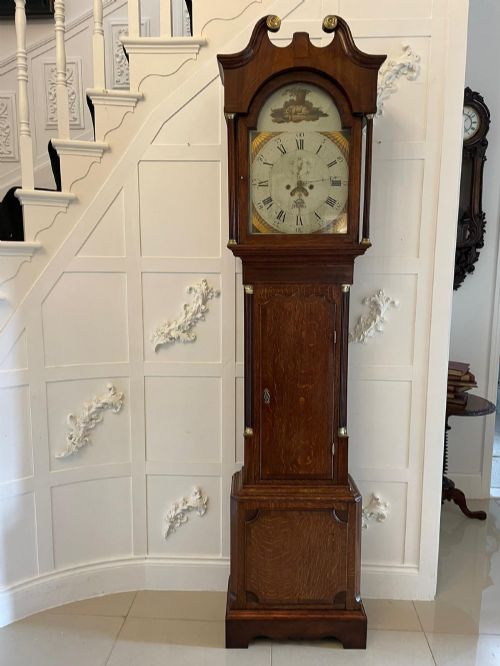
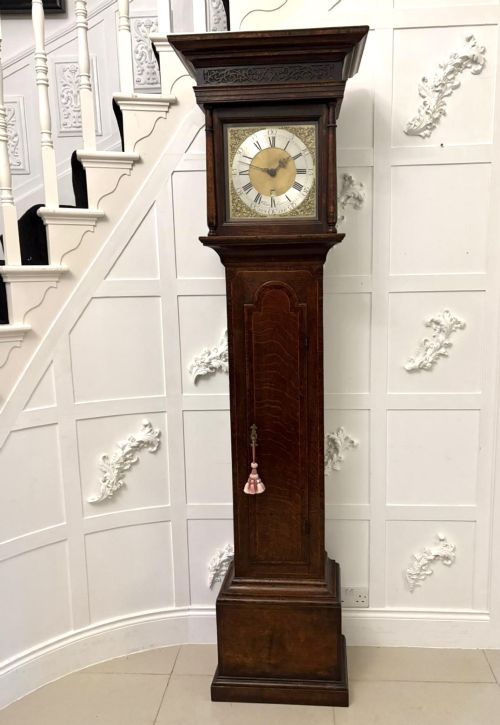
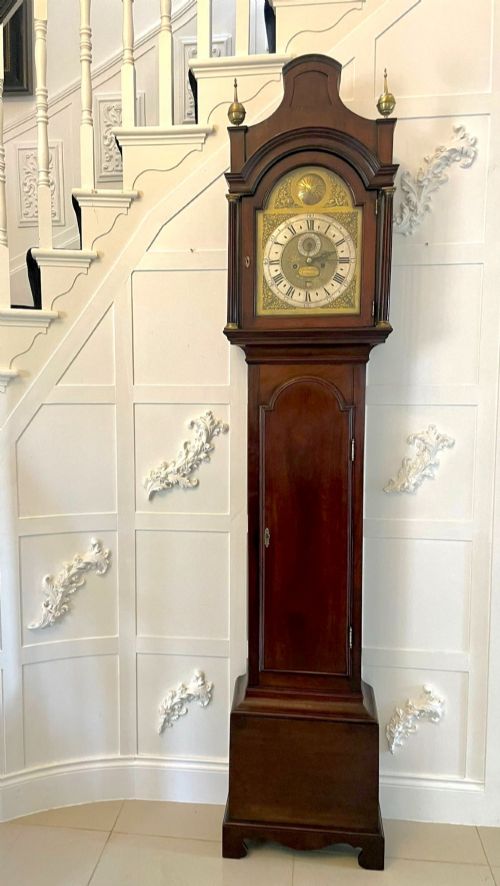
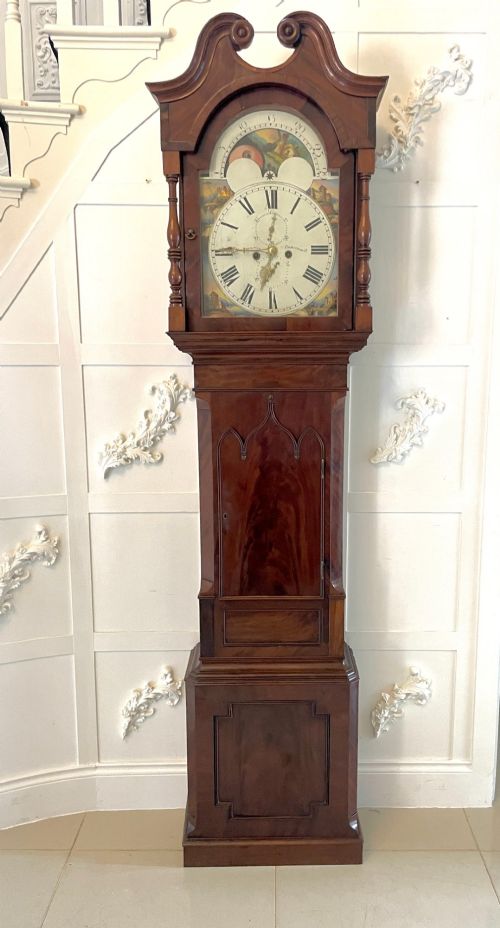
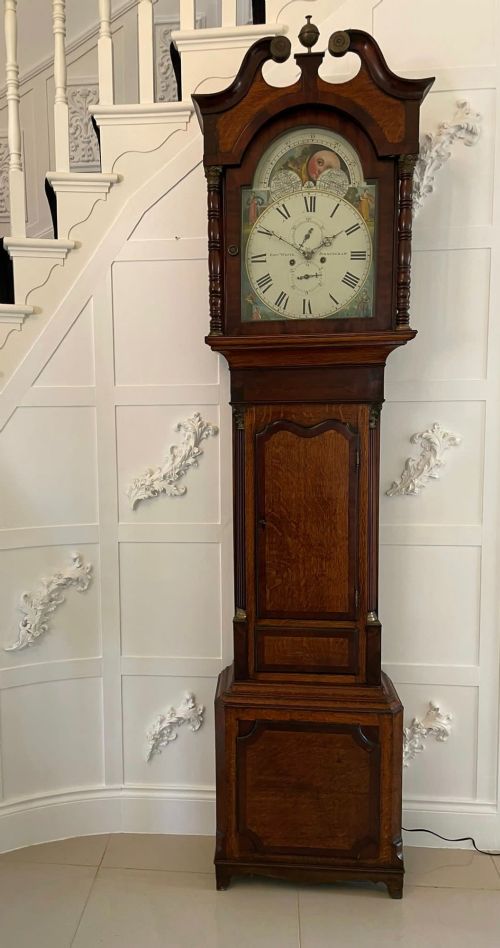
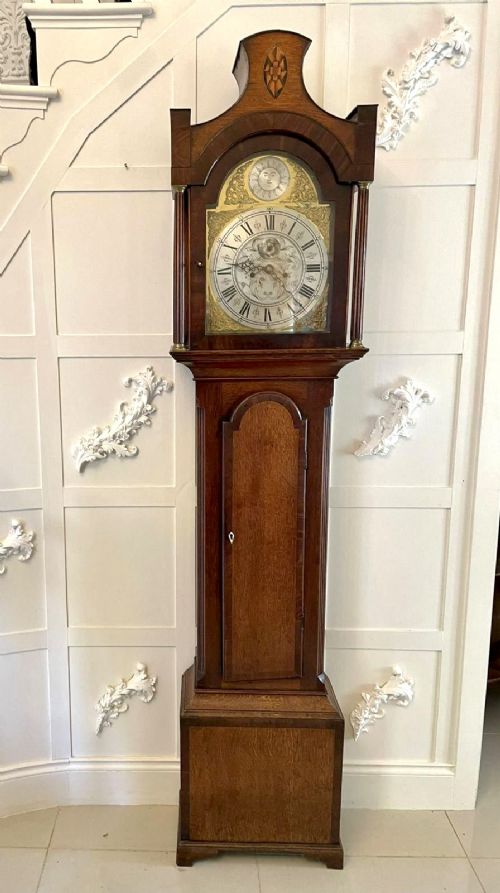
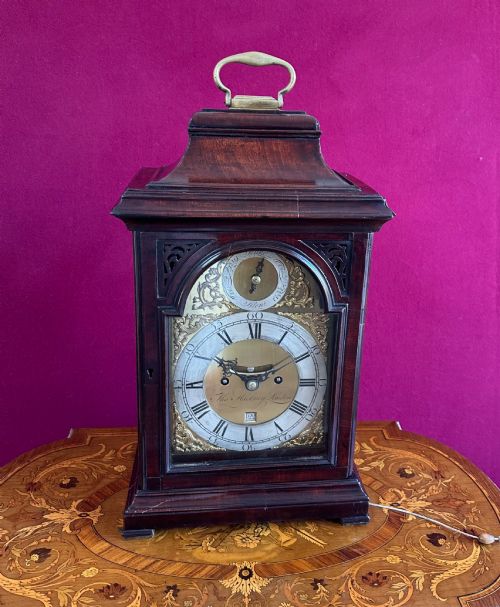

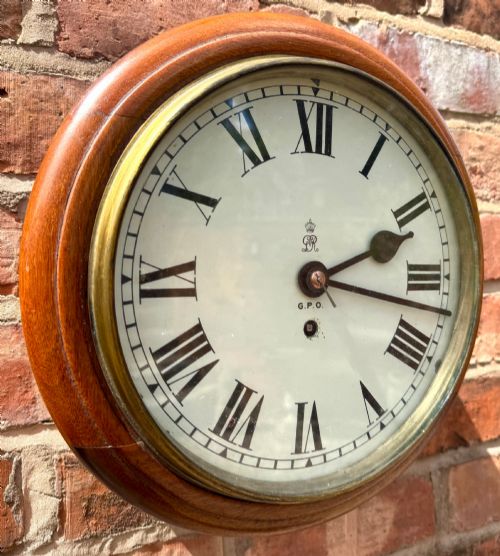
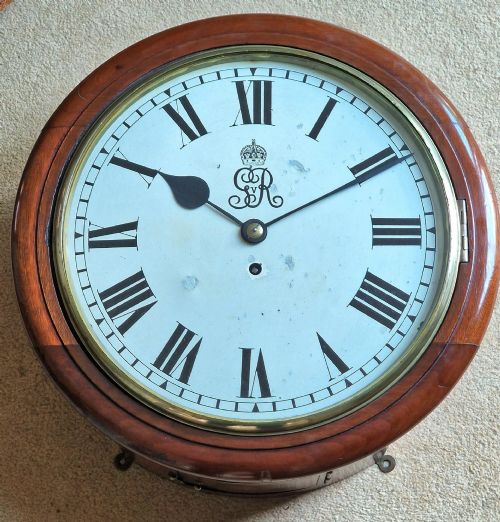

George V Dial Clock
A george v dial clock is a wall timepiece built for public service, prized for crisp utility and reliable mechanical movement.
George V Dial Clock
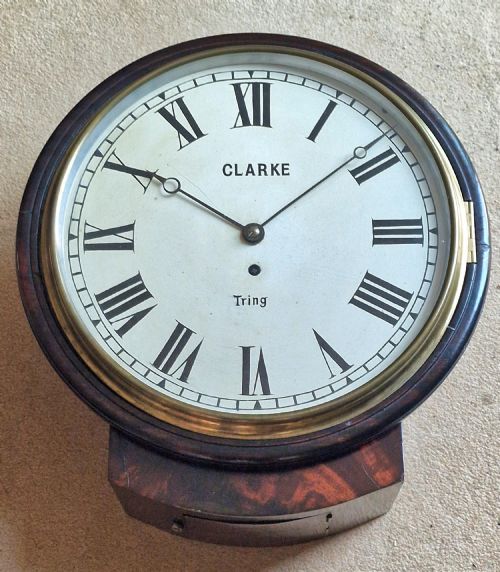
A george v dial clock sits flush against the wall in a round timber housing, designed for municipal buildings, post offices, and railway stations. These pieces display plain circular faces intended for rapid legibility from across a large room rather than domestic decoration.
Most examples found in trade connect directly to state or military administration, bearing markings from the General Post Office or the Department of War. Buyers encounter utilitarian mahogany or oak cases fitted with heavy cast bezels protecting paper or painted metal dials.
Materials and Movement
The fusee mechanism maintains equal tension on the gear train as the mainspring unwinds, ensuring accurate timekeeping across the span of an eight-day run. Dials comprise painted metal, silvered brass, or enamel protected by thick bevelled glass.
George V Dial Clock Retail Price Guide 2026
Typical asking prices for george v dial clock among the pieces listed under this phrase on Sellingantiques today, from the lower quarter to the upper quarter. They describe what is for sale here now, not the wider market.
Materials documented across the inventory include heavy cast brass, bevelled glass, and hand-painted metal dials.
Judging Quality
Differentiation at the upper tier rests upon the originality of the movement and the crispness of government or maker stampings on the timber case. Untouched fusee movements with matching serial numbers to the dial command greater respect from collectors.
The grade of timber selection and the retention of original finish dictate overall desirability. Heavy restoration to the dial or replacement bezels diminish historical integrity.
Charles Shuckburgh·Windmills and Wightman·George Hallifax·Henry Weedon·William McEwan·Charles Dowsett·John Denbigh·Thomas Vernon·Edward White·George Buckmaster·John Bates
The George V Dial Clock Glossary
- Fusee
- A conical pulley used in mechanical clocks to equalise the torque of the mainspring as it runs down. This device ensures consistent force is applied to the escapement throughout the duration of the wind.
- Dial
- The face of the clock upon which the hours and minutes are marked. On utility wall clocks, this component is constructed from painted iron, brass, or enamel.
- Bezel
- The metal ring that holds the glass protecting the clock face in place. Hinged brass bezels allow easy access for winding and hand-setting.
- G.P.O
- General Post Office. This stamp indicates the timepiece served within the British postal network during the early twentieth century.
George V Dial Clock: Frequently Asked Questions
How do I wind a fusee wall clock?
Open the side door or swing the brass bezel outward to access the dial face, then insert the winding key into the arbor situated near the centre. Turn the key gently in a clockwise direction until the stop is felt, taking care not to overwind.
Ensure the pendulum hangs freely and swings in a uniform beat before closing the case housing. Regular lubrication by a professional horologist keeps the gear train functioning smoothly.
Where were these wall clocks used?
Government departments, railway termini, and postal sorting offices relied upon these sturdy instruments to maintain strict schedules. Their robust construction allowed them to withstand constant vibration and heavy public traffic.
Today, collectors hang them in hallways, kitchens, and studies where their clear faces provide immediate utility and historical character.
How do I identify a genuine period piece?
Examine the timber housing for authentic mounting brackets, original patination, and matching maker or government stampings inside the back box. The dial should exhibit period-appropriate typography and hand-painted numerals rather than modern transfers.
Inspect the movement for hand-cut teeth and quality brass plates bearing the signatures of established makers or official contractors.
Are these clocks suitable for daily timekeeping?
Mechanical fusee movements engineered over a century ago retain remarkable accuracy when properly serviced and levelled on a solid wall. They require weekly winding using a dedicated key to maintain continuous operation.
Placing the clock away from draughts and damp environments preserves the delicate balance and prevents timber warping in the case.