




George III Wardrobe
A george iii wardrobe is a substantial mahogany storage piece offering deep drawers and sliding trays for historical garments.
George III Wardrobe
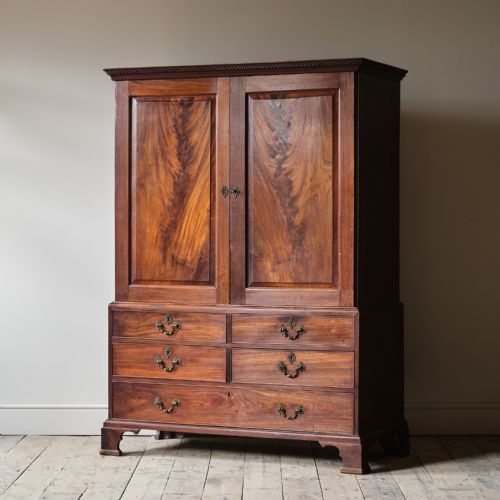
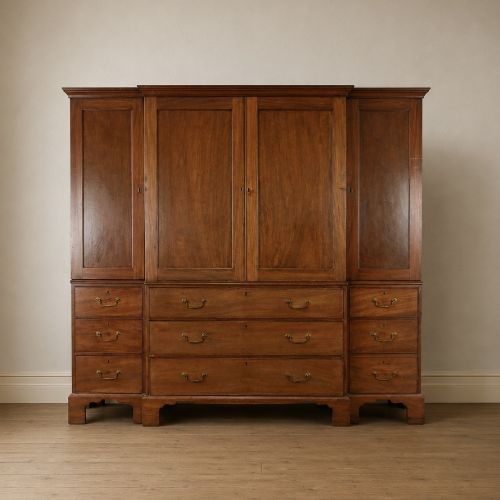
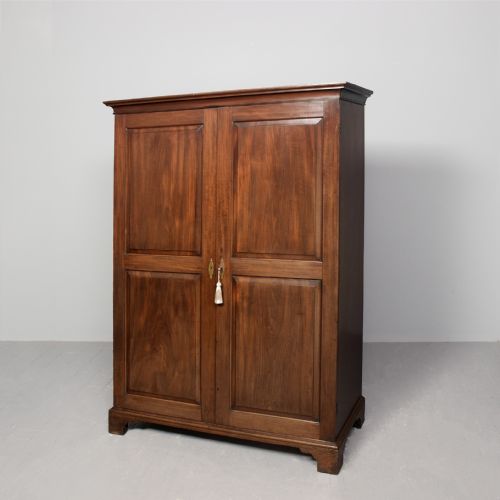
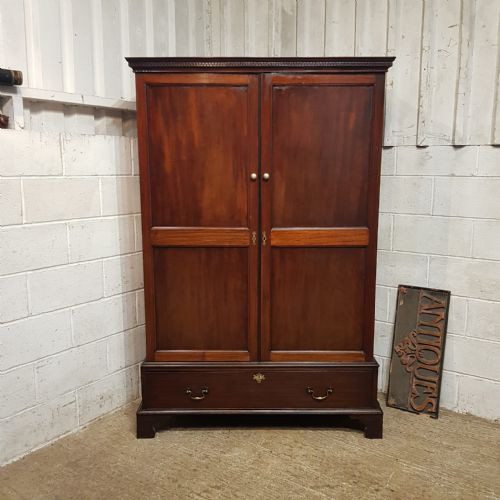
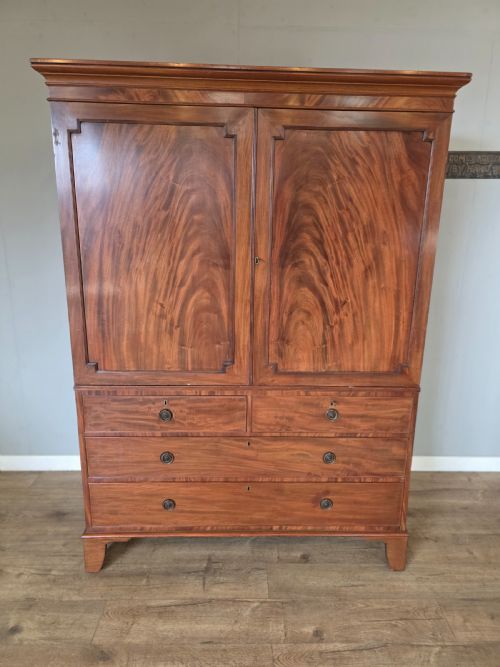
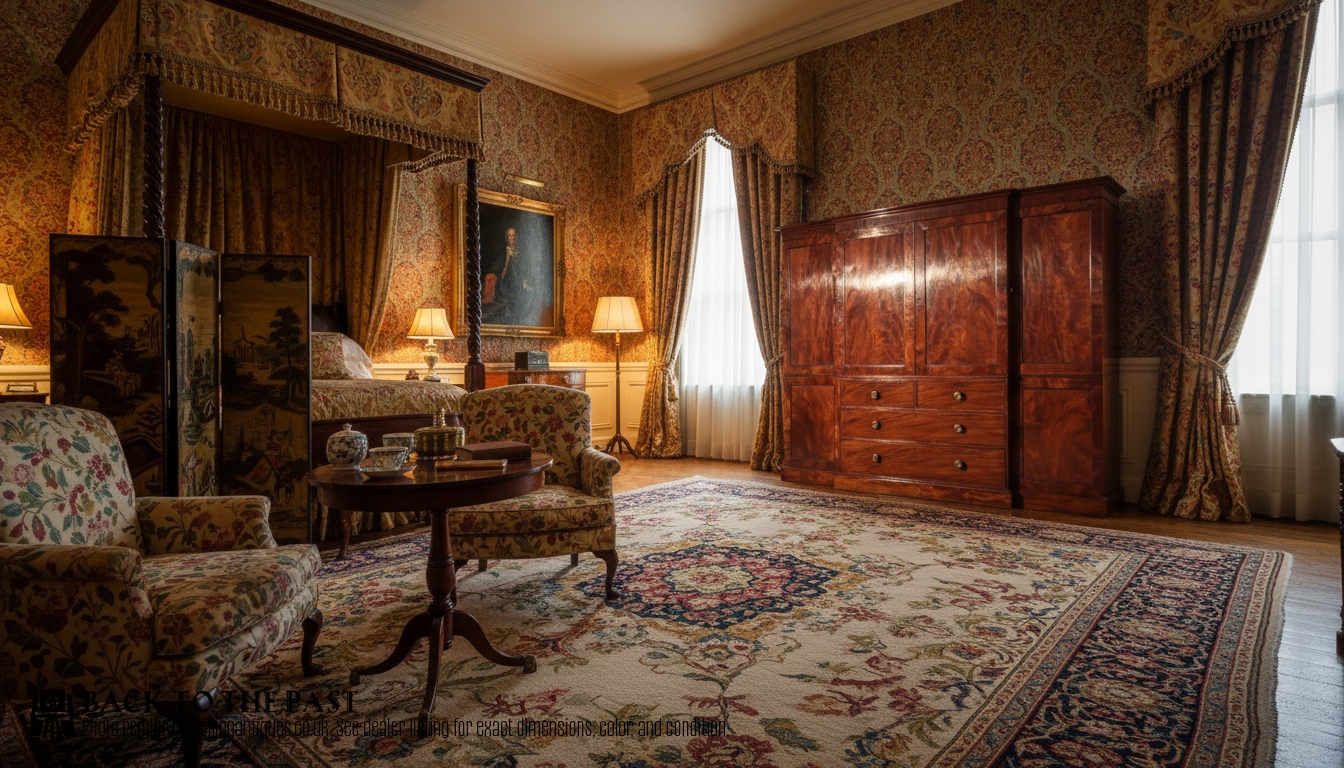
A george iii wardrobe typically appears as a linen press, a cupboard on a chest, or a tall breakfront piece designed to house folded textiles and hanging clothes. These items stem predominantly from the Georgian period and the eighteenth century, alongside later revival interpretations.
The pieces on this page frequently combine upper cupboard sections with lower chests of drawers. Many examples retain interior sliding trays, reflecting the original storage of folded linen rather than modern coat hangers.
How they were made
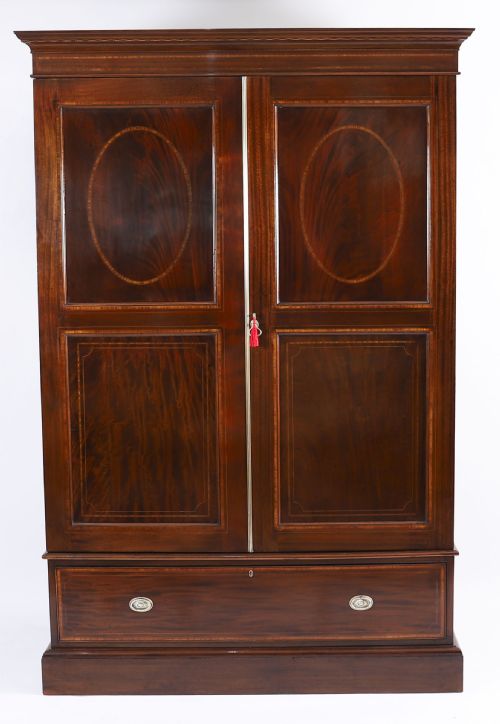
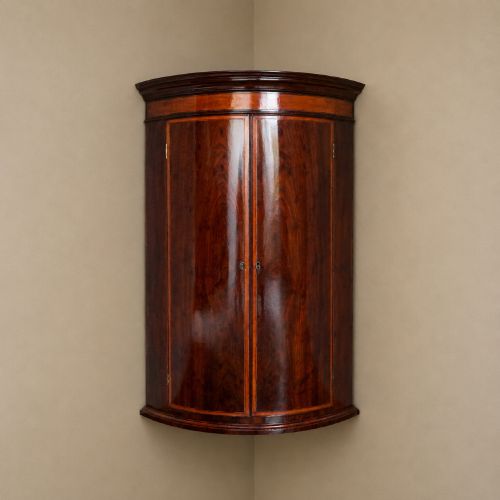
Cabinet makers constructed these pieces primarily from solid mahogany and oak, frequently applying figured flame mahogany veneers to the main exterior surfaces. Detail work often incorporates contrasting boxwood inlay and satinwood banding around the doors and drawers.
Joiners built the internal sliding trays using secondary timbers such as oak, while brass fittings served for handles, escutcheons, and hanging mechanisms.
Listings feature mahogany, satinwood, oak, walnut, and padouk, alongside revival styles from the nineteenth and twentieth centuries.
What varies in quality
The refinement of the timber selection dictates much of the visual standard, separating standard stock from pieces utilising highly figured flame mahogany veneers and intricate boxwood stringing. Architectural elements such as swan-neck pediments and breakfront configurations elevate the design complexity.
Proportion and scale also separate simpler regional cupboards from grand estate cabinets attributed to prominent workshops like Gillows.
Gillows
The George III Wardrobe Glossary
- Linen press
- A two-section storage piece with an upper cupboard enclosing sliding trays for folded textiles, set above a chest of drawers.
- Breakfront
- A cabinet design where the central section projects forward from the flanking outer wings.
- Swan-neck pediment
- A decorative broken arch top cornicing that curves outward and upward, frequently terminating in a scroll.
- Sliding tray
- A pull-out internal shelf housed within the upper section of a press, utilised historically for linens before hanging space became standard.
- Flame mahogany
- A highly figured timber veneer cut from timber fork joints, displaying a distinctive flickering flame pattern.
George III Wardrobe: Frequently Asked Questions
What is a george iii wardrobe used for?
These pieces provide substantial storage capacity through a combination of deep drawers, cupboards, and sliding trays. They function today as striking architectural bedroom furniture for garments and linens.
Historically, the upper sections held folded clothing on internal trays while the lower chest accommodated smaller items. Owners frequently adapt them for modern hanging storage or retain the original tray configuration.
How do you tell a linen press from a wardrobe?
A linen press specifically incorporates internal sliding trays behind its upper doors for folded garments. A standard wardrobe focuses primarily on vertical hanging space.
Many period pieces catalogued as presses have since been adapted to accommodate modern clothes rails while retaining their traditional exterior appearance.
How do revival pieces differ from original ones?
Revival items date to later nineteenth or twentieth-century movements like George III Revival or Edwardian periods. They echo the proportions and decorative motifs of eighteenth-century workshops.
Examination of secondary timbers, drawer construction, and internal hardware generally helps distinguish these later interpretations from eighteenth-century originals.