





Sheraton Wardrobe
When you handle a sheraton wardrobe, you are looking at substantial case furniture defined by disciplined neoclassical lines and precise inlay.
Sheraton Wardrobe
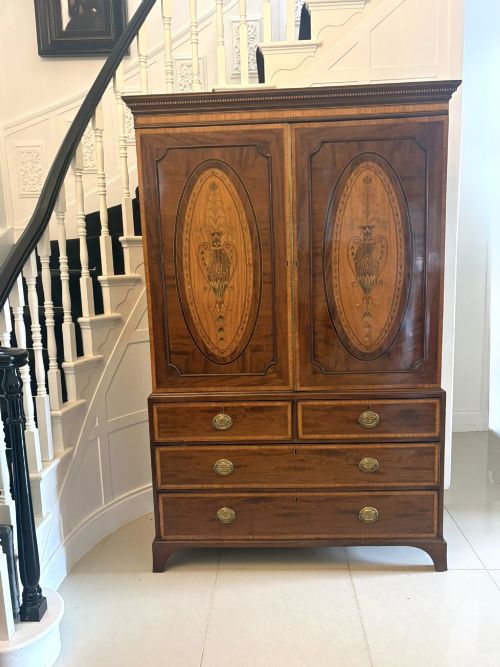
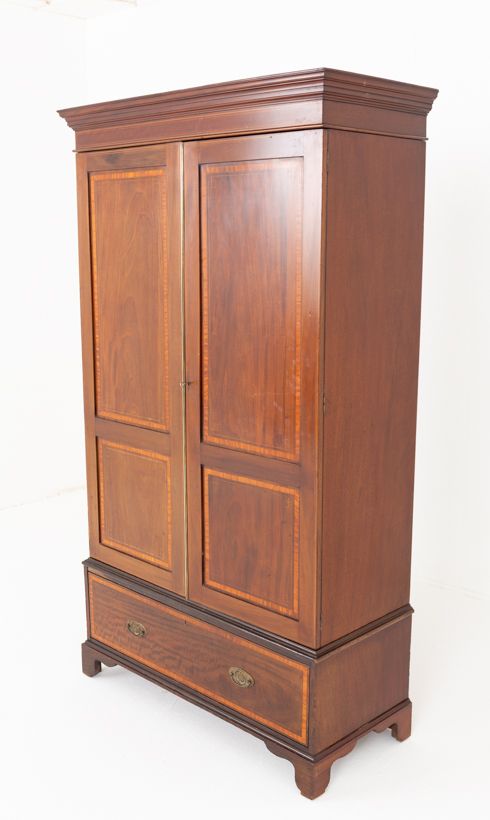
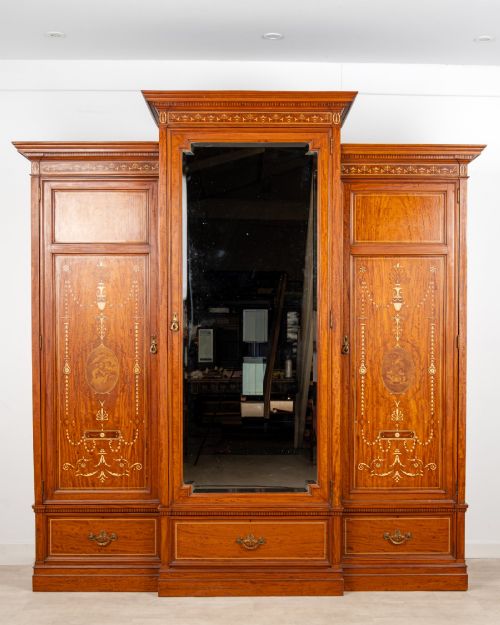
A sheraton wardrobe brings architectural proportion and light timber decoration to bedroom storage. The pieces meeting this description span the Georgian period, the Victorian era, and the Edwardian epoch, taking the form of double wardrobes, triple sections, and compactum units.
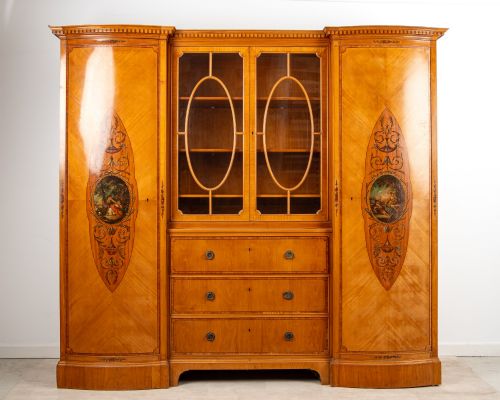
Linen presses and housekeepers cupboards appear frequently among these listings, combining sliding trays in the upper section with drawer storage below. Buyers encounter classical breakfront layouts alongside bow front and serpentine forms designed to command a substantial bedroom.
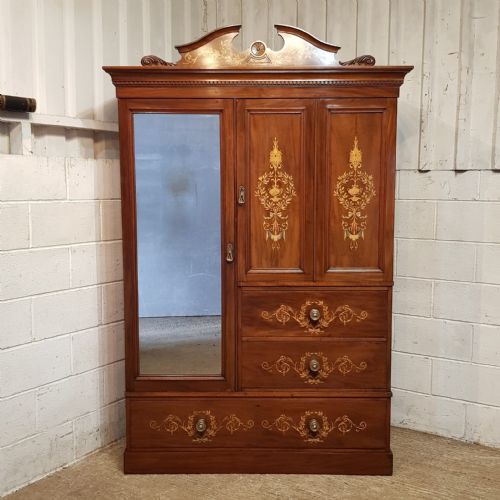
Revival pieces from the late nineteenth and early twentieth centuries reproduce the restrained geometry of the eighteenth century. These later interpretations often integrate mirrored doors and fitted internal compartments while retaining the characteristic banded borders.
Timbers and inlay techniques
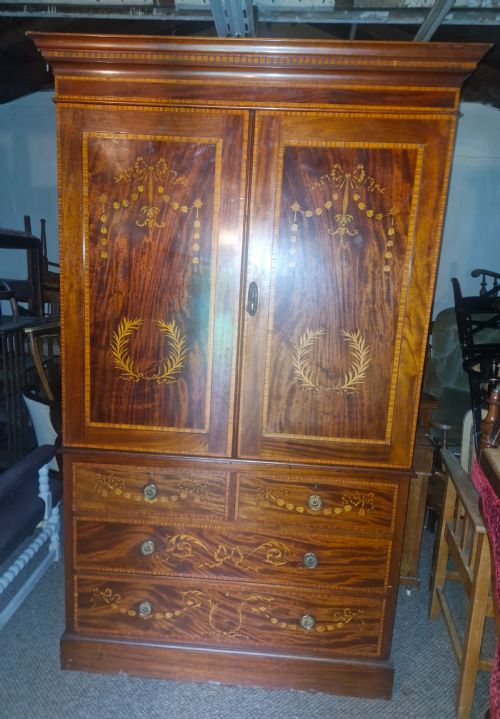
Mahogany and satinwood form the structural foundation of these pieces, frequently enhanced by flame mahogany veneer on larger door panels. Cabinetmakers utilised contrasting timbers such as boxwood and rosewood to execute delicate stringing, shell motifs, and urn marquetry.
Brass hardware secures the doors and internal drawers, while glass appears in panel mirrors fitted to central wardrobe sections during the Edwardian period. Hand-painted panels occasionally supplement the wood inlay on satinwood pieces from the turn of the twentieth century.
Sheraton Wardrobe Retail Price Guide 2026
Typical asking prices for sheraton wardrobe among the pieces listed under this phrase on Sellingantiques today, from the lower quarter to the upper quarter. They describe what is for sale here now, not the wider market.
Listings feature satinwood, mahogany, and walnut combined with brass hardware across Edwardian and Georgian periods.
Distinctions in construction and design
The precision of the cabinetwork dictates the standing of an individual piece. Crisp execution in the contrasting stringing and balanced grain selection in the mahogany veneers separate standard regional items from pieces produced by major workshops.
Proportion and the integrity of the original cornice ornamentation define the visual weight of the wardrobe. Examples retaining their fitted sliding interior trays and original brass fittings hold greater architectural coherence than altered pieces.
Druce & Co.·Maples & Co·Gillows·Harrods·Warings
The Sheraton Wardrobe Glossary
- Linen press
- A two-part storage piece featuring sliding trays enclosed by upper doors above a chest of base drawers. This form preceded the hanging wardrobe in domestic use.
- Compactum
- A multi-compartment wardrobe providing specialised internal storage such as linen slides, drawers, and hanging space within a single unified case. It organises varied garments efficiently.
- Stringing
- A narrow strip of contrasting wood inlaid into a channel on the furniture surface. It outlines panels and doors to create a geometric neoclassical border.
- Breakfront
- A cabinet facade where the central section projects forward from the flanking wings. This architectural arrangement adds depth and shadow to large wardrobes.
Sheraton Wardrobe: Frequently Asked Questions
How do I fit a large wardrobe?
Many of these pieces dismantle into sections for transport and installation in modern rooms. Measure your ceiling height and stair clearance carefully before delivery.
Position the wardrobe away from direct heat sources to protect the mahogany veneer and prevent timber movement.
What is a compactum wardrobe?
A compactum combines hanging space, drawer storage, and linen slides into one comprehensive piece of furniture. It offered complete bedroom organisation in a single footprint.
These units often feature mirrored doors and internal divisions suited to period garments.
How to date a Sheraton revival piece?
Sheraton revival furniture was made predominantly during the late Victorian and Edwardian periods. Look at the interior secondary timbers and backboards to confirm the nineteenth or twentieth-century construction date.
Mirror bevelling and machine-cut screws often indicate a later nineteenth-century or Edwardian manufacturing date despite the eighteenth-century style.
Are linen presses practical today?
The internal sliding trays provide excellent flat storage for folded clothes, linen, and knitwear. Many buyers utilise the upper section for modern shelving needs.
The deep base drawers accommodate bulky items while the upper cabinet keeps everyday essentials organised.