
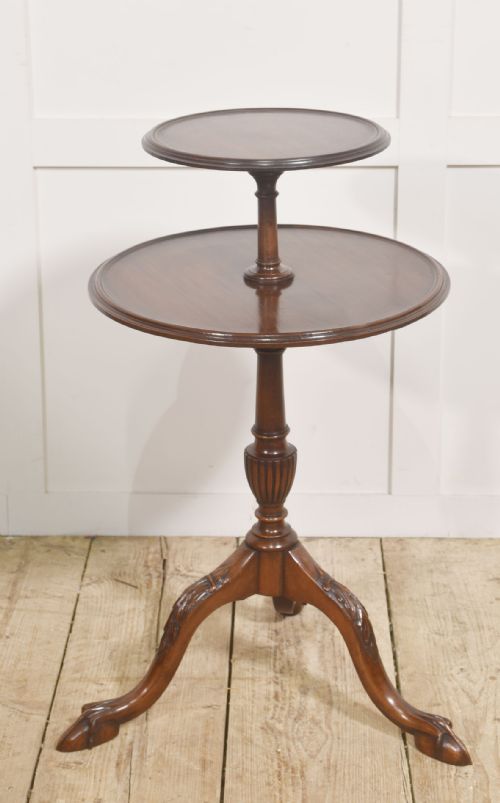


George III Tier Table
These george iii tier table pieces are tiered dining and serving stands built to hold dishes and books.
George III Tier Table
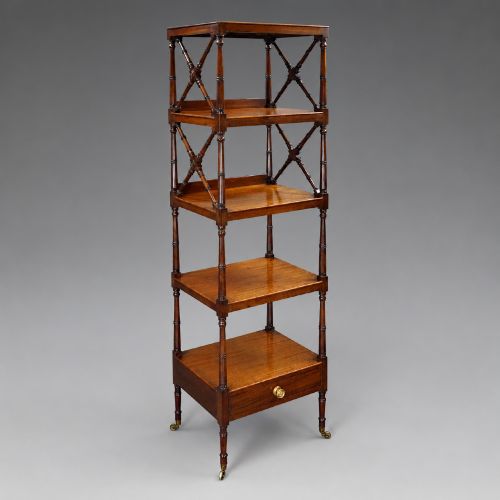
When you examine a george iii tier table, you are looking at multi-level serving stands, dumb waiters, and occasional pieces originating mostly from the eighteenth century and the Georgian period. The form serves dining rooms and drawing rooms, designed to hold plates, glasses, and books across successive platforms.
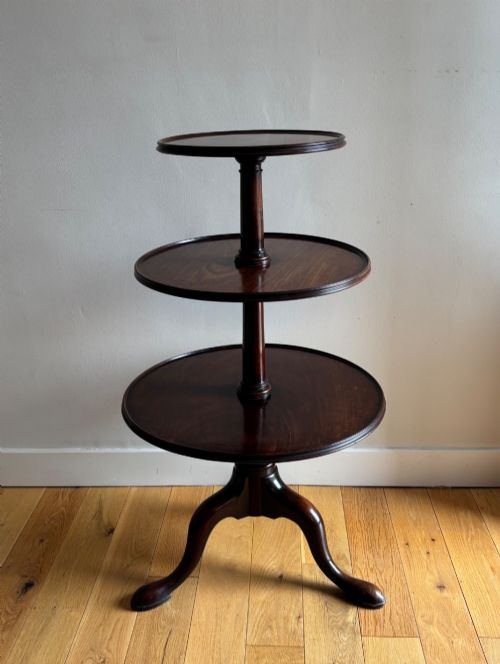
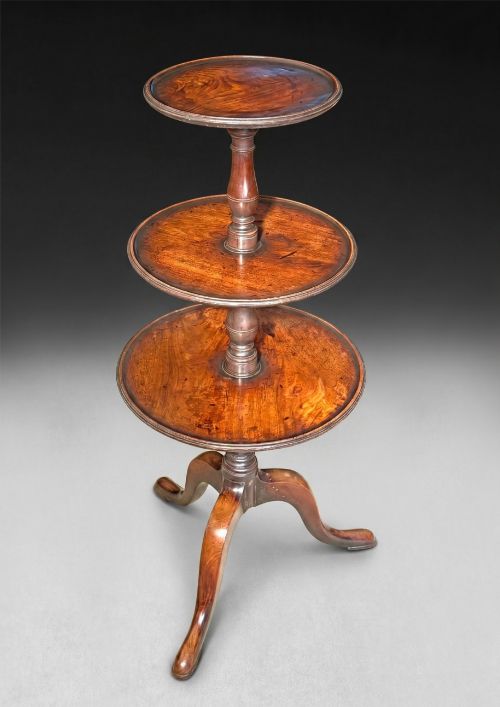
The version you are most likely to meet on this page is the mahogany dumb waiter, often featuring two or three graduated circular tiers supported on a central pillar with tripod legs. Alongside these stand occasional tables, side tables, and what-nots spanning the Georgian era and later revivals.
Makers of the period also produced variations with drop leaves, revolving mechanisms, and hexagonal or octagonal trays. These specific formats catered to dining rooms where servants stepped away and guests helped themselves from revolving tiers.
Materials and construction
Cabinet makers built these pieces primarily from solid and veneered mahogany, frequently employing dense Cuban mahogany for its rich grain and weight. Brass castors, hinges, and pillar mounts appeared on many examples to facilitate movement around the dining room.
Construction techniques relied on sturdy central columns, tripod supports, and tiered graduated trays fixed securely by turned pillars or metal fittings. Drop-leaf actions and revolving mechanisms required precise joinery to ensure stability when loaded with heavy ceramics or silver.
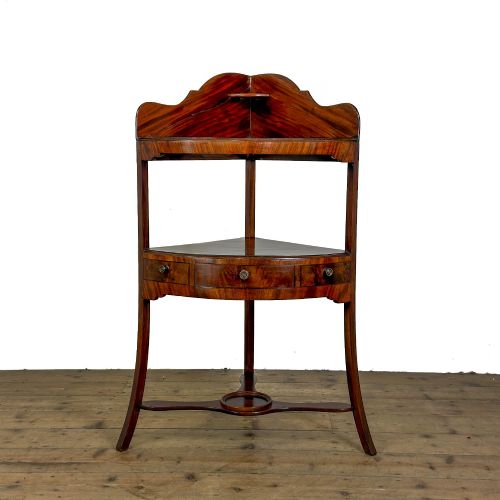
Object forms span dumb waiters, occasional tables, what-nots, nightstands, and washstands.
What determines quality
Quality rests upon the selection of timber, particularly the choice of figured Cuban mahogany and the depth of its natural grain. The elegance of the turnings on the central pillar and the proportions of the graduated tiers dictate the overall visual balance of the stand.
Mechanisms also set pieces apart, distinguishing simple stationary trays from revolving tiers and complex drop-leaf folding tables. Original brass hardware, crisp edge moulding, and intact tripod leg joints elevate an example above standard utility pieces.
The George III Tier Table Glossary
- Dumb waiter
- A multi-tiered freestanding serving stand designed to hold food and utensils without the aid of servants. These tables typically feature two or three revolving or stationary trays mounted on a central pillar.
- Whatnot
- An open set of multi-tiered shelves used for displaying or storing small household items and books. The form emerged in the eighteenth century and shares the vertical tiered structure of dining stands.
- Tripod table
- A small table supported by a pillar resting on three spreading legs. This base design allows maximum stability for multi-tiered stands on uneven floors.
- Cuban mahogany
- A dense, dark timber imported from the Caribbean used extensively in high-end eighteenth-century cabinet making. It possesses a heavy weight and a deep, rich grain pattern.
- Drop-leaf
- A table top configuration featuring hinged side flaps that fold down to save space. Many serving stands incorporated this feature for compact storage beside dining room walls.
George III Tier Table: Frequently Asked Questions
What was a dumb waiter used for?
These pieces held extra dishes, glasses, and silverware during formal meals so diners could serve themselves without servants present in the room.
They also functioned as mobile side tables for books and tea service in private drawing rooms.
How many tiers do these tables have?
Most examples feature either two or three graduated circular trays stacked vertically on a single central column.
Some variants include specialised forms with rectangular drop-leaves or hexagonal trays.
Are the tiers fixed or movable?
Many surviving examples incorporate revolving mechanisms that allow diners to spin the trays and reach dishes easily from a seated position.
Other versions remain stationary or feature folding drop-leaves designed to tuck against a wall when not in use.
What timber is most common?
Mahogany dominates the evidence on this page, ranging from standard stock to dense Cuban mahogany chosen for its rich figure.
Makers occasionally supplemented this primary wood with brass fittings and subtle inlay work.
How do I spot a later style copy?
Pieces dated to the early twentieth century often replicate the eighteenth-century Georgian proportions using machine-turned pillars and standardised hardware.
Examine the timber shrinkage, joinery methods, and wear patterns on the central column base to distinguish period originals from later interpretations.