


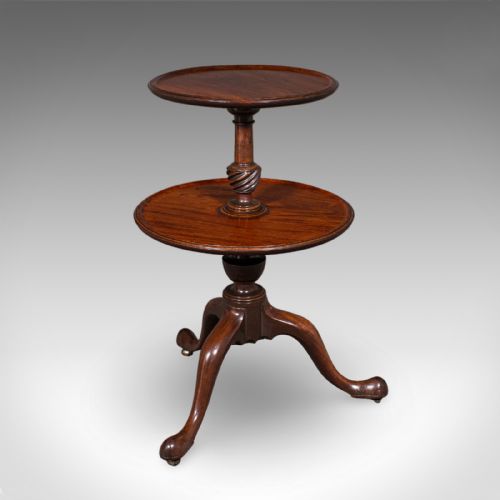


Georgian Dumbwaiter Table
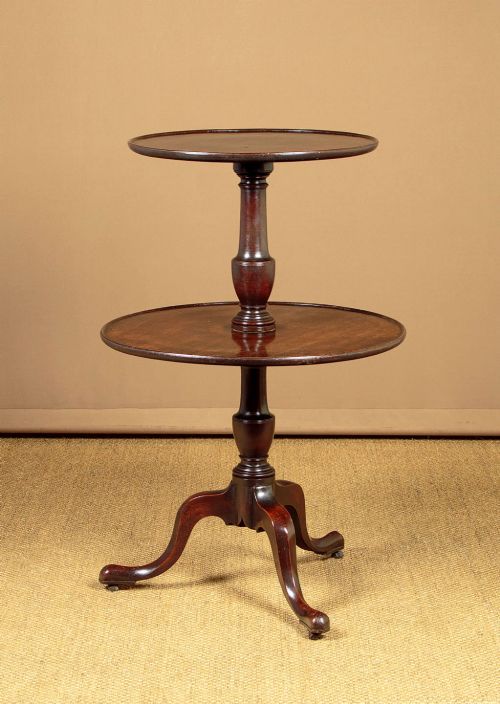
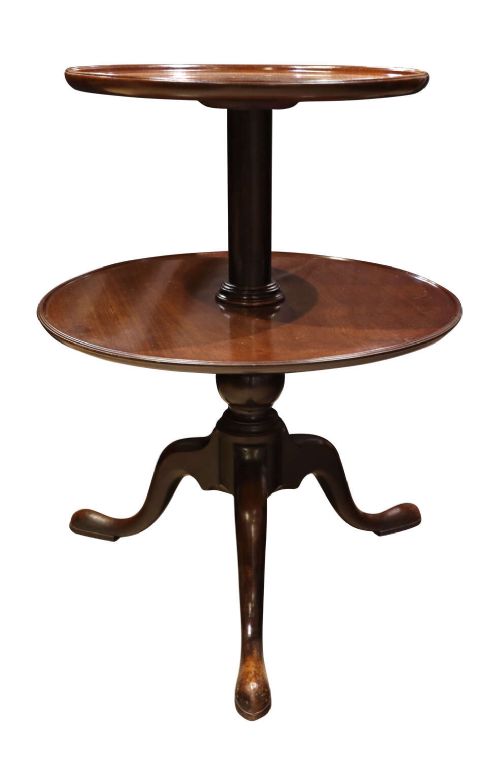
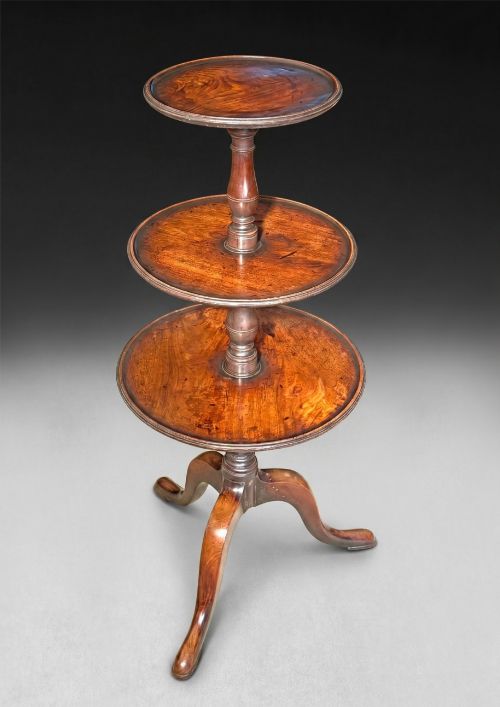
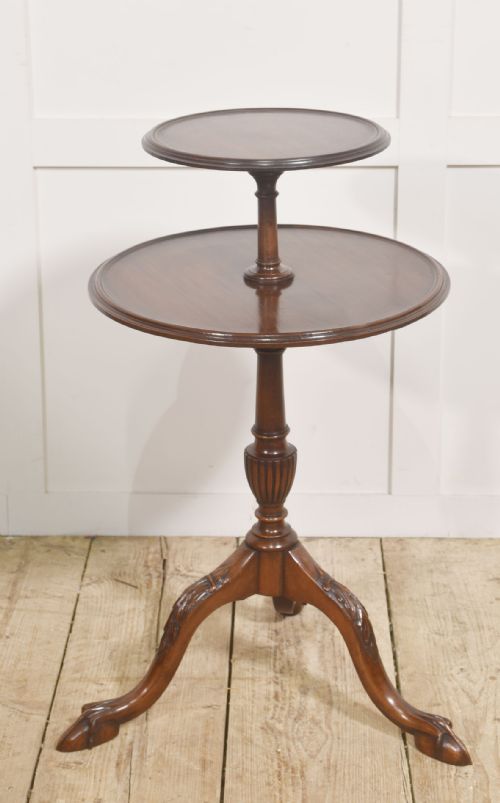
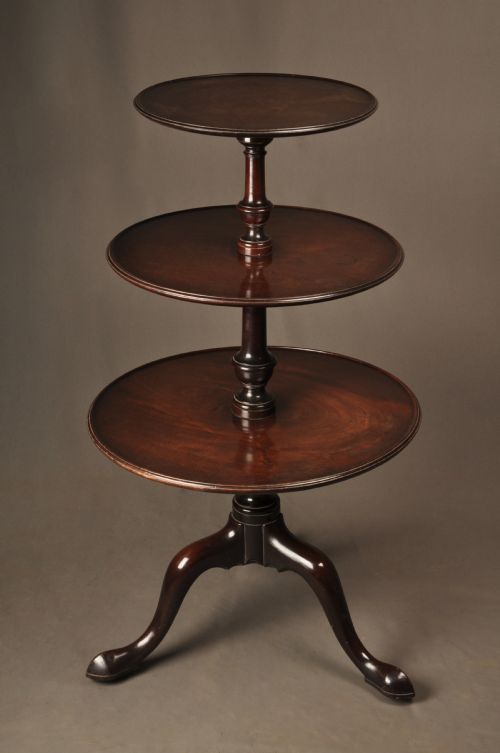
A georgian dumbwaiter table is a tiered serving stand designed to hold dishes without servants present during a meal.
Georgian Dumbwaiter Table
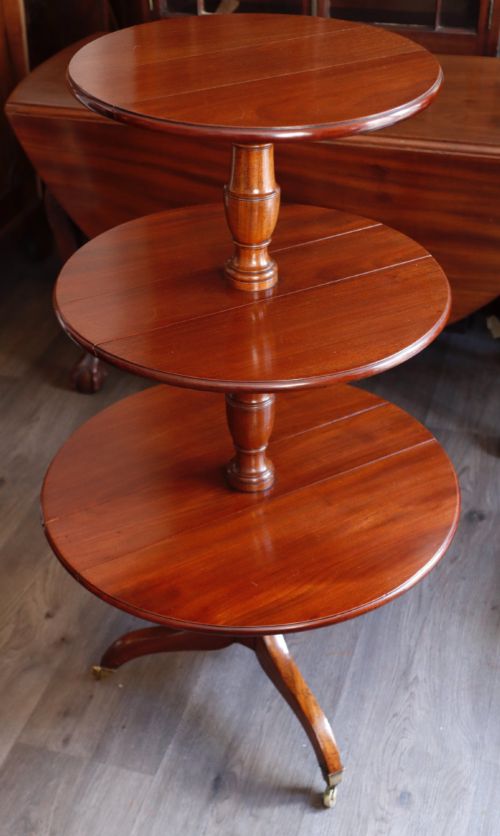
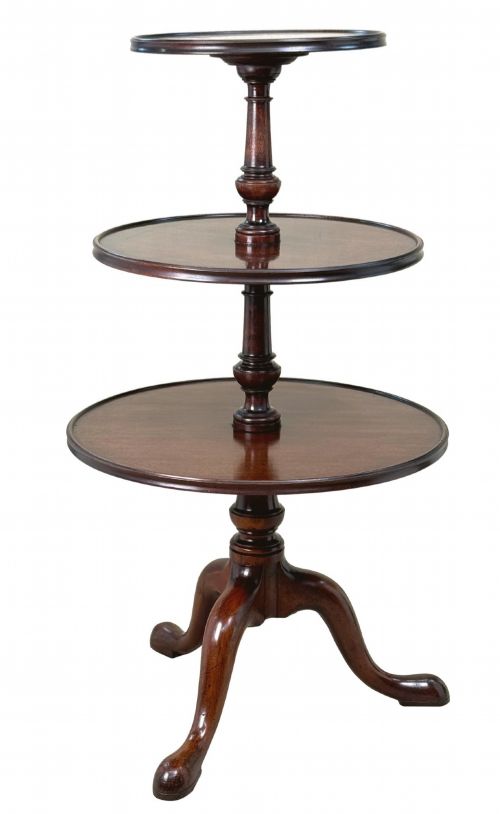
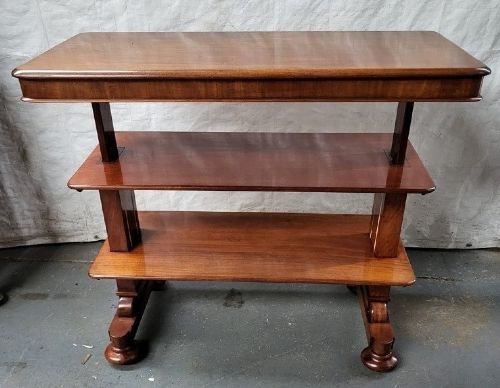
When you search for a georgian dumbwaiter table, you encounter tiered pieces designed to hold food and plates independently during meals. These serving stands appear in forms ranging from two-tier revolving round tables to three-tiered folding and drop-leaf variations.
The pieces on this page span the eighteenth and nineteenth centuries, alongside later revivals from the Edwardian period and nineteen-ten. Alongside standard tall pedestal stands, the selections include table-top lazy susans, side tables, and metamorphic buffets.
Most examples rely on solid mahogany or standard mahogany construction, though variations in the evidence include rosewood, brass fittings, paint, and inlaid details. The underlying styles stretch from George III and Regency through to Chippendale revival and William IV.
Distinguishing quality across examples
The calibre of a tier depends upon the choice of timber and the precision of the turning on the central column. Subtle grain figure in the mahogany and tight joints at the tripod base elevate the stature of a piece.
Mechanical complexity separates standard static tiers from sophisticated folding mechanisms and revolving top sections. Pieces with original brass hardware and untouched timber surfaces display greater integrity than later heavily decorated alternatives.
Guests once spun the tiers in silence to avoid the listening ears of household servants.
The Georgian Dumbwaiter Table Glossary
- Dumbwaiter
- A multi-tiered serving stand used historically to hold dishes and silverware beside a dining table. These pieces typically feature graduated circular shelves on a central pillar.
- Tripod base
- A supporting structure consisting of three legs branching out from a central pedestal column. This design ensures stability on uneven dining room floors.
- Etagere
- A piece of furniture consisting of a set of open shelves for displaying or serving items. These function similarly to tiered dumbwaiters.
- Metamorphic
- Describing furniture designed to transform into different forms or configurations, such as a buffet converting for alternative dining uses.
- Fiddleback mahogany
- Mahogany timber featuring a undulating grain pattern that resembles the back of a violin. This figure adds distinct visual movement to table tiers.
Georgian Dumbwaiter Table: Frequently Asked Questions
What is a georgian dumbwaiter table used for?
These tiered stands held extra dishes, glasses, and silverware within reach of diners during extended meals. They allowed guests to serve themselves without servants attending the room.
Over time, owners adapted them as general side tables, plant stands, or display furniture in reception rooms and hallways.
How many tiers do these tables have?
Most examples feature either two or three graduated circular trays mounted upon a single central pillar. The upper tiers are typically smaller than the bottom ones.
Some variants include drop-leaves or folding mechanisms to alter the footprint of the stand when not in use.
Do the tiers revolve?
Many examples incorporate a revolving mechanism that allows diners to spin the trays and access dishes easily. This feature earned certain table-top and pedestal variants the alternative description of lazy susan.
Fixed tiers also appear across the inventory, relying on stationary platforms rather than pivoting pivots.
What timber is most common?
Mahogany is the dominant material seen throughout the listings, appearing in both solid form and figured variations. Cabinet makers favoured it for its strength and rich dark colour.
Alternative materials include rosewood, brass hardware accents, and occasional painted or inlaid surfaces on later revival pieces.
How do I spot a later revival piece?
Revival pieces often date from the Edwardian era or the early twentieth century, mimicking earlier George III proportions and details. Examining the timber maturity, construction joints, and wear patterns helps indicate the actual age.
Makers working in later periods sometimes added decorative paint or alternative hardware styles that depart from eighteenth-century conventions.