



Antique Tier Stand Castors
Antique tier stand castors support multi-level furniture designed to move easily across rooms, bringing mobility and display space together.
Antique Tier Stand Castors
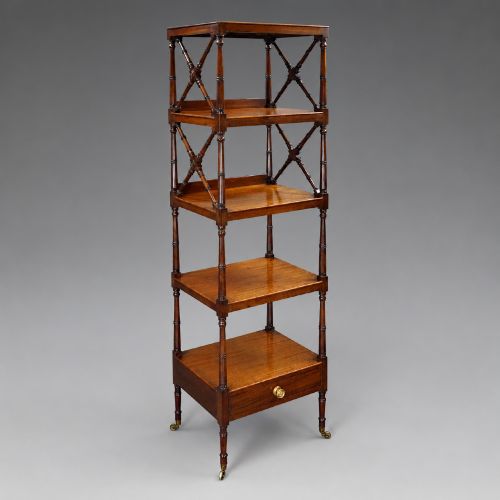
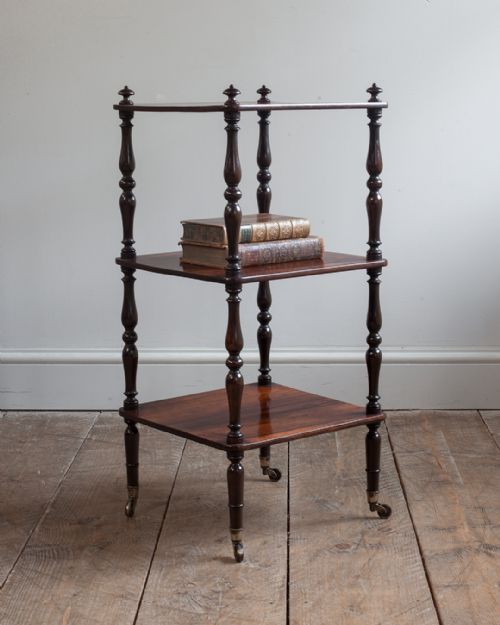
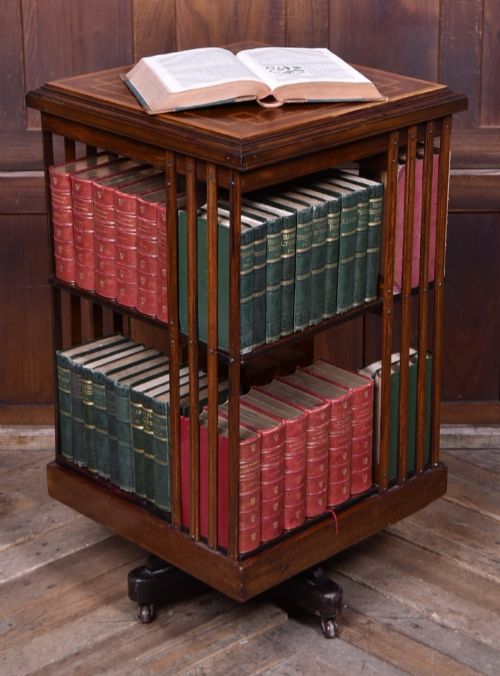
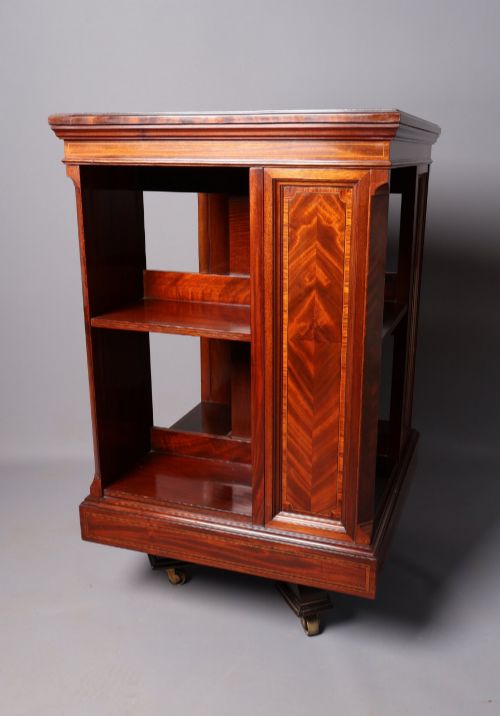
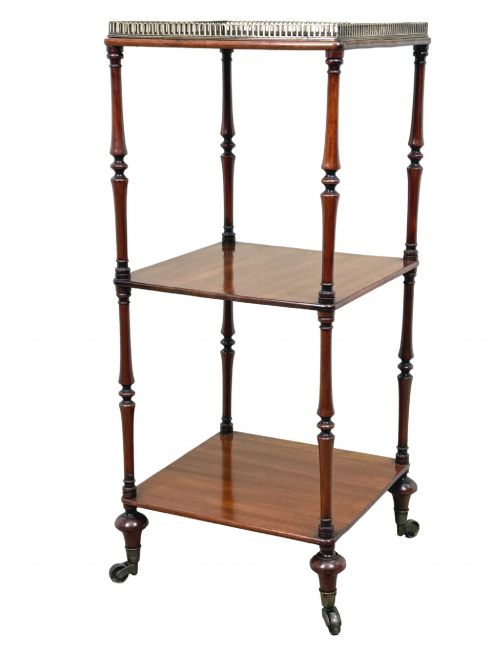
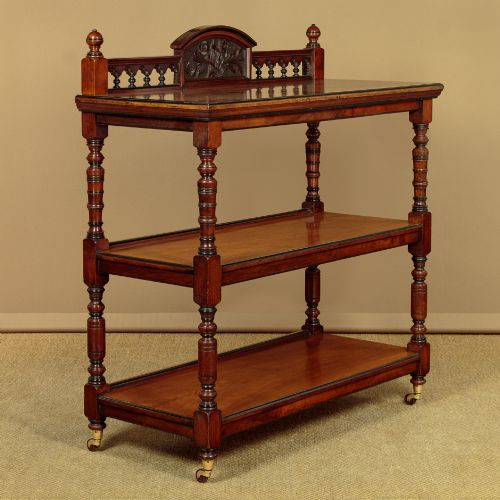
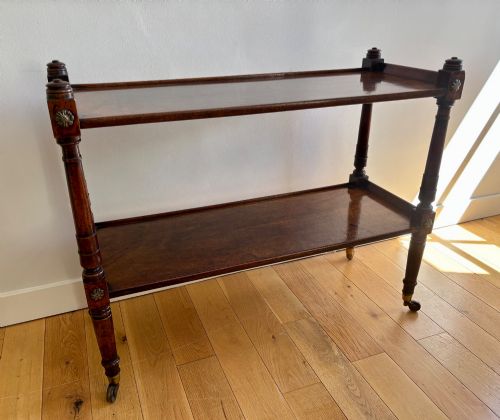
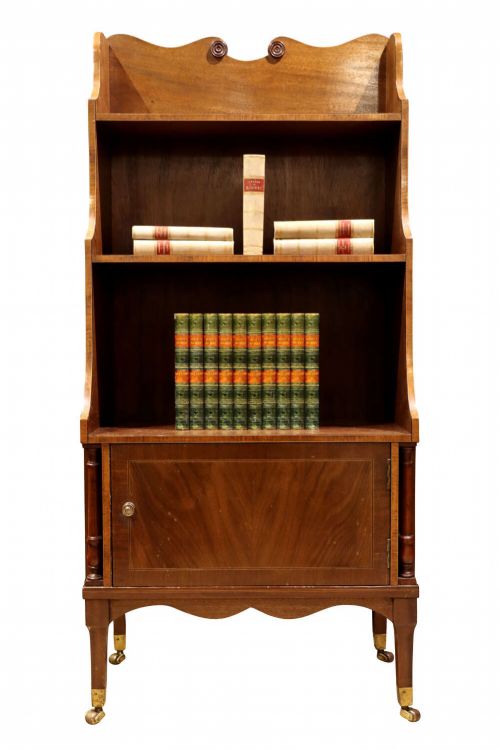
Antique tier stand castors belong to multi-level pieces such as whatnots, etageres, dumbwaiters, and revolving bookcases found across the Georgian, Regency, and Victorian periods. These pieces provide stacked surfaces for books, silver, and decorative objects, using small wheels underneath to reposition the furniture without lifting.
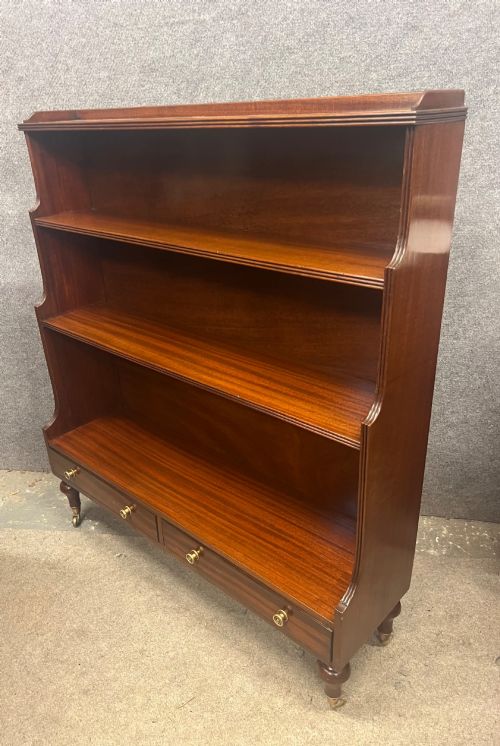
The versions most common here are mahogany, rosewood, and walnut tier stands from the nineteenth century, ranging from simple side tables to large revolving bookcases. Many sit on brass castors attached directly to turned feet or directly onto the legs, allowing the multi-tiered stand to glide smoothly across the floor.
What Varies in Quality
The distinction between ordinary and superior tier stands lies in the selection of timbers, such as burr walnut, birdseye maple, or figured mahogany, and the crispness of the turning on the upright supports. Superior pieces show careful attention to grain alignment across the tiers and refined joinery where the shelves meet the uprights.
Hardware quality also separates grades of furniture, with heavy cast brass castors and robust internal pins representing better manufacturing than lighter, pressed metal alternatives. The overall balance and rigidity of the stacked shelves when loaded determine how successfully the piece performs its function.
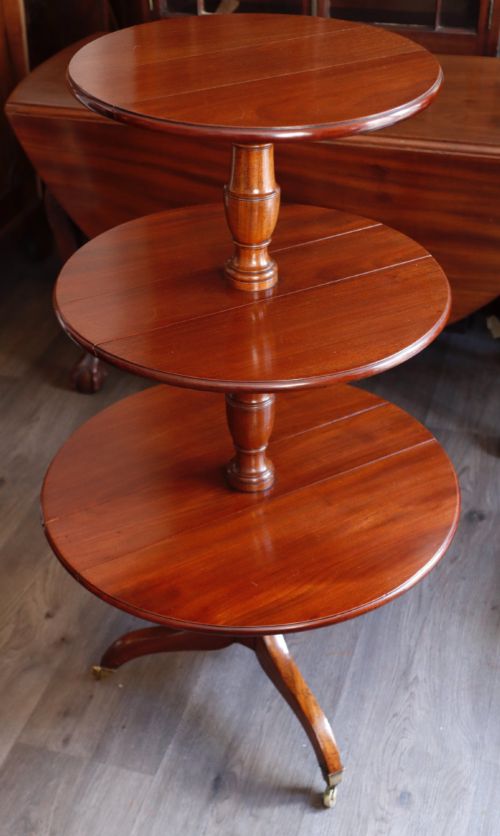
The furniture forms on this page span whatnots, etageres, revolving bookcases, and dumbwaiters fitted with working brass and iron castors.
The Antique Tier Stand Castors Glossary
- Whatnot
- A piece of furniture with multiple open shelves for displaying ornaments, books, or small objects. They first appeared in the eighteenth century and remained popular through the Victorian era.
- Etagere
- A French term for a display stand with several tiers, similar in function to a whatnot. These often feature slender uprights and delicate shelf arrangements.
- Castor
- A small wheel mounted on a swivel attached to the bottom of a piece of furniture for ease of movement. Materials commonly include brass and iron.
- Dumb waiter
- A tiered stand used in dining rooms to hold food and utensils without requiring a servant present. They often feature revolving or fixed circular trays.
- Revolving bookcase
- A freestanding shelved unit mounted on a rotating base, allowing books to be accessed from all sides. They appear frequently in Edwardian formats.
Antique Tier Stand Castors: Frequently Asked Questions
What is an antique tier stand castor?
An antique tier stand castor is the small wheel mechanism fitted to the base of multi-level furniture such as whatnots and etageres. These fittings allowed heavy timber shelving units to be repositioned easily around a room.
Such hardware is typically made of brass or iron, attached securely to the foot of the stand to support the combined weight of the wooden tiers and objects placed upon them.
How were tier stands used originally?
Tier stands served primarily as flexible display and storage furniture in drawing rooms, libraries, and dining spaces. Owners placed books, ceramics, and tea equipment across the multiple shelves.
The inclusion of castors meant the furniture could follow the light or be moved aside when rooms were rearranged for entertaining.
How do I care for antique castors?
Antique castors require gentle cleaning with dry cloths to remove dust from the wheels and swivel joints without moisture damage. Avoid harsh metal polishes that can strip the aged patina from brass components.
Checking that the fixing pins remain secure in the wooden feet prevents strain on the lower legs when moving the stand across floorboards.
How do I date a tiered stand?
Dating relies upon the timber choice, construction methods, and overall style, moving from plain Georgian mahogany forms to decorative Victorian burr walnut and Edwardian revolving designs. Georgian and Regency pieces often show hand-turned columns and simpler bracket or ring turnings.
Later Victorian and Edwardian examples frequently incorporate elaborate inlays, ebonised finishes, or revolving mechanisms that reflect changing domestic fashions.