



George III Table Mirror
A george iii table mirror brings a focused piece of Georgian craftsmanship to a dressing surface.
George III Table Mirror
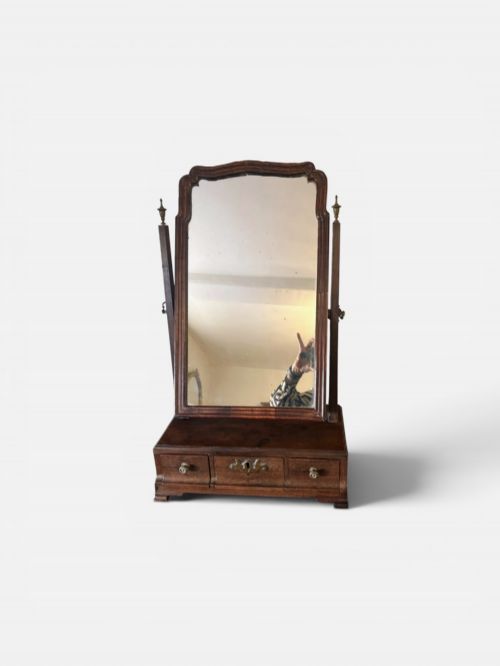
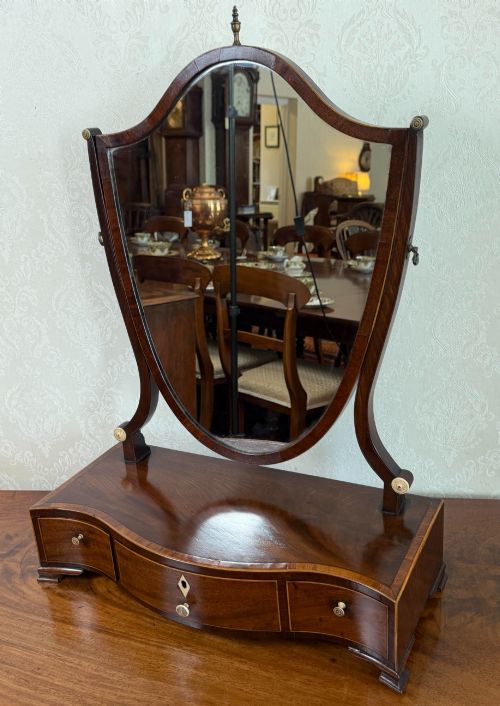
A george iii table mirror is a compact glass designed to sit upon a chest or stand, primarily appearing as a toilet mirror or dressing mirror in the evidence. These objects span the Georgian period, the eighteenth century, and nineteenth century items.
The prevailing form on this page is the dressing table mirror, often configured with a rectangular or serpentine base equipped with small drawers. Alongside these tabletop glasses, the listings occasionally include related forms such as dressing tables, wash stands, and work tables.
Makers of this era employed rich timbers and pivoting glass frames to assist with personal grooming in bedrooms and dressing rooms. Most examples retain their original proportions, scaled specifically to rest securely on top of other furniture.
What varies in quality
Quality in a george iii table mirror rests upon the selection of timber figure, such as plum pudding mahogany or figured burr maple, and the crispness of any inlaid boxwood or satinwood stringing. Finer pieces demonstrate careful proportion in the serpentine or bow front curves of the base box.
The sophistication of the drawer arrangement and the presence of secondary woods influence the calibre of the piece. Superior examples maintain crisp mouldings around the glass frame and harmonious brasswork that suits the scale of the miniature chest beneath.
George III Table Mirror Retail Price Guide 2026
Typical asking prices for george iii table mirror among the pieces listed under this phrase on Sellingantiques today, from the lower quarter to the upper quarter. They describe what is for sale here now, not the wider market.
Recorded forms extend from basic rectangular toilet mirrors to serpentine examples featuring three small drawers in the base box.
The George III Table Mirror Glossary
- Toilet mirror
- A small mirror designed for placement on a dressing table or chest, typically featuring a bank of small drawers beneath the swing glass.
- Serpentine
- A front contour characterised by a convex central section flanked by two concave curves, frequently seen on eighteenth-century mirror bases.
- Satinwood
- A durable, yellowish timber imported from the tropics, utilised by cabinetmakers for contrasting veneers and geometric stringing.
- Harewood
- Sycamore wood stained grey to simulate a lighter exotic timber, employed extensively in fine Georgian decorative work.
- Swing frame
- The pivoting mirror glass suspended between two upright arms, allowing the user to adjust the angle of reflection.
George III Table Mirror: Frequently Asked Questions
What is a george iii table mirror?
A george iii table mirror is a small, pivoting glass set into a wooden frame that sits upon a chest or table for grooming.
These pieces typically incorporate a small box base fitted with drawers for storing small personal items.
How were these mirrors used?
They were placed on dressing tables or chests of drawers in bedrooms to assist with shaving, hairstyling, and fastening garments.
The adjustable swing frame allowed the user to tilt the glass to various angles for optimal light.
Where should I place one?
A table mirror sits securely atop a chest of drawers, sideboard, or dedicated dressing table in a bedroom or hallway.
Ensure the surface is stable and deep enough to support the footprint of the box base without overhang.
How do I identify the period?
Authentic Georgian examples display period timber varieties like mahogany, satinwood, and harewood combined with hand-cut dovetails in the drawers.
Construction details, such as old secondary woods and traditional brass pivot screws, help distinguish eighteenth-century items from later reproductions.