



George III Secretary
A george iii secretary offers consummate eighteenth-century craftsmanship, combining a fitted writing drawer with deep shelving for the serious collector of practical antique furniture.
George III Secretary
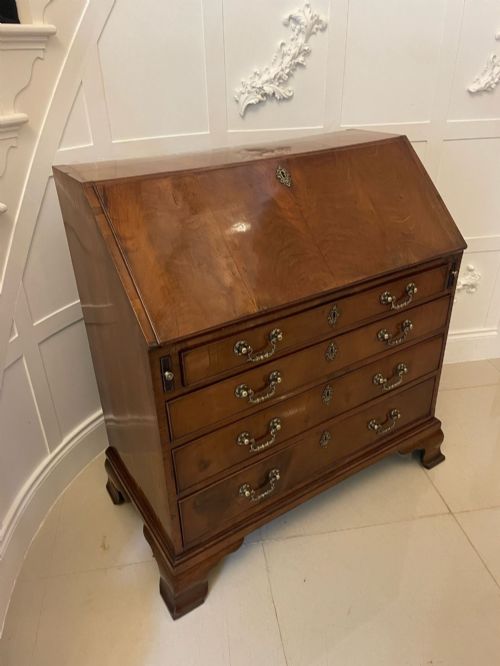
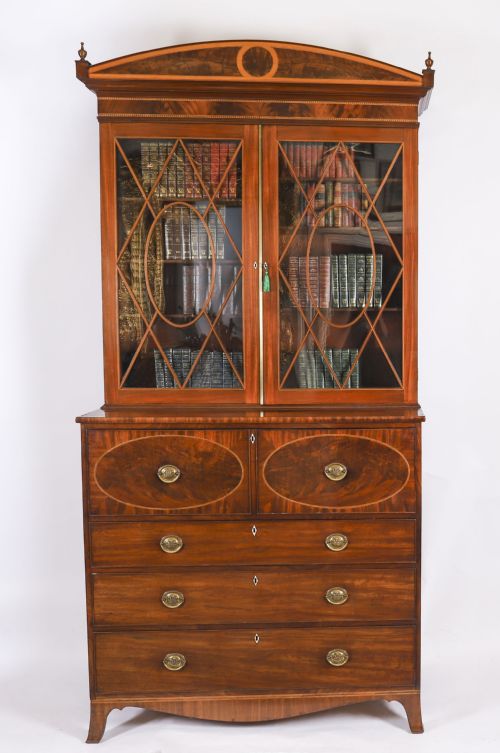
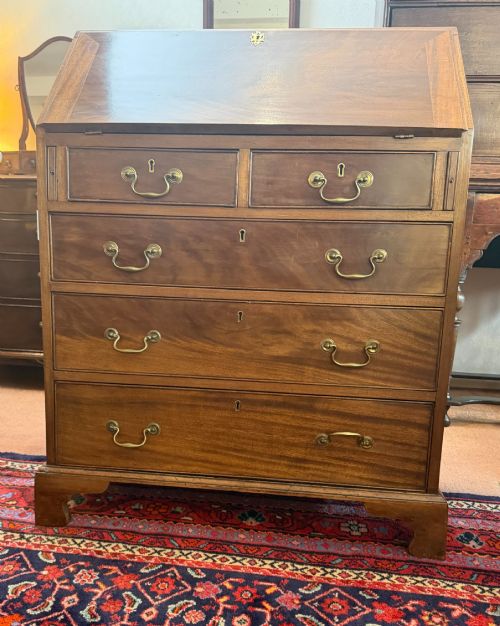
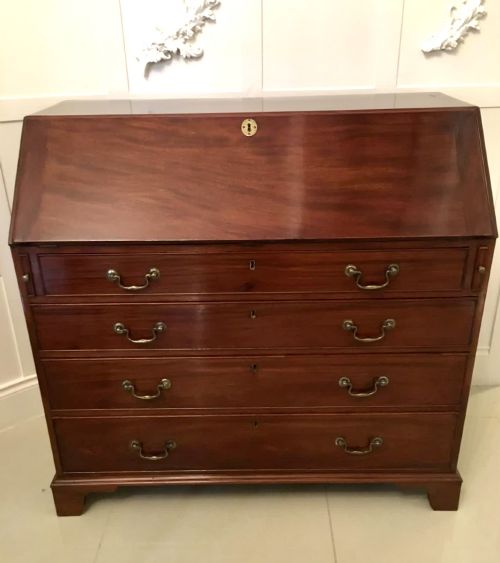
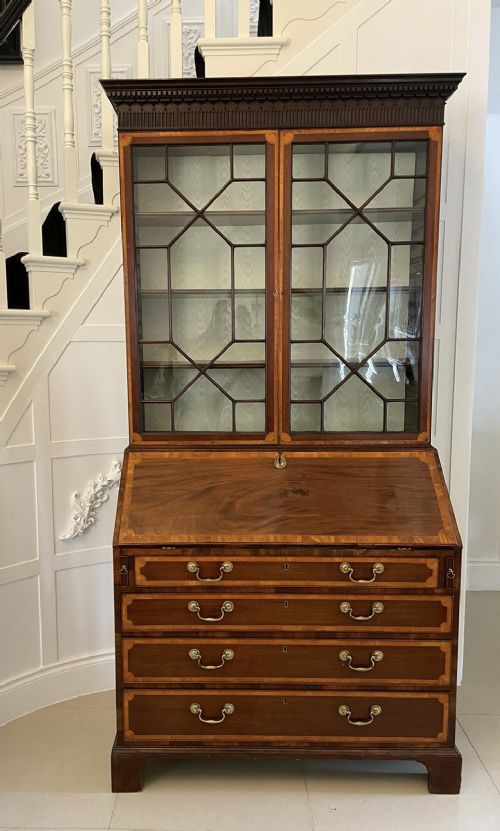
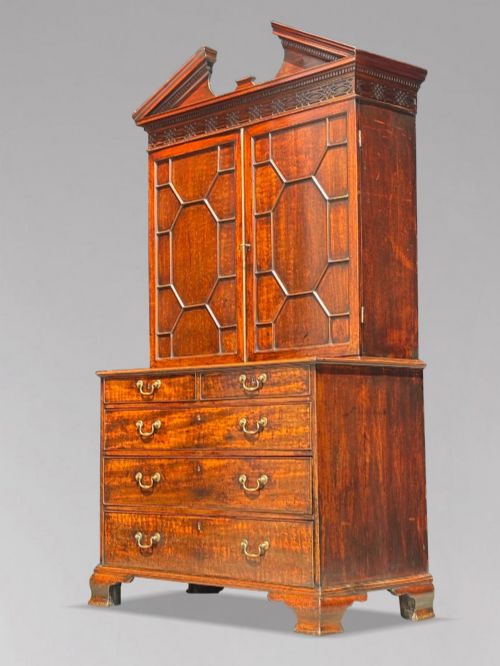
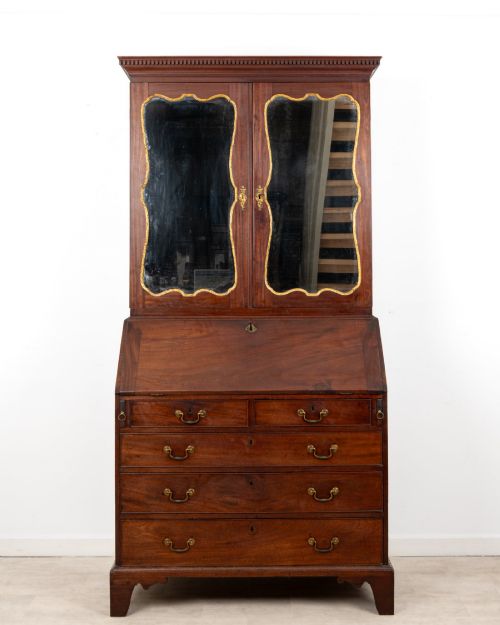
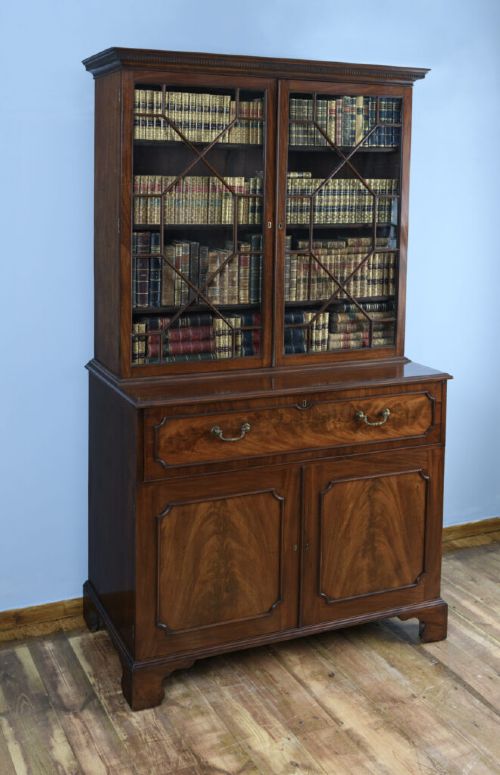
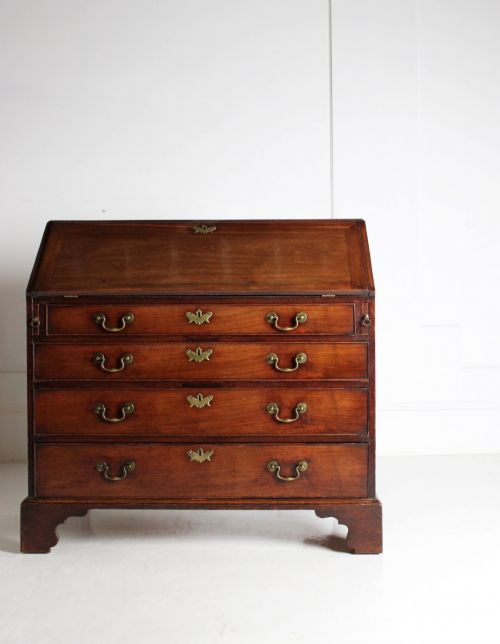
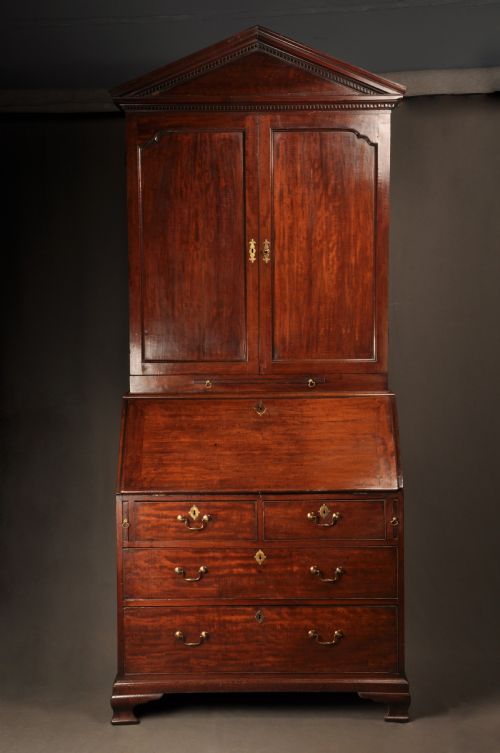
A george iii secretary takes several distinct forms, most frequently appearing as a bureau bookcase, secretaire bookcase, or fall-front bureau designed for domestic writing and storage. These pieces combine a lower writing cabinet featuring a drop-down or fitted drawer with upper bookcase sections enclosed by glazed or solid doors.
The objects span periods from the eighteenth century into the nineteenth century, alongside later George III style reproductions. Mahogany remains the dominant timber, often enhanced by satinwood inlay or flame mahogany veneer.
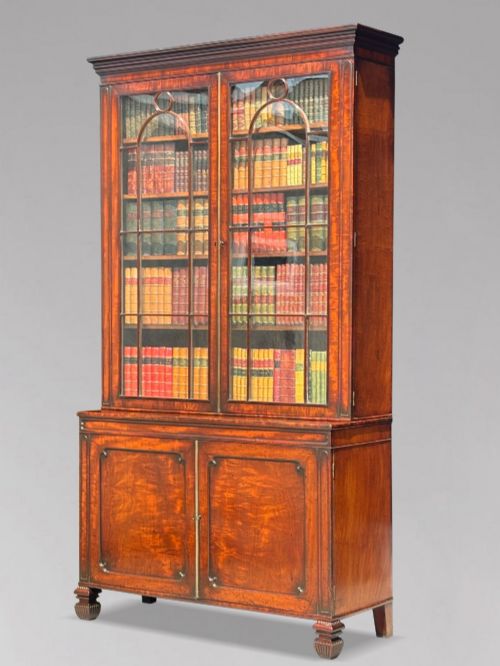
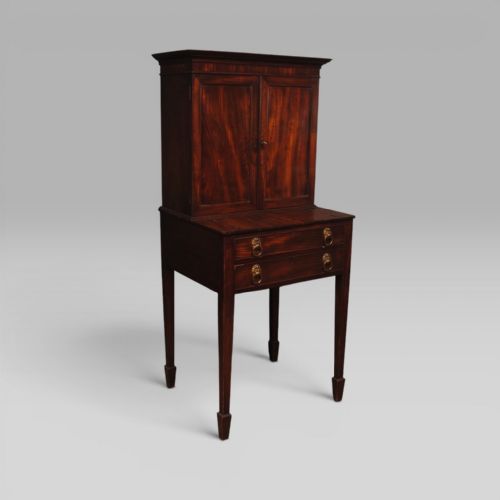
Buyers encounter variations ranging from diminutive desks to tall breakfront library bookcases and writing cabinets on stands. Oak examples also appear alongside the finer mahogany and satinwood forms.
How george iii secretary furniture was constructed
Cabinetmakers utilised solid mahogany, oak, and satinwood, frequently applying highly figured flame mahogany veneer to primary surfaces. Brass handles, escutcheons, and hinges punctuate the exterior alongside glass panes fitted within upper bookcase doors.
The internal writing compartments integrate leather writing surfaces inset into the fall-front or secretaire drawer. Advanced cabinetmaking techniques secured the pigeonholes, small drawers, and secret compartments hidden within the fitted interiors.
What determines quality in a george iii secretary
The choice of timber creates a primary distinction, particularly the degree of figuring in flame mahogany veneers and the crispness of satinwood inlay. Superior examples display consistent grain matching across the fall front and drawer fronts.
Structural integrity and the retention of untouched original surfaces separate exceptional pieces from heavily restored items. The sophistication of the internal fitments, such as secret drawers and finely dovetailed pigeonholes, dictates the standing of the desk.
Thomas Chippendale·Gillows
The George III Secretary Glossary
- Secretaire
- A desk or writing cabinet featuring a pull-out drawer with a drop front that conceals fitted pigeonholes and small drawers. This mechanism allows the piece to function as a writing desk while maintaining the external appearance of a chest of drawers.
- Bureau bookcase
- A dual-purpose furniture form comprising a lower writing bureau and an upper shelved bookcase enclosed by doors. These taller pieces provide substantial storage for books and writing materials.
- Flame mahogany
- A veneer cut from the fork of the mahogany tree where the branch joins the trunk, producing a distinctive, fiery wave pattern. Cabinetmakers utilised this timber on prominent surfaces for decorative impact.
- Fall front
- A hinged writing flap that drops down to a horizontal position to create a writing surface. It conceals the internal compartments when closed.
- Bonheur du jour
- A light lady's writing desk featuring a small cabinet or set of shelves on the top. These decorative pieces appeared later in the nineteenth and early twentieth centuries.
George III Secretary: Frequently Asked Questions
What is a george iii secretary?
A george iii secretary is an eighteenth-century or nineteenth-century writing cabinet featuring a fall-front desk or a specialised secretaire drawer paired with an upper bookcase or shelving unit.
These pieces served as functional workstations and status items in wealthy homes, designed for correspondence and the storage of bound volumes.
How do I identify periods?
Period identification relies on examining timber selection, secondary woods like oak, brass hardware styles, and construction methods such as hand-cut dovetails. Eighteenth-century pieces typically exhibit heavier proportions and particular veneer choices compared to later nineteenth-century interpretations.
Stylistic cues such as Chippendale influences or Sheraton inlay help narrow the date of manufacture alongside structural evidence found inside the drawers.
Where were these placed?
These pieces traditionally stood in libraries, parlours, or private studies where the household correspondence and book collections were kept. Their dual function made them central items for daily administrative tasks.
Modern interiors accommodate them in living rooms, studies, and hallways where their vertical proportions utilise wall space effectively.
How do I care for mahogany?
Maintaining mahogany and satinwood furniture requires stable indoor humidity and protection from direct sunlight to prevent the timber and veneers from drying out or fading. Gentle dusting with a dry cloth preserves the polished finish.
Application of traditional wax polish occasionally helps nourish the wood and maintain the lustre of flame mahogany surfaces.