




George III Night Cupboard
A george iii night cupboard is a practical piece of Georgian furniture that brings discreet storage and handsome mahogany timber to the bedside.
George III Night Cupboard
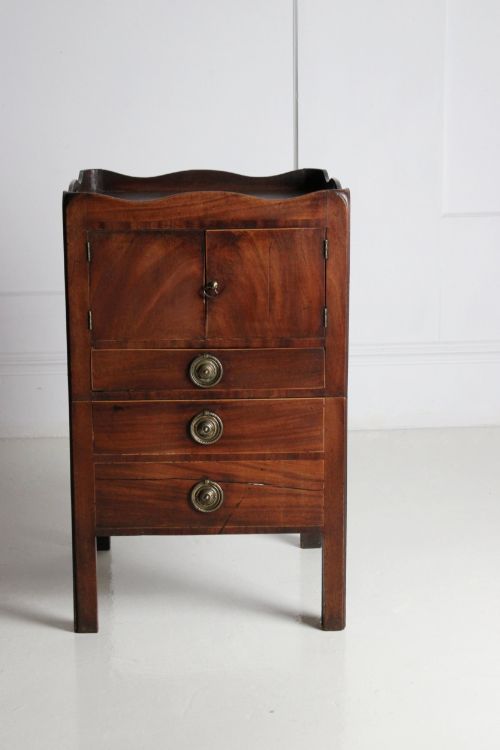
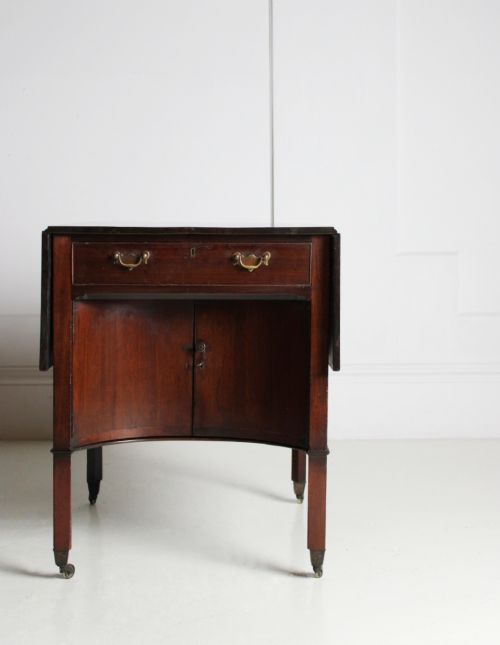
A george iii night cupboard is a compact piece of furniture designed for the bedroom, appearing in forms such as bedside cabinets, commodes, and night stands. These pieces belong to the Georgian and 18th century periods, carrying the proportions and utilitarian purpose of the era.
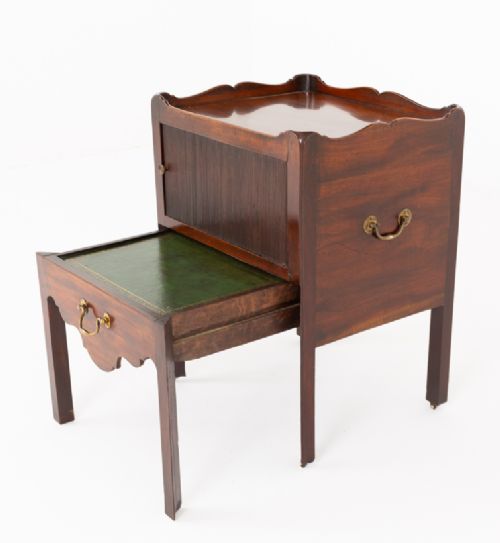
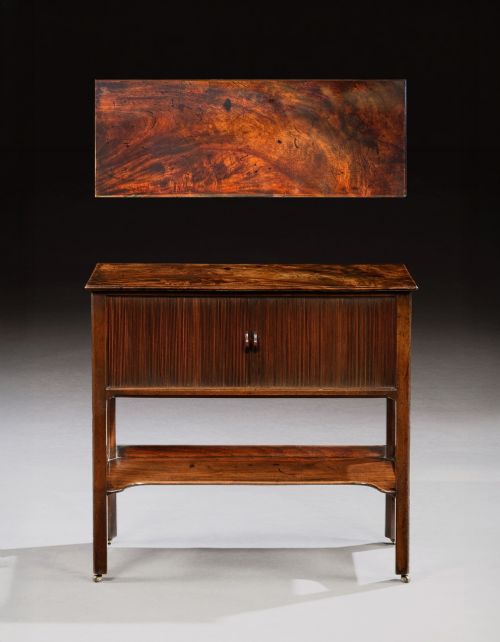
The versions most commonly met on this page are constructed from mahogany, sometimes featuring flame mahogany veneer or satinwood and boxwood inlay. Cabinets and commodes often incorporate tambour doors or tray tops to contain bedside items safely.
Makers of the period produced these cupboards as functional bedside tables and side cabinets rather than grand display items. Their compact footprints and enclosed storage make them versatile additions to contemporary bedrooms as well as traditional interiors.
Assessing quality and craftsmanship
The distinction between standard examples and top-tier pieces rests on the choice of timber and the precision of the cabinetwork. Grain selection in the mahogany, particularly the use of figured or flame veneer, signals an elevated commission.
Subtleties such as serpentine fronts, delicate boxwood inlay, and smoothly operating tambour mechanisms indicate superior workshop execution. The crispness of the mouldings and the integrity of the original brass fittings further separate ordinary bedside cabinets from exceptional ones.
Listings feature mahogany, satinwood, boxwood inlay, and canvas, spanning the Georgian period and the 18th, 19th, and early 20th centuries.
The George III Night Cupboard Glossary
- Tambour
- A flexible shutter made of narrow vertical strips of wood glued to canvas, allowing curved cupboard doors to slide open smoothly. This clever mechanism prevents doors from swinging outward in confined bedroom spaces.
- Commode
- A low enclosed cabinet or chest of drawers. In this context, it often denotes a bedside cupboard designed to house a chamber pot.
- Tray top
- A raised rim around the upper surface of a table or cabinet. This feature prevents items from rolling off the edges.
- Serpentine front
- A furniture front characterised by a wavy contour, curving outward in the centre and inward at the sides. It demands high joinery skill to shape accurately from solid timber.
- Satinwood
- A lustrous hardwood with a yellowish golden colour, frequently used for contrasting stringing and inlay on mahogany furniture. Its bright tone adds visual lightness to dark timber surfaces.
George III Night Cupboard: Frequently Asked Questions
What is a george iii night cupboard?
A george iii night cupboard is an 18th-century bedside cabinet built to conceal a chamber pot or store nighttime necessities. They typically feature enclosed lower cupboards with doors, drawers, or tambour shutters.
Cabinetmakers constructed them primarily in mahogany, often incorporating tray tops or pull-out shelves. Today, buyers use them as compact bedside tables that offer practical enclosed storage.
How do I use one in a modern bedroom?
These cupboards serve as bedside tables where enclosed storage is preferred over open shelving. Their compact footprint fits well beside standard bed heights while hiding books, reading glasses, and charging cables.
The flat or tray tops provide a secure surface for a bedside lamp and a glass of water. Their traditional timber finishes add warmth and texture to contemporary bedroom schemes.
What materials were used?
Solid mahogany is the predominant timber found across these pieces, frequently paired with mahogany veneers for drawer fronts and cupboard doors. Finer examples incorporate satinwood and boxwood inlay for decorative contrast.
Hardware is typically brass, including small ring handles, knobs, and hinges. Canvas backing often supports the wooden slats of sliding tambour doors.
How do I identify a genuine period piece?
Genuine period pieces display construction methods consistent with the 18th century, such as hand-cut dovetails on drawer linings and timber shrinkage appropriate to age. Look for secondary woods like oak or pine inside the carcase.
Design characteristics like serpentine fronts, tray tops, and tambour shutters align with Georgian cabinetmaking conventions. Original brass hardware and patinated mahogany surfaces also support period authenticity.