
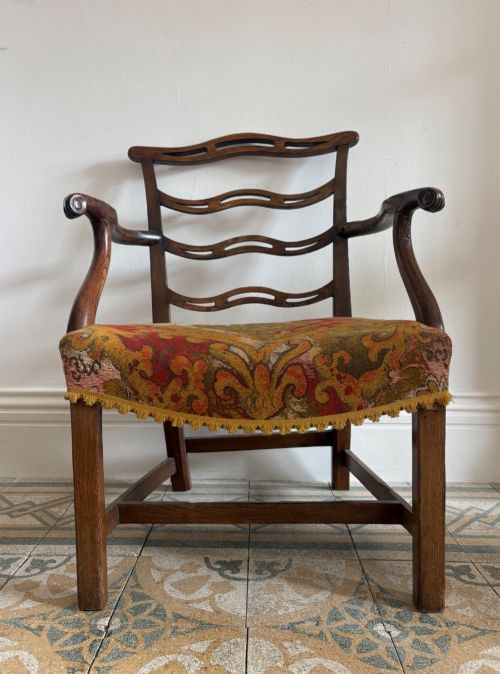
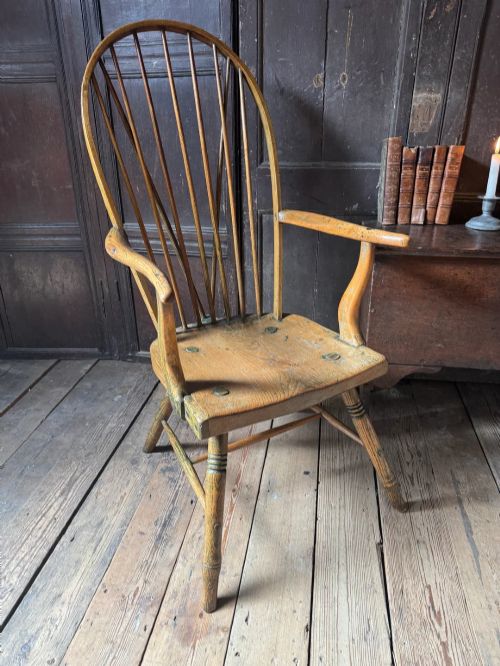
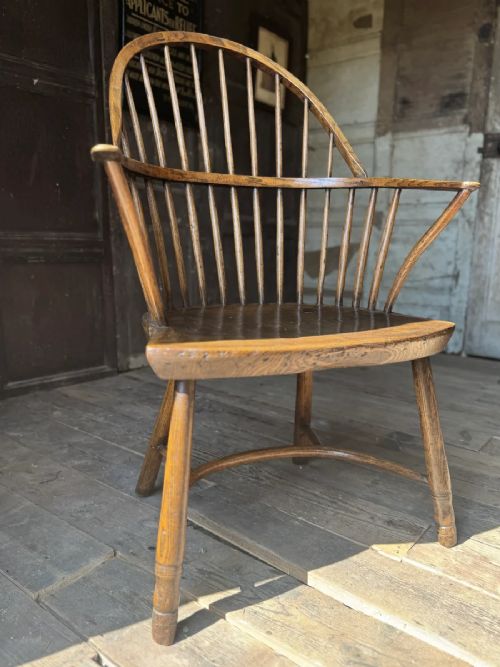
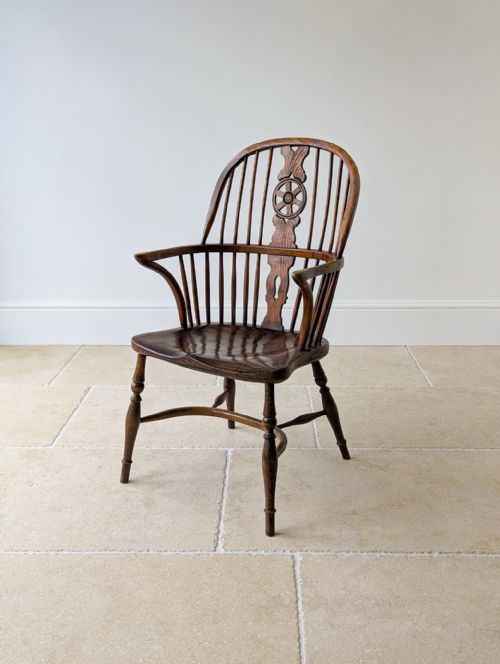
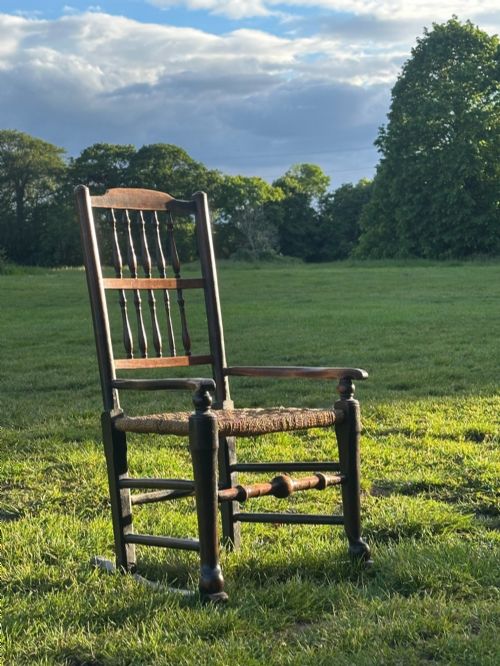


George III Elm Armchair
A george iii elm armchair brings provincial character and honest regional craftsmanship into a room.
George III Elm Armchair
The version most commonly met on this page is the Windsor chair, typically pairing a solid elm seat with ash spindles and hoops. Makers often utilised local timbers such as fruitwood, yew, or oak alongside elm to build functional seating for country houses and farmhouses.
How they were made
Elm provides the thick, saddled wooden seats of these chairs, chosen for its interlocking grain that resists splitting when shaped and drilled. Ash and fruitwood supply the turned legs, arms, and uprights, while rush or tapestry fabric sometimes furnishes the drop-in seats of open armchairs.
Makers constructed Windsor and ladderback forms using traditional pegged joinery and steam-bent components. Iron reinforcement or crinoline stretchers frequently strengthen the underframe of regional Windsors.
Some chairs incorporate child-sized proportions and rocking mechanisms for smaller household members.
What varies in quality
The distinction between standard provincial work and superior pieces lies in the sculptural ambition of the turning and the depth of the saddle seat. Thicker, deeply sculpted elm seats and well-figured grain elevate a chair above plain utility.
The George III Elm Armchair Glossary
- Windsor chair
- A chair built with a heavy solid wooden seat into which the legs and back spindles are separately tenoned. This construction method defines many regional country chairs.
- Crinoline stretcher
- An arched underframe connecting the legs of a Windsor chair to provide stability. It gets its name from the hooped shape resembling a nineteenth-century petticoat frame.
- Ladderback
- A chair back constructed from horizontal arched slats set between two upright posts. This traditional form often appears on simple open armchairs.
- Saddle seat
- A wooden chair seat shaped with hollows and dips to fit the human form. Elm is particularly suited to this deep carving because of its tough grain.
George III Elm Armchair: Frequently Asked Questions
What is a Windsor armchair?
A Windsor armchair is a seat built with a solid wooden plank base into which the legs and back spindles are driven directly. This sturdy construction creates a durable chair suited to daily use in country houses and cottages.
Most examples pair an elm seat with ash or fruitwood components, resulting in varied regional styles from different parts of Britain.
How do I date an elm armchair?
Dating relies on observing construction methods, tool marks, and stylistic clues recorded in the woodwork. Pieces from the period often show hand-turned spindles and pegged joints rather than modern fasteners.
Regional variations and timber choices also help place a chair within the late eighteenth or early nineteenth century.
Where were these chairs made?
These chairs originated in rural workshops across various British regions including the West Country, Lancashire, Cheshire, and Scotland. Local cabinet makers and bodgers utilised whatever native timbers grew nearby.
This regional independence explains the distinct differences in turning styles and back designs found across different counties.
Can I use an antique armchair daily?
These practical seats were built for robust everyday use in farmhouses and provincial homes. Their solid construction makes them resilient furniture for modern living spaces.
Placing them away from direct heat sources helps preserve the antique elm and ash timbers over time.