

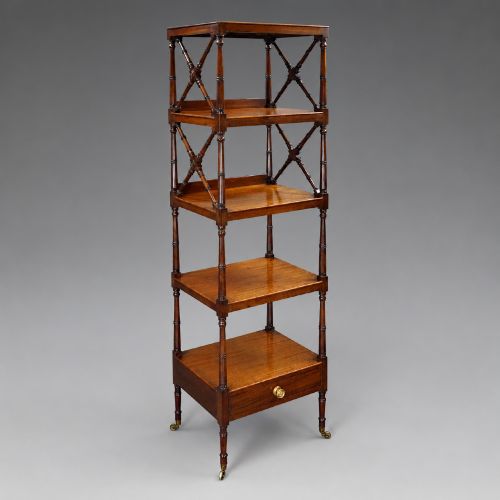
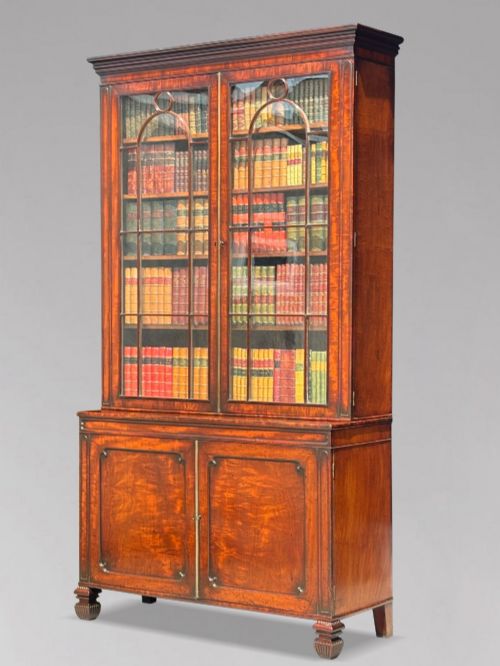
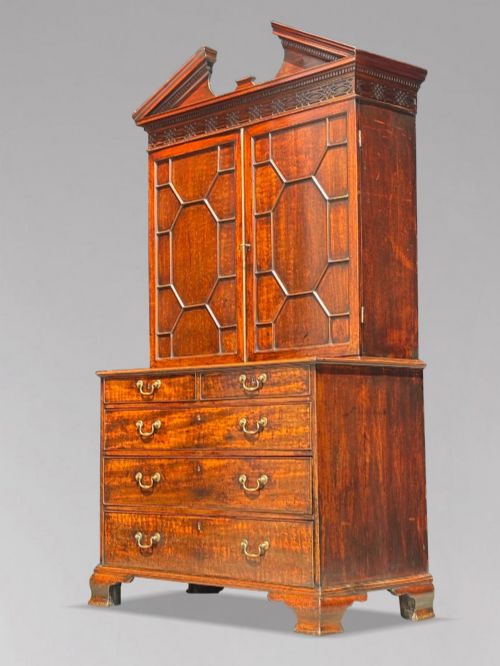
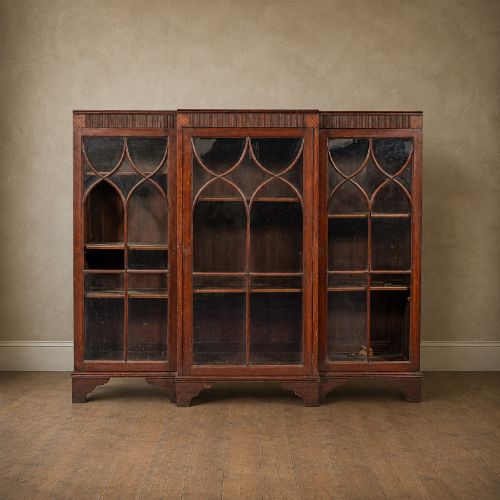


George III Display Bookcase
A george iii display bookcase brings architectural scale and figured timber into a room, offering glazed upper sections for display and fitted lower cabinets for storage.
George III Display Bookcase
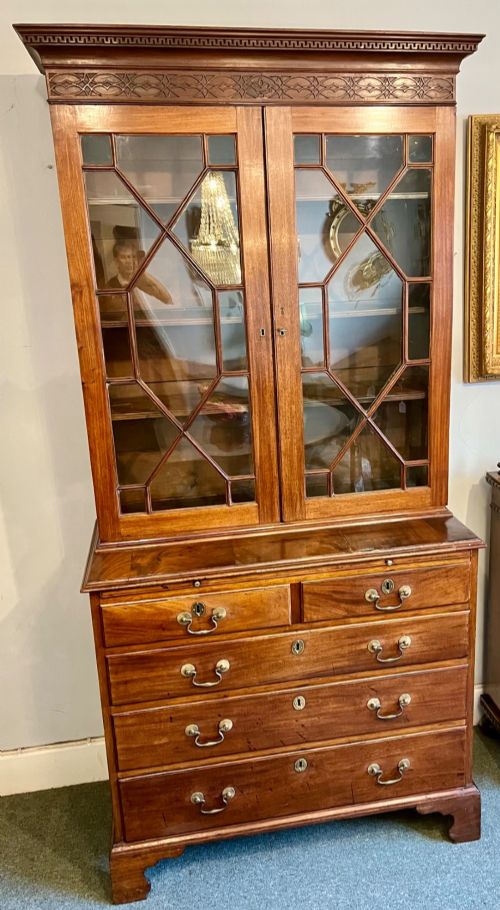
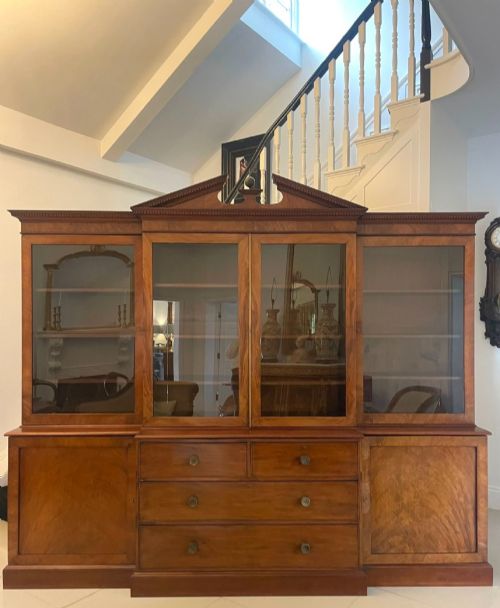
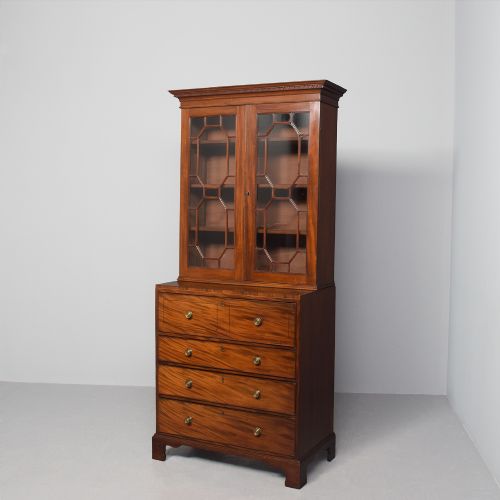
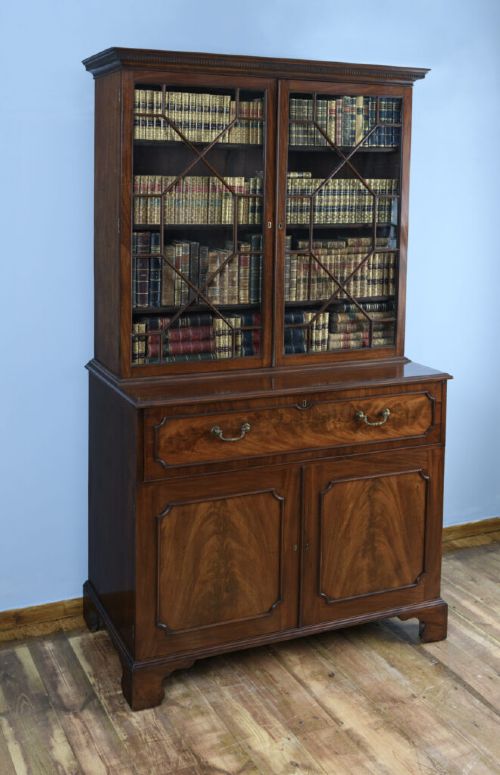
A george iii display bookcase spans grand breakfront library pieces and smaller secretaire cabinets, originating principally from the Georgian period through to the late eighteenth century. Buyers seek these forms for their balanced proportions, architectural cornices, and glazed upper doors designed to showcase collections of books or porcelain.
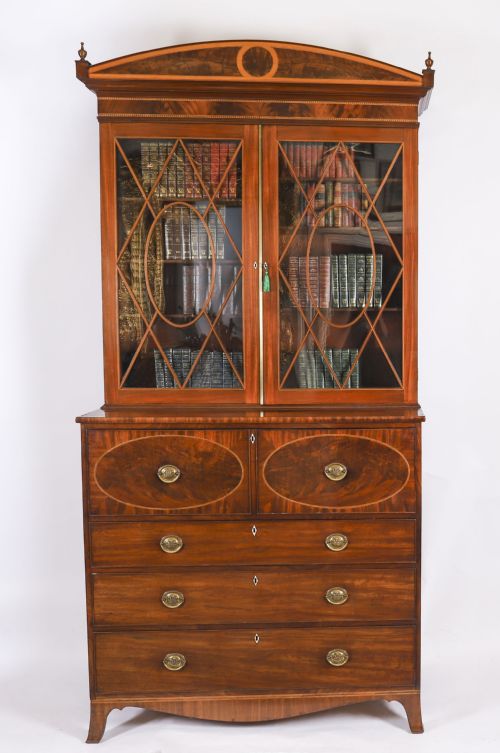
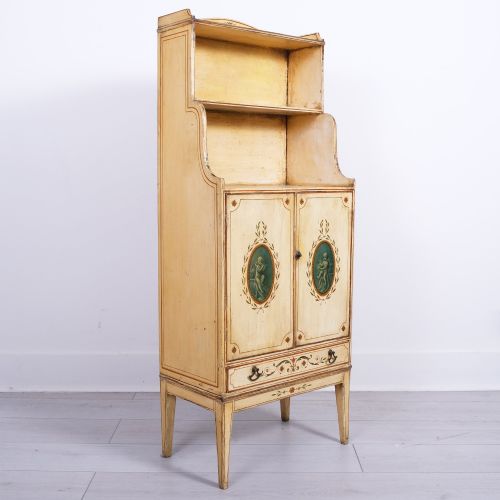
The pieces appearing most frequently range from tall breakfront library bookcases in solid and figured mahogany to refined secretaire bookcases featuring fitted writing drawers. Alongside these sit occasional variations including hanging shelves, corner display cabinets, and waterfall bookcases in painted wood or satinwood.
Materials and Construction
Makers relied heavily on mahogany as the principal structural timber, often selecting flame mahogany veneers for drawer fronts and cupboard doors to create striking natural patterns. Secondary woods such as oak provide sturdy interior framing, while brass hardware secures doors and supports adjustable shelving.
Glazing bars divide the upper doors into precise geometric lights, allowing maximum visibility into the shelved interior. Inlaid details utilise satinwood and marquetry techniques to add contrasting borders and decorative motifs around panels and cornices.
George III Display Bookcase Retail Price Guide 2026
Typical asking prices for george iii display bookcase among the pieces listed under this phrase on Sellingantiques today, from the lower quarter to the upper quarter. They describe what is for sale here now, not the wider market.
Listings feature mahogany, satinwood, oak, and painted wood alongside brass hardware and glazed display sections.
Gradations in Quality
The distinction between standard cabinetwork and exceptional pieces rests upon timber selection and the ambition of the architectural detailing. Superior examples employ deeply figured flame mahogany matched across symmetrical door panels, paired with finely carved cornice mouldings and original brasses.
Interior execution further defines the tier of a piece, separating basic shelving from elaborate secretaire drawers fitted with pigeonholes, secret compartments, and contrasting satinwood inlays. The crispness of the glazing bar joints and the retention of original glass panes distinguish museum-standard examples from later alterations.
Thomas Chippendale·Gillows
The George III Display Bookcase Glossary
- Breakfront
- A cabinet design where the central section projects forward from the flanking wings, adding architectural depth to large bookcases.
- Secretaire
- A cabinet incorporating a pull-down writing drawer fitted with small drawers and pigeonholes behind a fall-front panel.
- Flame mahogany
- A decorative veneer cut from where a branch joins the main trunk, producing a characteristic rippled flame pattern.
- Glazing bar
- A slender wooden strip holding individual panes of glass within a cabinet door, often shaped in geometric or Gothic patterns.
George III Display Bookcase: Frequently Asked Questions
How do I distinguish a secretaire bookcase?
A secretaire bookcase includes a dedicated writing drawer with a drop-front panel that conceals a fitted interior of small drawers and pigeonholes, sitting beneath the upper display section.
This dual function combines a standard library bookcase with a bureau desk, making it a versatile piece of working furniture.
How should I care for mahogany timber?
Maintain mahogany furniture by keeping it away from direct sunlight and sudden temperature shifts that can dry out the historic timber and veneer.
Apply a microcrystalline wax occasionally to nourish the surface, avoiding silicone-based polishes that build up over time.
Are the glass panes original?
Original glass panes often display minor surface ripples, tiny air bubbles, and slight thickness variations characteristic of eighteenth-century manufacturing methods.
Examining the glazing bars from the interior can also reveal whether the glass has been replaced during repairs.