
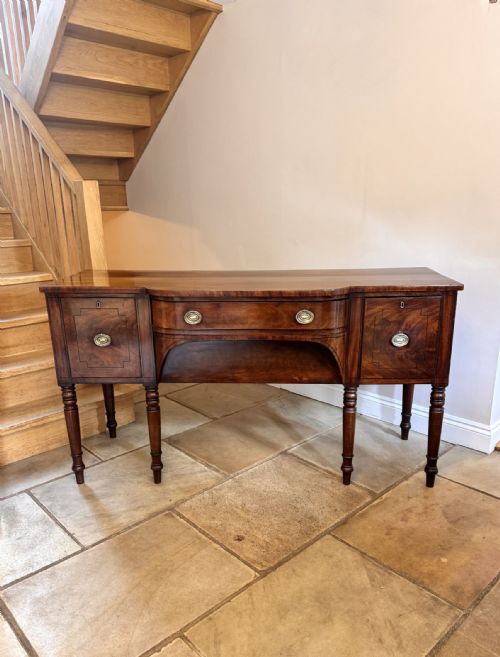
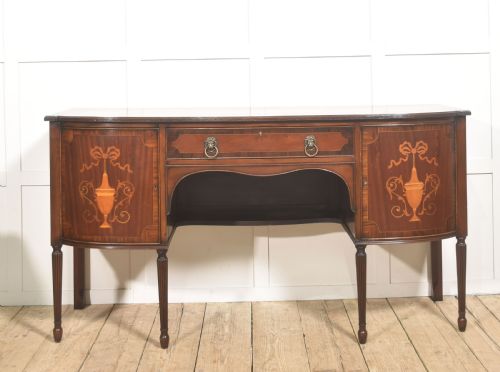
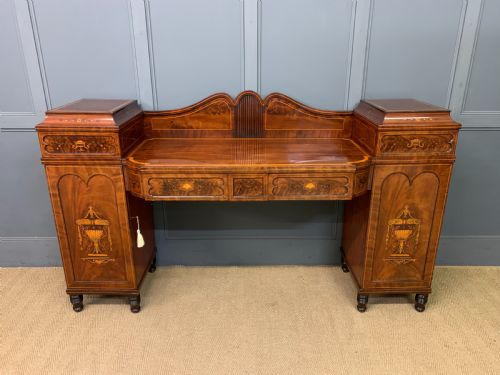


George III Dining Room Server
A george iii dining room server brings architectural presence and formal proportion to a traditional interior, offering refined storage for dining service.
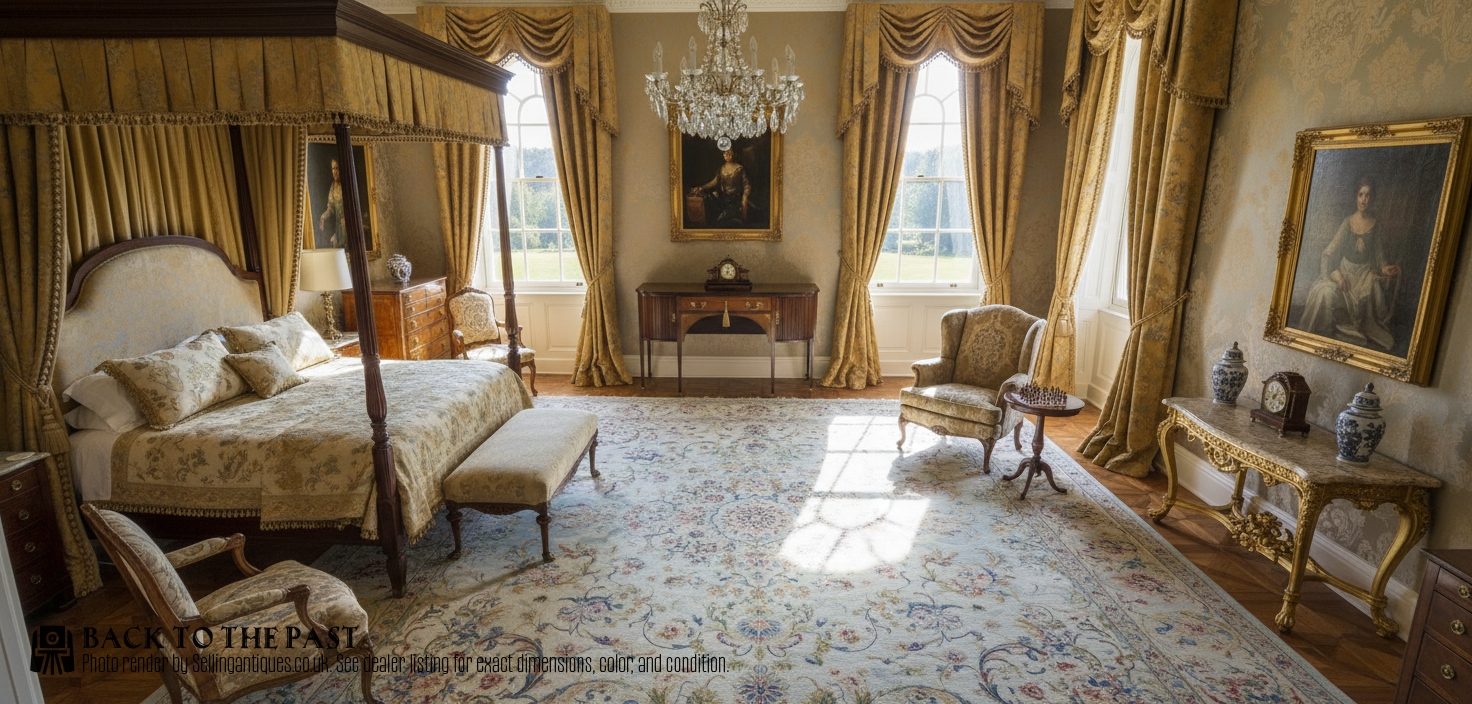
George III Dining Room Server
When you search for a george iii dining room server, you encounter formal dining furniture designed for elite households during the Georgian period and the late eighteenth century. These pieces encompass sideboards, serving tables, and multi-tiered dumb waiters built to assist with grand meals.
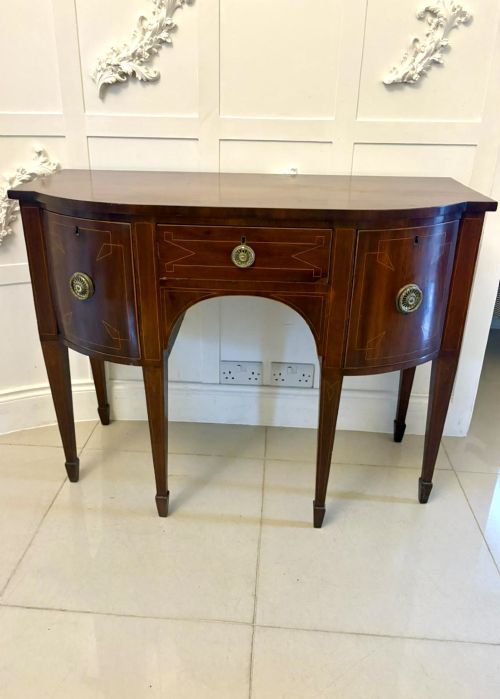
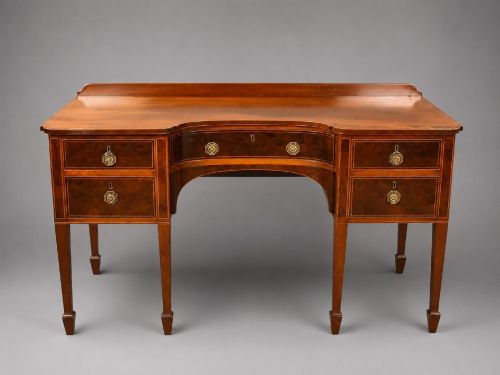
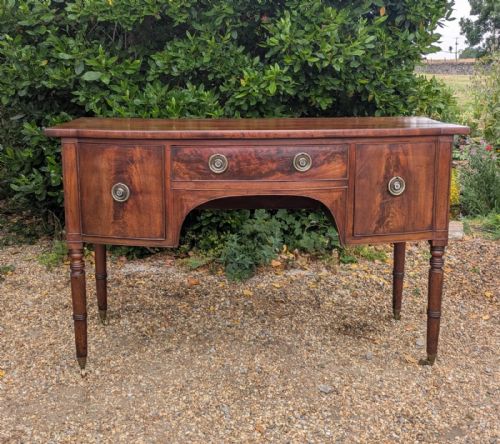
The version you are most likely to meet on this page is a mahogany sideboard or serving table, often featuring a serpentine or bow front. Many examples incorporate inlaid decoration or boxwood stringing, reflecting the influence of Sheraton design.
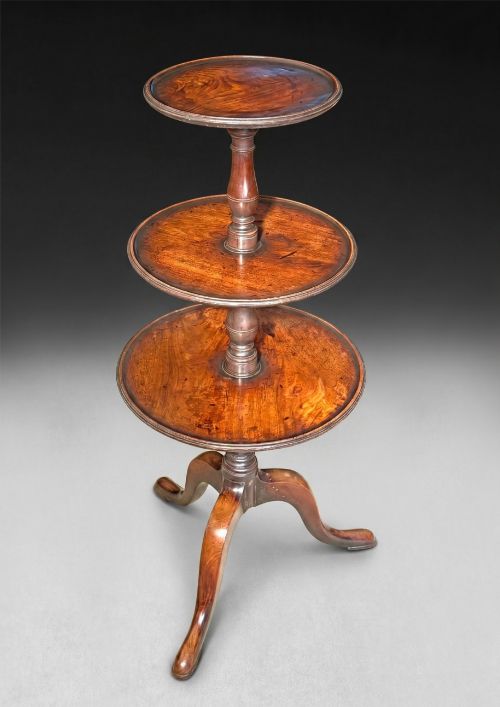
Beyond standard sideboards, the selection includes occasional pieces such as three-tier dumb waiters in solid mahogany. These auxiliary tables provided accessible tiered surfaces for serving wine and dishes during prolonged dining occasions.
Materials and Construction
Makers relied primarily on mahogany, frequently selecting flame mahogany and figured veneers to create dramatic visual movement across large drawer fronts and top surfaces. Solid timber formed the structural frames, legs, and shaped framing components.
Decorative surface enrichment relied on contrasting timbers such as satinwood and boxwood. Craftsmen utilised fine stringing and detailed inlay work to define borders, edge panels, and central motifs without compromising structural integrity.
Tiered dumb waiters let eighteenth-century guests refill their own glasses while servants took a quiet breather.
Distinctions in Quality
The upper tier of these dining room pieces is distinguished by the selection of timber figures, where symmetrical flame mahogany veneer and crisp boxwood inlay demonstrate superior cabinetmaking ambition. Finer examples balance elaborate serpentine or demi-lune curves with restrained proportions.
Construction nuance separates standard utility pieces from exceptional works, visible in the precision of dovetailed drawer boxes and the retention of original brass hardware. The depth of colour and surface patina acquired over centuries further elevate the standing of an individual server.
The George III Dining Room Server Glossary
- Serpentine front
- A furniture front characterised by a wavy contour with a convex centre flanked by concave curves. This shaping required advanced woodworking skill to match veneers smoothly.
- Dumb waiter
- A freestanding piece of furniture featuring multiple graduated circular tiers rotating or fixed upon a central pillar. These served as convenient auxiliary storage beside the dining table.
- Boxwood stringing
- A narrow line of light-coloured boxwood inlaid into channels cut into darker mahogany surfaces. It provides sharp linear contrast around drawer perimeters and tabletops.
- Flame mahogany
- A highly figured grain pattern derived from the junction of tree branches, resembling flickering flames. Cabinetmakers reserved this prized timber for prominent exterior panels.
- Demi-lune
- A half-moon or semicircular shape applied to serving tables and sideboards designed to stand flush against dining room walls.
George III Dining Room Server: Frequently Asked Questions
What is a george iii dining room server?
A george iii dining room server is a formal piece of antique furniture built during the late eighteenth century to facilitate the serving of food and wine.
These items primarily include sideboards, serving tables, and dumb waiters designed to stand against dining room walls and hold serving vessels.
How were these servers used originally?
In period dining rooms, these servers functioned as staging areas for dishes, silverware, and decanters before servants placed them on the main dining table.
Tiered dumb waiters specifically allowed diners to help themselves to wine and side dishes without constant servant intervention.
How do I identify a george iii piece?
Authentic pieces from this era typically exhibit dense mahogany timbers, hand-cut dovetail joinery, and period-appropriate decorative elements like satinwood inlay or boxwood stringing.
Proportions remain classical and formal, aligning with Georgian design principles and the specific influence of Sheraton cabinetmakers.
How do I care for antique mahogany?
Protect antique mahogany surfaces by keeping them away from direct sunlight and extreme fluctuations in household humidity.
Apply traditional beeswax periodically to nourish the wood and maintain the rich natural patina built up over generations.