




George III Country Dresser
A george iii country dresser brings honest timber and timeless utility into a modern home, offering both display space and deep storage.
George III Country Dresser
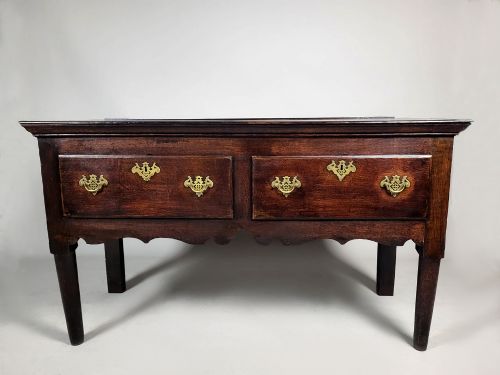
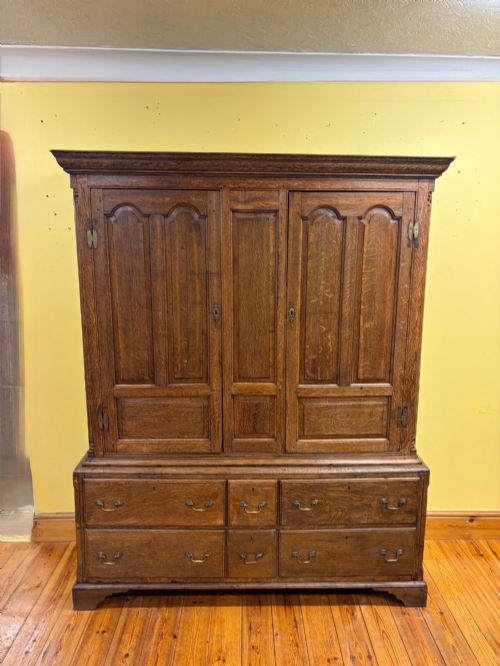
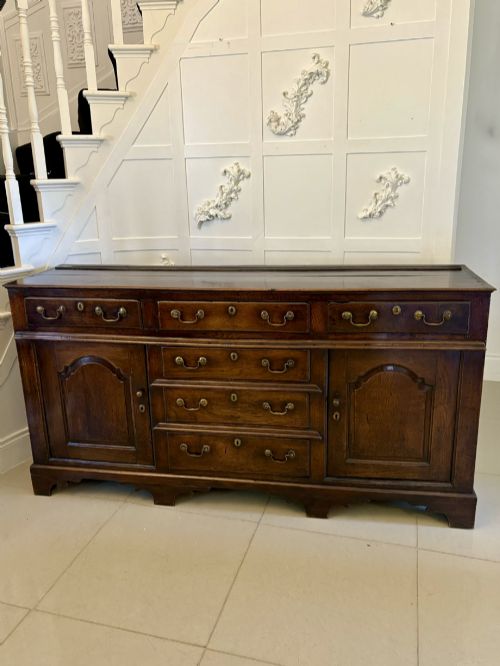
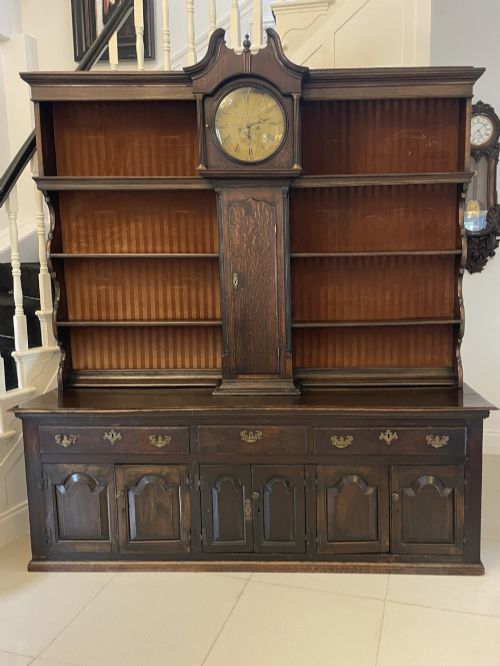
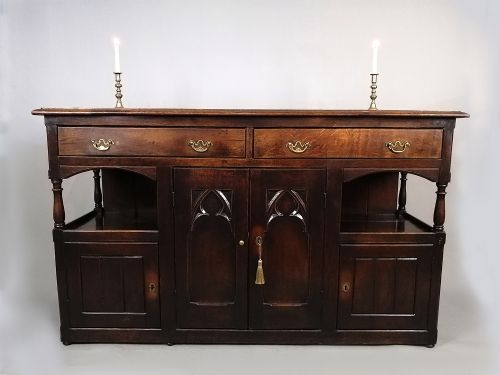
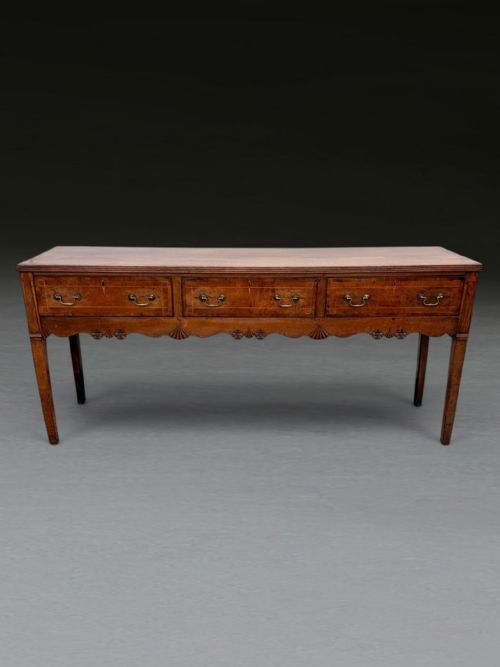
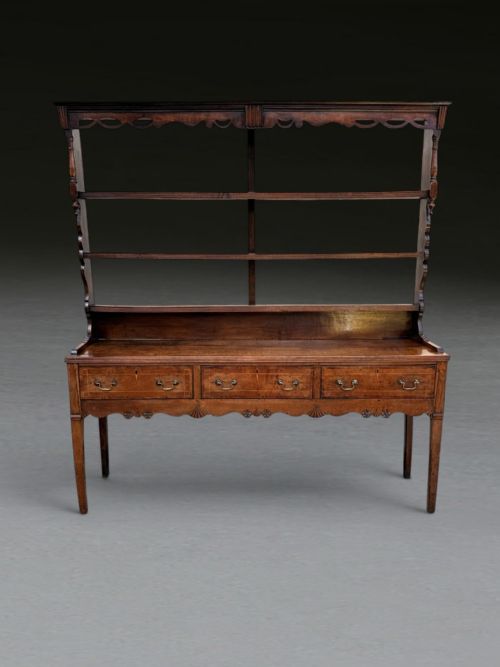
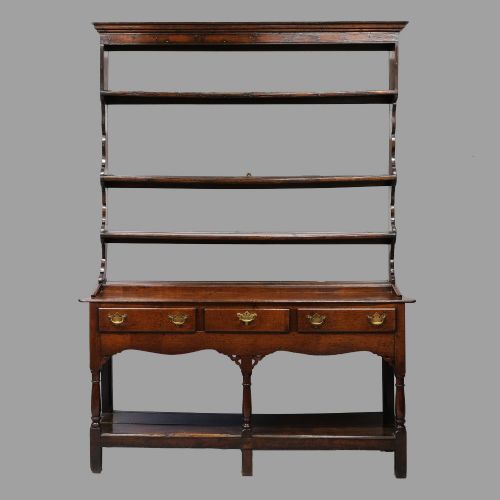
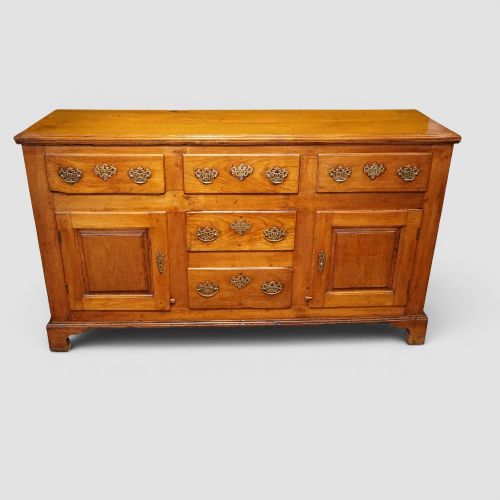
A george iii country dresser is a sturdy domestic storage piece designed for daily use in regional homes during the Georgian era. These items combine open plate racks or enclosed upper cupboards with practical lower drawer bases and potboards.
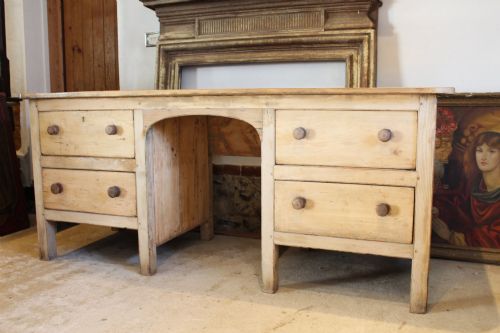
Buyers also encounter related forms including housekeeper cupboards, wall racks, and occasional hybrid desk configurations. Each piece provides a tangible link to domestic life in the Georgian countryside.
Materials and Construction
Makers relied primarily on native oak, supplemented by secondary timbers such as pine, fruitwood, and sycamore for internals and regional details. Iron and brass hardware, including original brasses and drop handles, secured doors and drawers.
Construction methods involved traditional joinery, pegged framing, and panelled doors built to withstand heavy daily use in busy farmhouse kitchens. Surfaces were finished simply, allowing the grain of the timber to develop a rich patina over centuries of service.
George III Country Dresser Retail Price Guide 2026
Typical asking prices for george iii country dresser among the pieces listed under this phrase on Sellingantiques today, from the lower quarter to the upper quarter. They describe what is for sale here now, not the wider market.
The inventory spans the eighteenth and nineteenth centuries, featuring Georgian styles alongside occasional Gothic revival influences.
Judging Quality and Character
Quality in these pieces rests upon the integrity of the timber, the retention of original brasses, and the survival of matching upper racks. Pieces that retain their early surface patination and structural honesty command greater interest from collectors.
Proportion and regional styling dictate visual success, ranging from simple provincial work to ambitious designs incorporating inlay or Gothic revival motifs. The balance between base and rack, alongside minimal timber replacement, defines the better examples.
The George III Country Dresser Glossary
- Potboard
- An open slatted lower shelf beneath a dresser base designed for storing heavy pots and pans. This open tier sits directly above the floor.
- Welsh Dresser
- A traditional form featuring a plate rack fixed to the top of a drawer base for displaying ceramic tableware. The upper shelves allowed everyday dishes to dry and remain within reach.
- Dog Kennel Dresser
- A regional furniture type featuring a central recessed arch or cupboard space flanked by banks of drawers. This distinctive lower section creates a kennel-like opening in the centre.
- Plate Rack
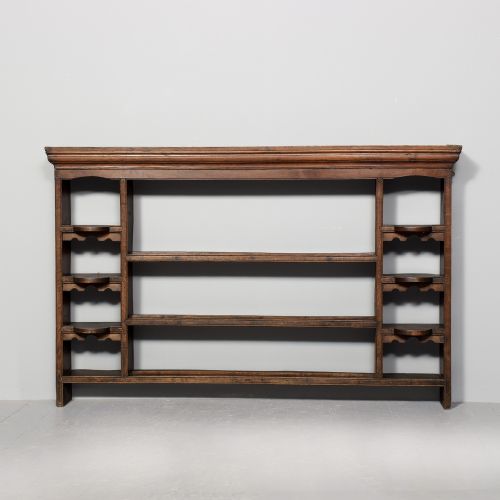
- A wall-hanging or top-mounted shelving unit fitted with grooved plate rails and vertical slats. It holds plates upright for safe display and storage.
- Provincial
- A term describing items made in regional workshops outside London, displaying local vernacular traits. These pieces often utilise native woods and straightforward construction methods.
George III Country Dresser: Frequently Asked Questions
How do I clean an antique oak dresser?
Maintenance requires only a soft cloth and occasional applications of traditional beeswax to nourish the dry timber. Avoid modern silicone sprays or excessive moisture which can damage the historic surface.
Keeping the piece away from direct heat sources prevents the old oak from splitting or warping. Gentle care preserves the natural patination built up over centuries.
Are dresser racks always original to the base?
Many surviving pieces were separated from their original plate racks during centuries of domestic reconfiguration. Finding a married pair or a matched wall rack is common in country furniture.
Examining the timber species, peg construction, and wear patterns helps determine if the top and bottom belong together. Even with matched components, a cohesive ensemble functions well in a modern setting.
Where were country dressers originally used?
These items stood in the kitchens and pantries of farmhouses and rural country houses across Britain. They served as central workstations for food preparation and storage.
Plates, utensils, and dry goods found a convenient home within the drawers and racks. Modern interiors adapt these functional workspaces into dining rooms and kitchens for everyday storage.