
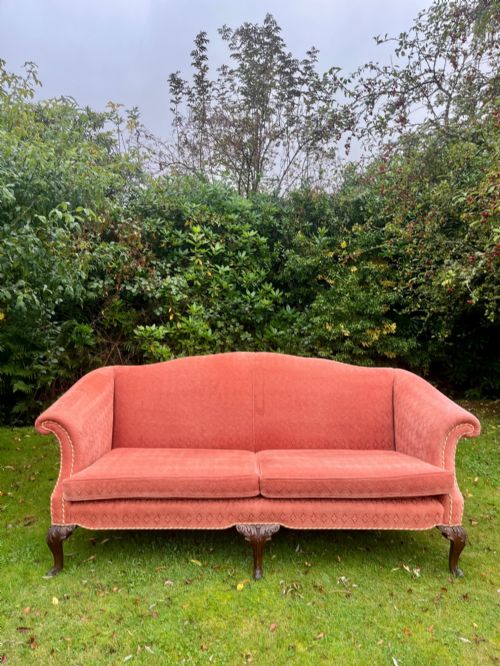


George III Couch
A george iii couch brings the sculptural lines of the Georgian period straight into a modern sitting room.
George III Couch
A george iii couch sits firmly in the Georgian tradition, taking forms such as the camel back and the serpentine settee. These pieces are built for drawing rooms and formal spaces, offering deep seating wrapped in period upholstery.
The versions most commonly met here span the eighteenth century alongside later interpretations like Edwardian pieces and mid-twentieth-century revivals. Each example balances structural timber with traditional stuffing and fabric covers.
Makers from this tradition include Gillows and Co, known for fine cabinet work in rosewood and mahogany. Buyers encounter everything from authentic eighteenth-century frames to later styles that echo the original aesthetic.
How they were made
Frames rely on solid mahogany and timber, carved with precision by period cabinet makers. Structural integrity comes from traditional joinery supporting the sweeping back rails and arm supports.
Upholstery methods utilise layers of horsehair and canvas secured over webbing, giving the seat its firm traditional profile. Top layers of fabric and damask finish the piece, often applied during later restorations.
Early makers stuffed these grand frames with actual horsehair, ensuring your antique couch comes with a truly authentic equestrian pedigree.
What varies in quality
The refinement of the carving separates standard workshop output from exceptional cabinet work. Sharp detail along the frame and well-proportioned camel backs indicate higher ambition in the original design.
The purity of the timber grain and the integrity of the surviving frame structure determine the standing of each couch. Retaining original wood surfaces without excessive modern intervention elevates the piece.
Gillows and Co
The George III Couch Glossary
- Camel back
- A sofa back featuring a graceful undulating curve that rises smoothly towards the centre. This profile became a hallmark of eighteenth-century seating design.
- Serpentine front
- A front rail that curves gently outward in the middle and inward at the sides. It creates a fluid, organic silhouette on larger settees.
- Horsehair
- Traditional stuffing material packed beneath the canvas to build firm and resilient upholstery. It provides the authentic support found in period furniture.
- Damask
- Patterned woven fabric traditionally used for rich upholstery finishes. It adds texture and visual depth to formal seating pieces.
George III Couch: Frequently Asked Questions
What defines a george iii couch?
A george iii couch is characterised by eighteenth-century proportions, serpentine fronts, and carved timber frames. These seating pieces reflect the distinct design movements of the Georgian era.
They often feature camel back profiles supported by mahogany legs and traditional internal stuffing. The style bridges formal drawing-room utility with refined cabinet craftsmanship.
How were these couches used?
These pieces served as formal seating in grand reception rooms and parlours. They provided comfortable seating for multiple people during social calls and evening gatherings.
Over time, many have been reupholstered to suit contemporary drawing rooms while retaining their original eighteenth-century frames.
How do I live with one?
Place the couch away from direct sunlight to protect antique timber and sensitive upholstery fabrics like damask. Ensure the frame rests evenly on level flooring to prevent strain on historical joinery.
Pair the piece with neutral surroundings to let the carved mahogany and serpentine lines stand out as a room's focal point.
How do I tell periods apart?
Eighteenth-century originals display hand-cut joinery and aged timber patination developed over centuries of use. Later revivals from the Edwardian era or the mid-twentieth century show different tool marks and secondary woods.
Examining the internal webbing, canvas, and horsehair stuffing often reveals clues about past upholstery updates and structural alterations.