
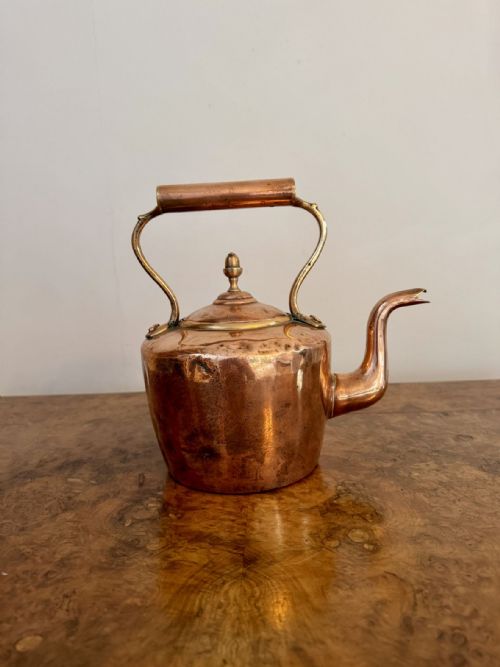


George III Copper Pot
A George III copper pot brings heavy gauge metal and traditional hearth utility straight into a modern interior.
George III Copper Pot
When you search for a george iii copper pot, you are looking at utilitarian kitchenware from the Georgian period, specifically around eighteen hundred. These pieces span heavy cooking pots, lidded vessels, saucepans, and kettles designed for open hearths and early stove use.
The selections on this page show domestic kitchen metalwork produced in various sizes, ranging from small kettles to large pans and shaped pots. Most examples combine copper body construction with brass or iron fittings, reflecting the practical requirements of period food preparation.
Materials and construction methods
These vessels rely on heavy gauge copper hammered or shaped into form, often paired with contrasting brass or wrought iron handles and fittings. The metalwork shows the hand-finished character typical of Georgian metalworking techniques before industrial mass production took over entirely.
Internal surfaces and structural joins utilise tin lining and traditional fastening methods to ensure durability for heavy kitchen tasks. Wood elements occasionally appear on handles, providing insulation against heat during use on the hearth.
Listings feature copper, brass, iron, wrought iron, wood, and tin across Georgian and nineteenth century pieces.
Distinctions in craftsmanship and scale
The distinction between ordinary kitchenware and superior examples lies in the thickness of the copper sheet and the integrity of the hand-shaped form. Larger pieces and lidded pots with well-preserved brass or iron attachments show a higher standard of period metalwork.
Proportion and surface finish also set pieces apart, with superior vessels retaining their balanced shape and clear maker marks or stamps. The presence of original fitted lids and sturdy handles indicates better survival through centuries of domestic service.
Liptons
The George III Copper Pot Glossary
- George III
- The period of the British monarchy spanning from seventeen sixty to eighteen twenty, defining the prevailing neoclassical and utilitarian designs of the era. Pieces from this time show distinct Georgian proportions.
- Copper
- A durable, highly conductive metal used extensively for domestic cookware and kitchen vessels due to its ability to distribute heat evenly. It develops a natural patina over time.
- Wrought iron
- Tough, malleable iron worked by hand into structural parts like handles and fixings, commonly found on heavy pots and pans. This material resists bending under high kitchen heat.
- Tin lining
- A protective internal coating applied to copper cooking vessels to prevent food from reacting directly with the copper metal. This traditional finish required periodic renewal during active use.
George III Copper Pot: Frequently Asked Questions
How were these pots used?
These vessels served for boiling water, preparing stews, and general cooking over open hearths or early kitchen ranges. Their thick copper construction allowed for even heat distribution during long cooking processes.
Over time, many transitioned from active kitchen duty to decorative display as domestic interiors shifted towards modern cooking methods. Their robust build ensured they survived centuries of heavy handling.
Can I cook with a Georgian copper pot?
While these vessels were originally made for kitchen use, historic pieces often require professional re-tinning before handling modern food preparation. Many collectors prefer to keep them unlined for display purposes.
If you choose to use one, check the integrity of the metal and any historic repairs. Modern acidic foods can react with exposed copper if the interior lacks a proper protective lining.
How do I clean antique copper?
Maintenance depends on whether you prefer a bright polished finish or a deep, aged patina developed over two centuries. Gentle cleaning with appropriate metal care products removes active tarnish without stripping the historic surface.
Avoid harsh abrasives that can thin the original copper sheet or damage brass and iron attachments. Regular dusting and occasional wiping keep the metal stable in dry room environments.
How do I identify a Georgian piece?
Identification relies on observing the manufacturing traits characteristic of eighteen hundred, such as hand-hammered surfaces and heavy gauge metal construction. Forms tend to be straightforward and functional, matching the domestic requirements of the period.
Look for traditional joins, iron handles, and brass fittings that align with Georgian metalworking practices. Evidence of age, including surface wear and tool marks, helps confirm the period.