
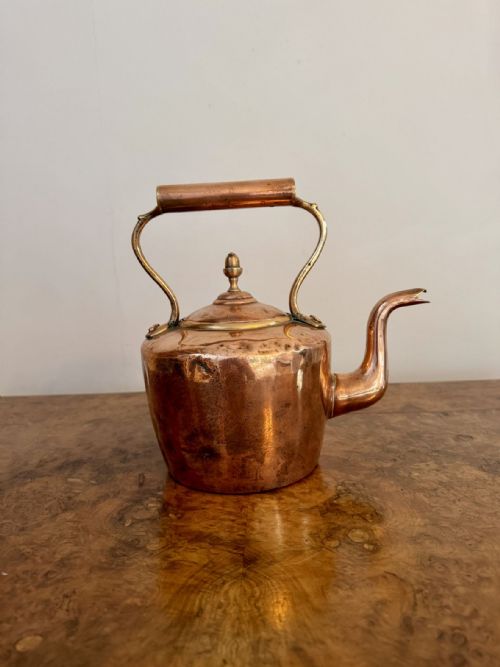
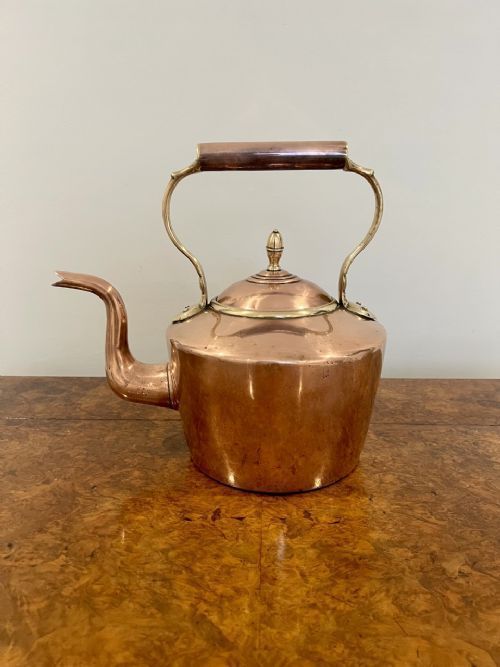
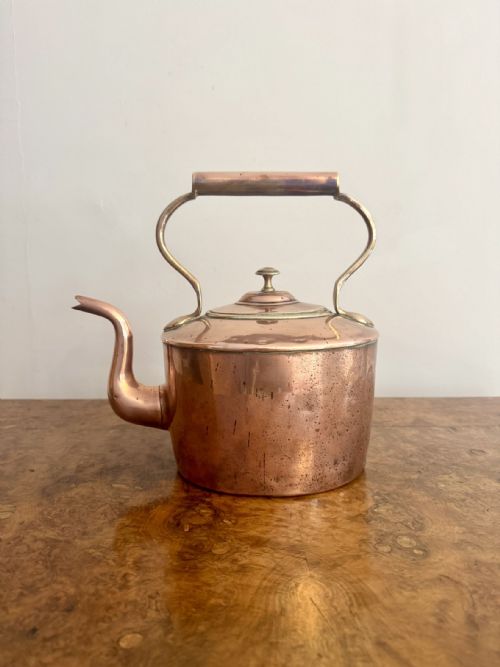
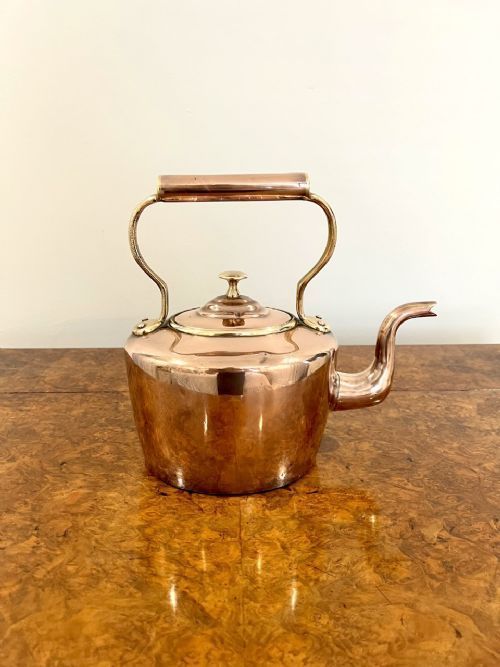


George III Copper Kettle
A george iii copper kettle brings substantial Georgian warmth to a hearth, combining heavy-gauge metalwork with honest utility.
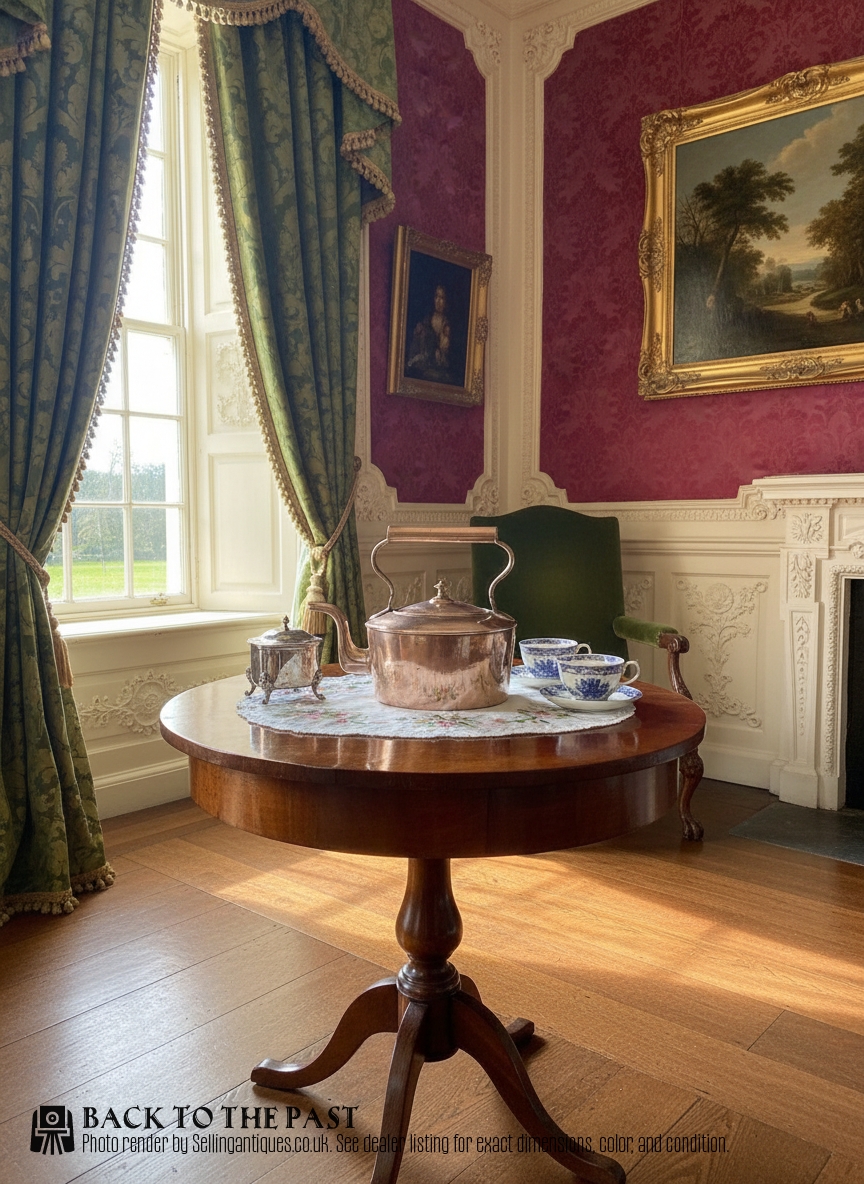
George III Copper Kettle
A george iii copper kettle sits firmly in the Georgian and nineteenth century periods, offering a direct link to early domestic hearths. Buyers looking at this page encounter round, oval, and lidded forms alongside related water urns, pots, and pans.
The objects appearing most frequently are substantial copper kettles datable around eighteen hundred. These pieces display the characteristic heavy proportions and practical build expected of Georgian kitchenware.
Origins tie directly to the Georgian era, with styles spanning standard domestic items to unusual oval shapes. Each piece serves as a tactile reminder of historical metalworking traditions.

Materials and construction methods
Makers utilised heavy copper sheets, shaping them manually to form the body of each kettle. Brass details and iron components appear alongside wood elements, providing structural strength and contrasting textures.
The integration of brass fittings and sturdy handles ensures durability, while polished surfaces highlight the underlying metallic quality. Construction relies on traditional joining methods appropriate for vessels intended for daily heating.
George III Copper Kettle Retail Price Guide 2026
Typical asking prices for george iii copper kettle among the pieces listed under this phrase on Sellingantiques today, from the lower quarter to the upper quarter. They describe what is for sale here now, not the wider market.
Some kettles arrived shaped like eggs, proving that Georgian tea drinkers appreciated a bit of whimsy by the hearth.
Distinctions in quality and scale
Scale creates a primary division among surviving examples, ranging from small domestic vessels to large hanging water urns. Larger formats and unusual oval shapes alter the visual impact of the piece within a room.
The degree of original finish and the handling of brass and wood attachments differentiate standard utility items from more refined examples. Heavier gauge metal and careful formation of spouts and lids mark the higher tier of survival.

The George III Copper Kettle Glossary
- Georgian
- The period spanning the reigns of the first four British monarchs named George, known for balanced proportions and functional design. This era produced much of the domestic metalware collected today.
- Copper
- A ductile reddish-metal chosen for its thermal conductivity and malleability. It forms the primary body of these vessels.
- Brass
- A yellow alloy of copper and zinc utilised for handles, fixings, and decorative accents. It offers a bright contrast to darker copper surfaces.
- Water urn
- A large vessel designed for heating and dispensing water, often equipped with a tap or hanging mechanism. These pieces served communal needs in larger households.
- Oval shaped
- A curved, elongated form departing from the standard circular vessel. This profile provides greater capacity while maintaining a compact footprint on a hearth.
George III Copper Kettle: Frequently Asked Questions
How old are these kettles?
The pieces date from the Georgian period, specifically around eighteen hundred.
They bridge the eighteenth and nineteenth centuries through traditional construction methods.
Were they used for boiling water?
These vessels functioned as practical equipment for heating water over open hearths.
Their heavy construction allowed them to withstand direct heat in domestic kitchens.
What metals are used?
The primary material is copper, supplemented by brass for fittings and iron for structural support.
Some examples also incorporate wood for insulating handles during use.
How do I display one?
These kettles sit well on hearths, open shelving, or large tables where their metallic surfaces catch the light.
Their substantial presence makes them natural focal points in traditional or rustic interiors.