



George III Caddy
A george iii caddy is a small, secure box for storing precious tea leaves, prized for its cabinetmaker's skill and rich timber grain.
George III Caddy
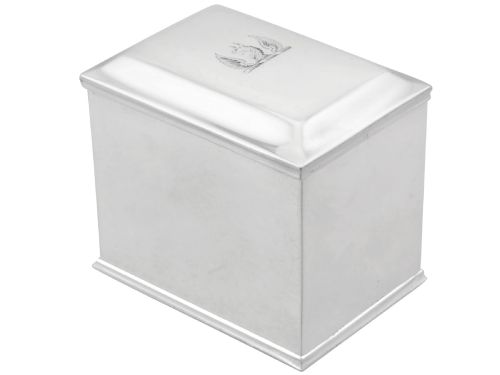
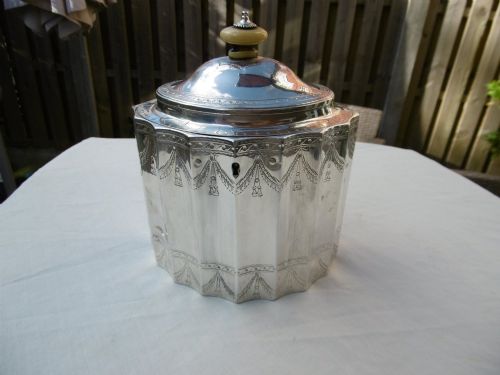
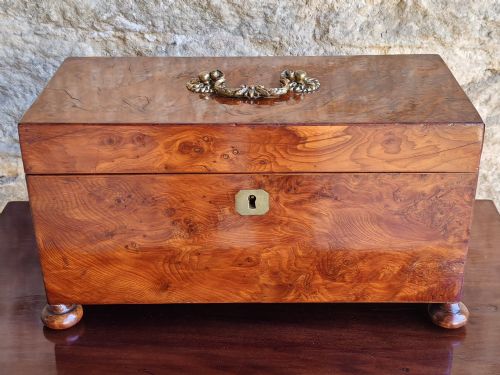
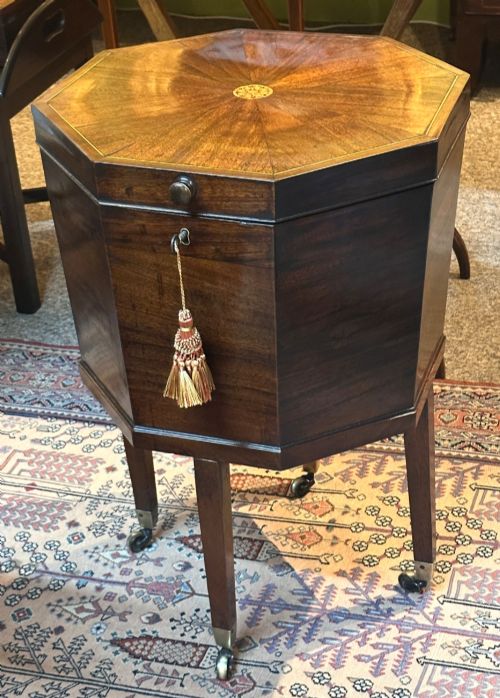
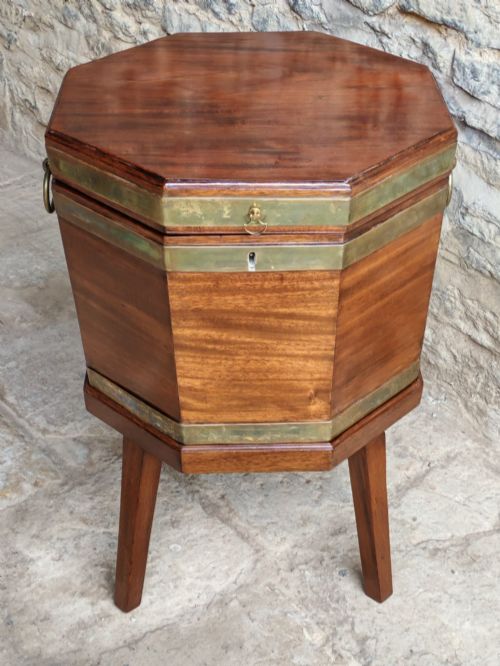
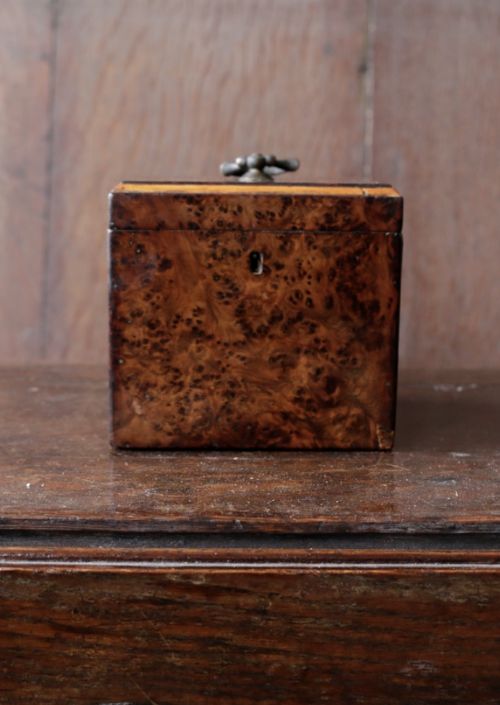
A george iii caddy typically takes the form of a lidded wooden box or a solid silver canister designed to preserve expensive imported tea leaves under lock and key. The wooden examples on this page span several distinct shapes, including octagonal, oval, hexagonal, cube and straight-sided chests.
Most pieces date from the eighteenth century or the early decades of the nineteenth century, reflecting the height of Georgian cabinetmaking and silver smithing. Alongside wooden tea caddies, the category encompasses smaller silver caddy spoons shaped as leaves, shells, hands or jockey caps, as well as related cellar furniture.
Makers utilised native and exotic timbers such as mahogany, satinwood, yew, walnut and partridge wood to construct these containers. Many incorporate intricate wood inlay, boxwood stringing, bone details or marquetry panels that display considerable geometric and floral precision.
What varies in quality
The standard of a george iii caddy depends largely on the choice of timber figure, the crispness of any inlaid marquetry, and the survival of original working locks and escutcheons. Finely figured burr yew, rich satinwood and balanced proportions distinguish superior workshop output from simpler utilitarian boxes.
In silver pieces, the depth of the chasing, the clarity of the maker's mark and assay office punches, and the artistic ambition of the bowl or spoon shape dictate the standing of the object. Silversmiths who executed naturalistic forms like human hands or horse hoofs demonstrated a higher level of sculptural command than those producing plain shovel bowls.
Silversmiths shaped tiny caddy spoons into riding caps, hooves, and human hands to amuse drinkers at the tea table.
Joseph Willmore·Robert Hennell·Cocks and Bettridge·Peter and William Bateman·Samuel Pemberton·Joseph Taylor·Thomas Wallis II·Thomas Shepherd·Thomas Johnson·Charles Aldridge·Elizabeth Morley
The George III Caddy Glossary
- Caddy spoon
- A short-handled silver scoop designed specifically for measuring loose tea from the caddy into the teapot. These small utensils frequently featured novelty bowls shaped as leaves, shells or jockey caps.
- Marquetry
- The art of forming decorative patterns on wooden surfaces by fitting together small pieces of different coloured veneers. Cabinetmakers used contrasting woods like harewood and satinwood to create floral or geometric tableaus.
- Cellarette
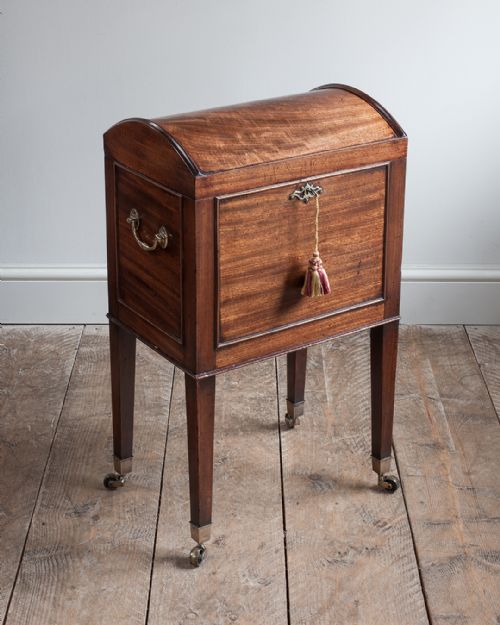
- A lockable container or cabinet used for storing bottles of wine in the dining room during the Georgian period. Larger examples often featured brass banding and sturdy carrying handles.
- Stringing
- A narrow inlay of contrasting wood, commonly boxwood, set flush into the surface of furniture to outline panels or borders. This technique added subtle linear definition to mahogany and satinwood boxes.
- Bright-cut engraving
- A faceted method of surface engraving where a burin cuts shallow angles that reflect light brilliantly. Silversmiths applied this technique to create sparkling geometric borders on spoons and tea canisters.
George III Caddy: Frequently Asked Questions
What is a george iii caddy?
A george iii caddy is a period container made of timber or sterling silver, built to hold and protect expensive tea during the Georgian era.
Tea was a costly commodity at the time, so these boxes were typically fitted with working locks and internal partitions to separate different leaf varieties.
How were tea caddies used?
Households kept them in the parlour or drawing room, where the mistress of the house would measure out the leaves for brewing.
Because tea was so valuable, the caddy remained locked between uses, with the key kept securely by the owner of the house.
How do I date a wooden caddy?
Dating relies on examining the timber species, construction methods, hardware like hinges and locks, and the overarching furniture style.
Georgian pieces often display characteristic wood inlay, hand-cut dovetails in the internal partitions, and specific cabinet proportions that shifted between the mid-eighteenth and early nineteenth centuries.
Why do some caddies have multiple compartments?
Multiple internal sections allowed owners to store green tea in one side, black tea in another, and sometimes a central blending bowl.
This division helped prevent delicate aromas from mingling before the leaves reached the teapot.
How should I care for an antique wooden caddy?
Keep the piece away from direct sunlight, central heating sources, and sudden humidity changes to prevent the delicate wood veneers from cracking or lifting.
An occasional application of microcrystalline wax will protect the old polish without building up a heavy, sticky residue.