




George II Style Glass
George ii style glass pieces are mirrors and cabinets that bring eighteenth-century Palladian gravity into a room, favoured for their architectural frames and rich timber work.
George II Style Glass
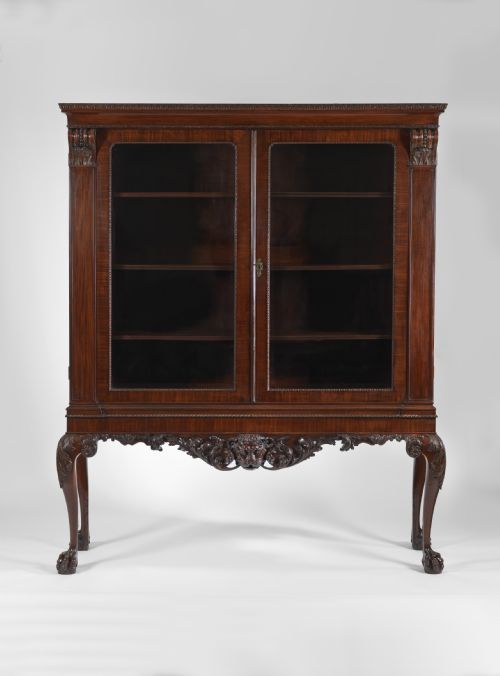
When you search for george ii style glass, you are looking at wall mirrors, pier mirrors, and display cabinets created across the nineteenth century alongside authentic eighteenth-century examples. The selection on this page leans heavily toward nineteenth-century revival pieces, including Victorian interpretations and items dated around nineteen hundred, which emulate the grand aesthetic of the mid-eighteenth century.
The dominant forms are architectural pier mirrors and wall mirrors designed to hang above mantelpieces or between windows. You will also encounter substantial display cabinets constructed to showcase collections, all sharing the distinct Palladian proportions and heavy frames characteristic of the style.
How they were made
The makers of these pieces relied on dense hardwoods such as mahogany and walnut, frequently incorporating burr veneers to create rich, figured surfaces. Frames often feature carved gesso and giltwood details, combining parcel gilding with polished timber to catch the light.
Techniques combined cabinetmaking with specialist carving and gilding, using mirror glass set within heavy architectural mouldings. Giltwood and parcel-gilt elements were applied by hand to highlight the carved scrollwork and swan-neck pediments typical of the design.
George II Style Glass Retail Price Guide 2026
Typical asking prices for george ii style glass among the pieces listed under this phrase on Sellingantiques today, from the lower quarter to the upper quarter. They describe what is for sale here now, not the wider market.
Some nineteenth-century makers were so enthusiastic about the style they added extra gilding just to be certain nobody missed the point.
What varies in quality
Quality rests in the depth and sharpness of the carving rather than the mere presence of decoration. Pieces at the higher end display crisply carved mouldings and well-defined parcel gilding that interact harmoniously with the grain of the walnut or mahogany beneath.
The choice of timber also dictates the standard of the piece, with select burr walnut veneers and substantial mahogany frames marking out superior examples. Lesser pieces rely on simpler construction and flatter surface work, lacking the architectural presence of the finer revivals.
William Kent
The George II Style Glass Glossary
- Pier mirror
- A tall mirror designed specifically to hang on the wall space between two windows. These often matched console tables placed below them.
- Parcel-gilt
- Partially gilded, where gold leaf is applied only to specific carved details while leaving the underlying timber exposed. This technique creates a contrast between polished wood and bright gold.
- Giltwood
- Timber carved and coated with gold leaf or a gold-coloured finish. It provides the reflective, formal ornamentation seen on many formal frames.
- Palladian
- An architectural style based on symmetry and classical proportions derived from Andrea Palladio. It heavily influences the pediments and column details found on these mirrors and cabinets.
- Gesso
- A plaster-like mixture applied to wood as a base for carving and gilding. It allows for intricate relief ornamentation before the gold leaf is laid down.
George II Style Glass: Frequently Asked Questions
Are these pieces from the eighteenth century?
Most examples found here date from the nineteenth-century revival periods, including Victorian interpretations and items from around nineteen hundred, alongside authentic eighteenth-century items.
This means you are mostly looking at nineteenth-century craftsmanship recreating earlier Palladian designs rather than pieces made during the actual reign of George the Second.
Where should a pier mirror hang?
Historically, pier mirrors were hung on the narrow wall space between two windows, often above a matching pier table. They reflect natural light back into the room.
In modern settings, they work equally well above a fireplace mantelpiece or on a prominent hallway wall where their vertical proportions can be fully appreciated.
What is the difference between walnut and mahogany versions?
Walnut and burr walnut versions tend to offer softer, highly figured grain patterns that catch the eye with rich brown tones. These were favoured in both the original period and later revivals.
Mahogany examples provide a darker, heavier presence, often associated with grander architectural compositions in the manner of William Kent.
How do I identify a revival piece?
Revival pieces from the nineteenth century often show secondary woods and construction methods typical of the Victorian era, even when faithfully copying eighteenth-century Palladian forms.
Examining the backboards, fixings, and the ageing of the mirror glass helps distinguish these nineteenth-century interpretations from their earlier predecessors.