



George II Silver Table
These pieces for a george ii silver table range from mahogany side tables to sterling silver spoons and candlesticks shaped by mid eighteenth century makers.
George II Silver Table
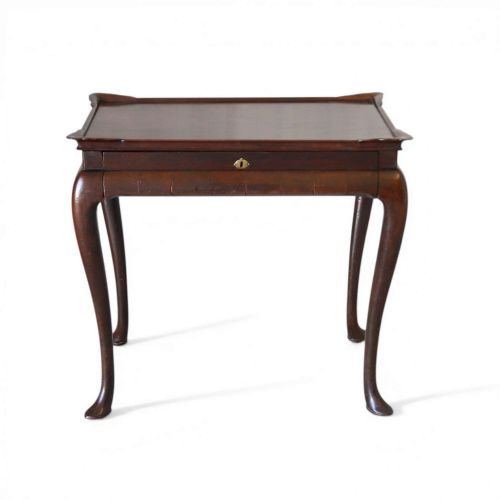
A george ii silver table search brings together two distinct categories: solid timber serving furniture designed to hold silver items, and actual sterling silver dining utensils or hollowware bearing mid eighteenth century hallmarks. The furniture side is dominated by mahogany side tables and occasional tables, often featuring cabriole legs and sometimes attributed to Irish workshops. Alongside these stands, the selection includes silver tablespoons, forks, salt cellars, sauce boats, and candlesticks originating from the Georgian period.
The mahogany versions of the george ii silver table typically display tray tops designed to keep tea services or silver vessels secure. Alternatively, the silver objects themselves span from practical table items like marrow scoops and casters to sets of dessert forks and serving spoons. While the furniture provides the surface, the smaller silver pieces represent the tableware actually used upon such furniture during the eighteenth century.
Most examples encountered here date from the eighteenth century, specifically the decades around the mid seventeen hundreds, though occasional later interpretations from the nineteenth and twentieth centuries appear in the George II style. Irish variants in mahogany and English sterling silver pieces by known makers form the core of what collectors meet under this search phrase.
How they were made
The wooden furniture pieces rely on dense timbers such as mahogany, Cuban mahogany, and solid red walnut, shaped with cabriole legs and raised tray tops. Cabinetmakers constructed these tables to bear heavy metal objects, utilising sturdy joints and figured grain surfaces that accentuate the natural timber colour.
The metal objects are fashioned from sterling silver or silver gilt, employing casting, hammering, and embossing techniques. Silversmiths worked metal into sturdy candlesticks, cast salts, and spoons, applying crisp hallmarks to record the assay office, date, and maker's mark.
Listings under this phrase include sterling silver, brass, walnut, mahogany, glass, and oak across the eighteenth, nineteenth, and twentieth centuries.
What varies in quality
Quality in the wooden furniture rests upon the choice of timber and the crispness of the carving on the cabriole legs and tray edges. Tables fashioned from figured Cuban mahogany or solid red walnut with well-proportioned supports stand above simpler domestic examples.
In the metalwork, quality displays itself through the clarity of the hallmarks, the weight of the silver, and the sharpness of embossed decoration on items like sauce boats and candlesticks. Heavy gauge metal and distinct maker marks separate ordinary utensils from pieces produced by prominent silversmiths.
Mappin And Webb·E Coker·John Cafe·David Hennell·John Wilks·Charles Alchorne
The George II Silver Table Glossary
- Cabriole leg
- A furniture leg that curves outward at the knee and tapers inward toward the foot, mimicking animal limbs. This form is typical of mid eighteenth century seating and tables.
- Tray top
- A tabletop finished with a raised moulded rim designed to prevent items from sliding off. This feature is characteristic of tables intended for holding silver tea services.
- Sterling silver
- An alloy containing ninety-two point five percent silver and seven point five percent other metals, chiefly copper. British pieces made to this standard carry a lion passant hallmark.
- Hallmark
- An official stamp applied to precious metals to indicate purity, the maker, and the year of assay. These marks provide the primary evidence for dating silver pieces.
- Silver gilt
- Silver that has been coated with a thin layer of gold on its surface. This technique provides the rich appearance of solid gold while utilising a silver core.
George II Silver Table: Frequently Asked Questions
What was a silver table used for?
These tables served as surface furniture for displaying or serving tea and silver items in fashionable eighteenth century rooms. The raised tray top kept vessels secure during social gatherings.
Over time, the terminology also came to describe the various silver utensils, spoons, and hollowware associated with dining tables of the same period.
How do I identify a George II silver table?
Look for mid eighteenth century characteristics such as mahogany or walnut timbers, raised tray edges, and cabriole legs. Irish examples often show distinct proportions and carving details.
When the search refers to silver objects rather than furniture, examination of the hallmarks provides the exact year of manufacture and the silversmith's mark.
Are these tables made of solid mahogany?
The tables listed under this heading utilise dense hardwoods, including Cuban mahogany and solid red walnut. These timbers provided the structural strength needed to support heavy metal objects.
The choice of dense grain and figured timber contributes significantly to the visual depth of the furniture surface.
How should I care for antique silver and mahogany?
Wooden surfaces require gentle cleaning with appropriate wax polishes to maintain the natural timber lustre without building up heavy residues. Direct sunlight and sudden temperature changes should be avoided to prevent wood movement.
Silver items benefit from minimal, careful cleaning using non-abrasive cloths to preserve the crispness of the hallmarks and any engraved crests.