

George I Mahogany Chest
When you search for a george i mahogany chest, you encounter solid timber forms built to hold domestic linens and personal items with enduring structural honesty.
George I Mahogany Chest
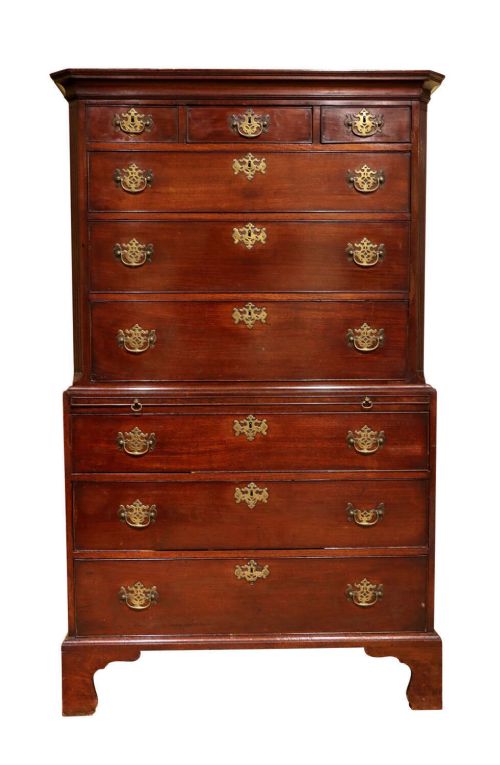
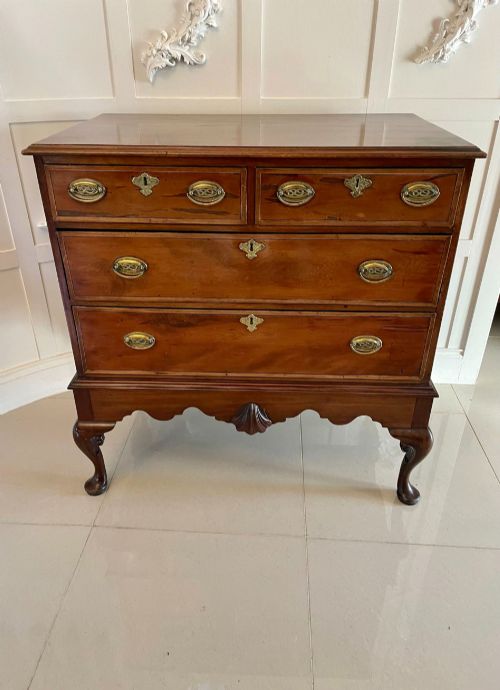
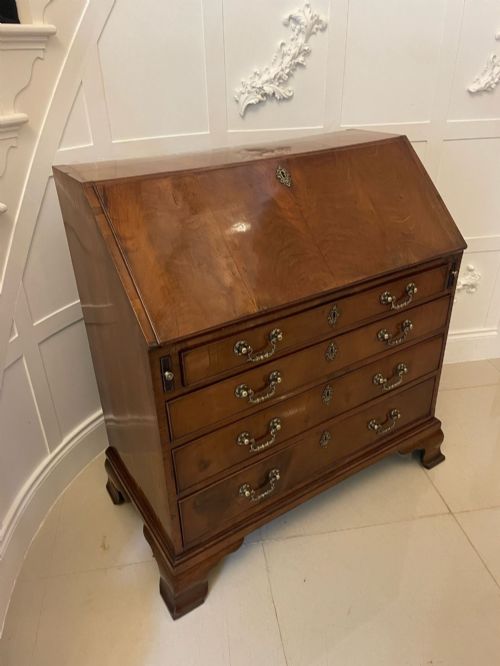
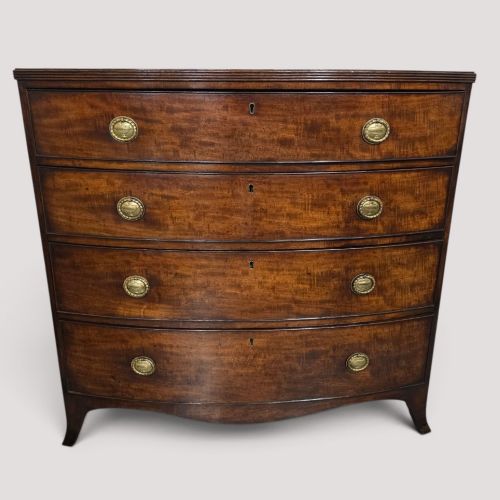
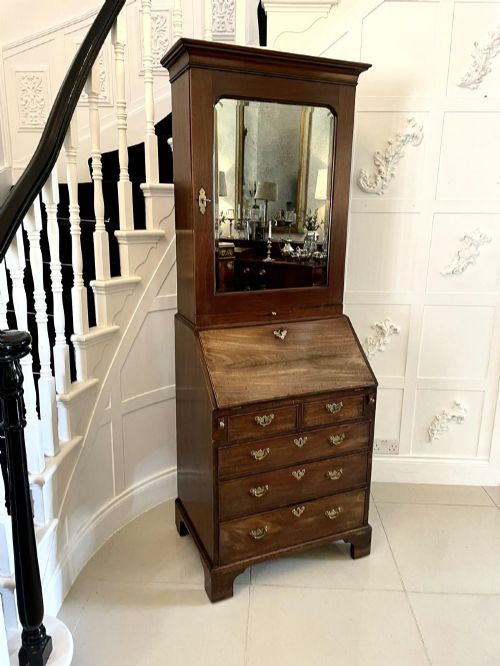
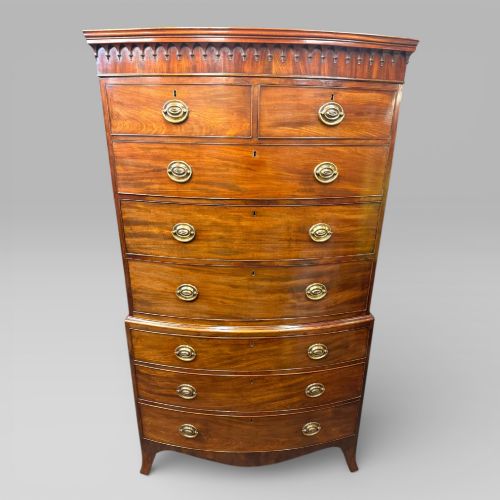
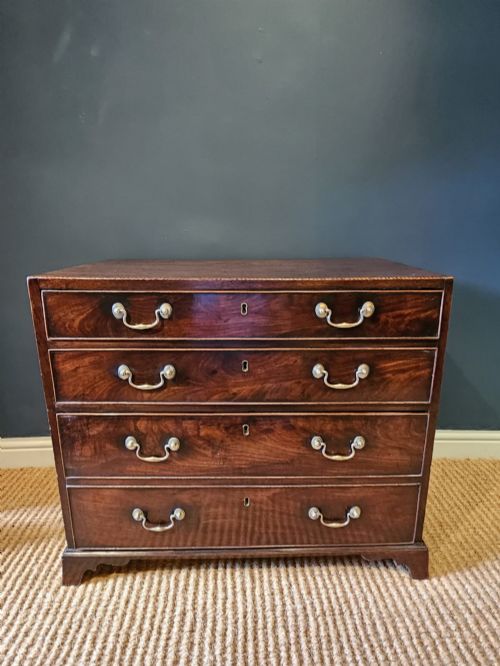
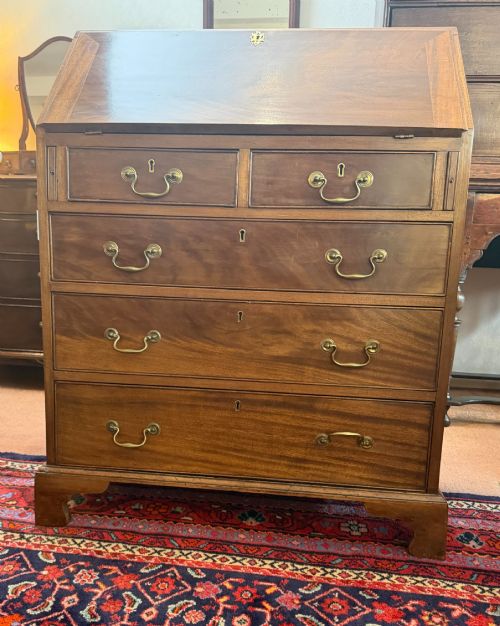
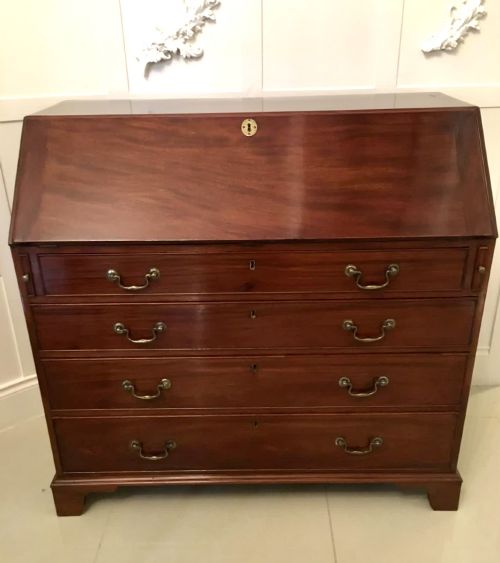
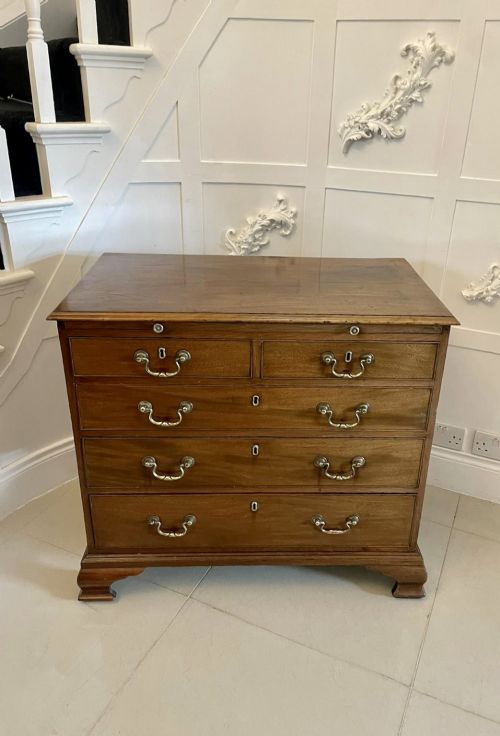
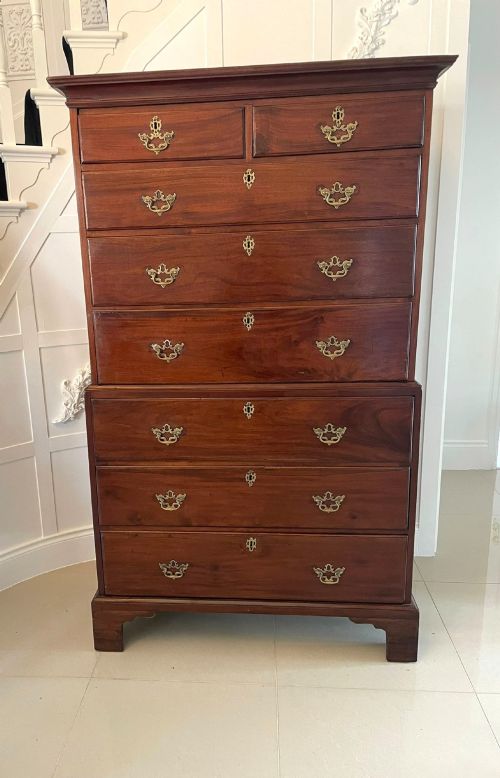
A george i mahogany chest represents a heavy case furniture piece designed primarily for storage within domestic chambers. These objects frequently appear in forms such as standard drawer chests, bureau variants, and taller chest on chest configurations.
The pieces on this page span various periods including the eighteenth century and the georgian era, utilising sturdy timber construction. Most examples emerge from domestic workshops and cabinet makers operating within British traditions during the seventeen-hundreds and subsequent decades.
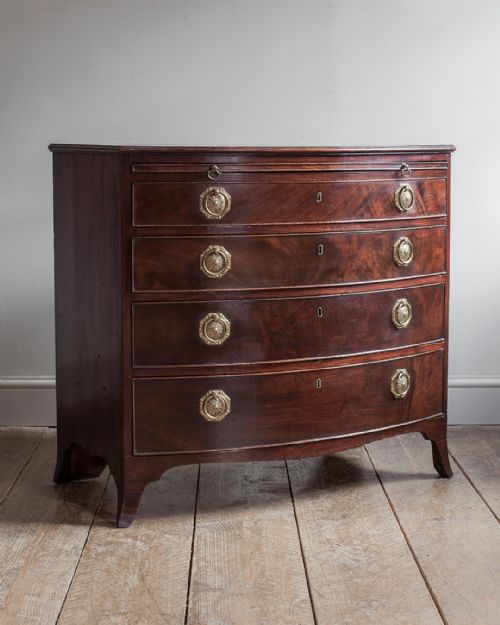
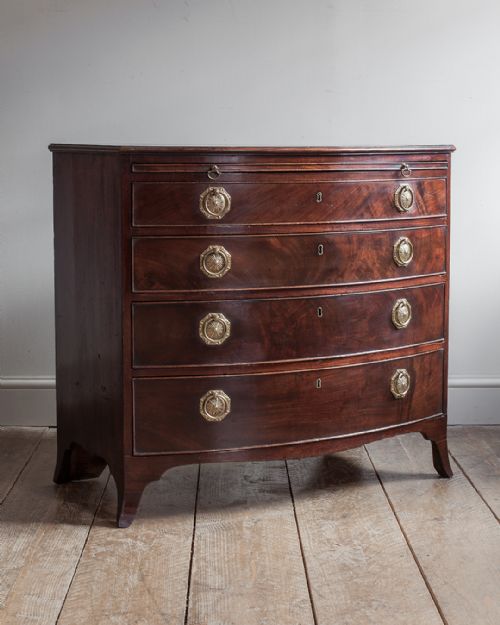
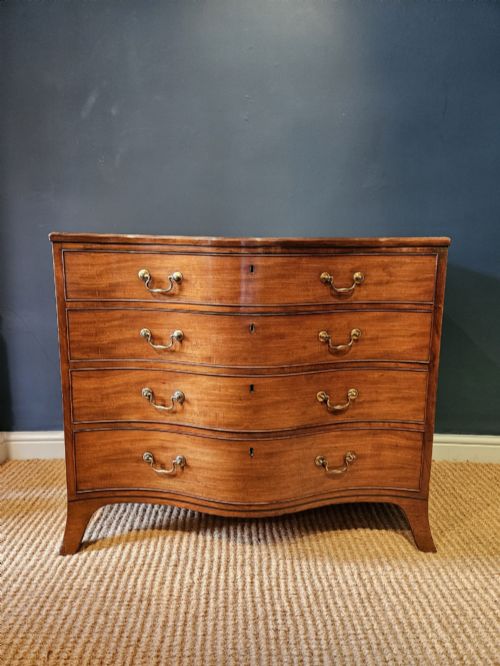
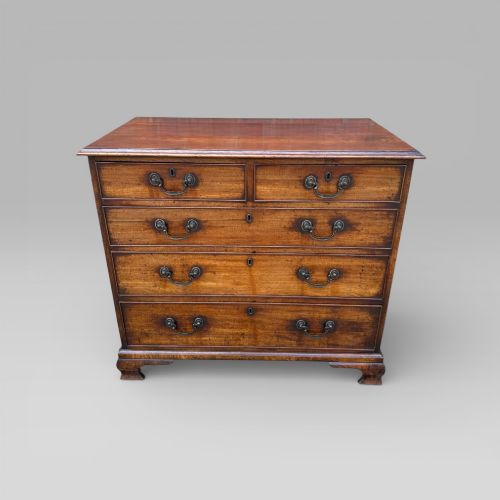
Buyers commonly encounter straightforward four-drawer formats, alongside sophisticated bow-front styles and specialised pieces featuring brushing slides or fitted writing interiors. The structural proportion remains central to identifying the period and regional origin of each individual cabinet.
Materials and construction methods
Makers utilised dense mahogany timber, frequently combined with secondary woods such as oak for drawer linings and internal framing. Flame mahogany and figured veneers appear on exterior drawer fronts to provide visual depth and surface variation.
Joinery methods rely on hand-cut dovetails for drawer construction and cabinet carcasses, ensuring rigidity without modern adhesives. Brass handles, escutcheons, and bracket feet provide functional support and decorative contrast to the dark timber surfaces.
Listings include brass, glass, bone, wood veneer, and iron across various Georgian and Regency forms.
Assessing material and structural standard
The standard of a piece depends heavily on the selection of timber grain, particularly where figured or flame mahogany veneers are matched symmetrically across drawer fronts. Superior execution involves precise dovetailing and retention of original brass hardware and secondary oak timbers.
Proportion and scale distinguish fine examples from simpler utilitarian items, with refined bracket feet and subtle mouldings elevating the overall presence. Alterations to drawer configurations or replaced timber sections diminish the original integrity of the cabinet.
J Moorcroft·George Oakley·Thomas Chippendale·Gillows
The George I Mahogany Chest Glossary
- Brushing slide
- A pull-out wooden shelf positioned above the top drawers, historically used for folding clothes or writing correspondence.
- Chest on chest
- A tall storage unit comprising two distinct cabinet sections stacked vertically, offering substantial drawer capacity.
- Dovetail
- A traditional interlocking joint used at the corners of drawers to provide maximum tensile strength.
- Crossbanding
- A decorative border of veneer laid around the edges of a drawer front with the grain running perpendicular to the main panel.
- Bracket foot
- A simple structural foot shape supporting the lower corners of case furniture in an L-shaped bracket form.
George I Mahogany Chest: Frequently Asked Questions
What is a bachelor's chest?
A bachelor's chest is a compact drawer unit featuring a fold-over top or a sliding board designed for writing. These versatile items served multifunctional purposes in smaller domestic spaces.
They frequently date from the eighteenth century and combine storage capacity with a convenient writing surface.
How do I spot a marriage piece?
A marriage piece occurs when two separate antique components from different origins are joined together to form a single item. Inspecting the secondary woods and internal construction helps reveal these discrepancies.
Differences in timber colour or mismatched dovetails often indicate that sections were united at a later date.
Why use oak for drawer linings?
Makers selected oak for drawer interiors because of its rigidity and durability under daily friction. This hardwood resisted warping and sustained the repetitive motion of opening and closing.
Secondary woods like oak remain a reliable indicator of period authenticity in traditional British cabinetmaking.
How should I care for mahogany?
Mahogany requires stable room humidity and protection from direct sunlight to prevent timber splitting and fading. Applying traditional wax feeds the grain and maintains the surface sheen.
Avoiding synthetic polishes ensures the timber ages naturally without chemical buildup on the surface.