


George I Caster
When you search for a george i caster, you are seeking a tall, slender silver vessel designed to dust sugar or spices onto food.
George I Caster
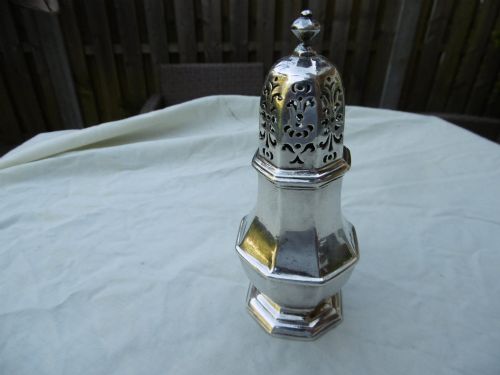
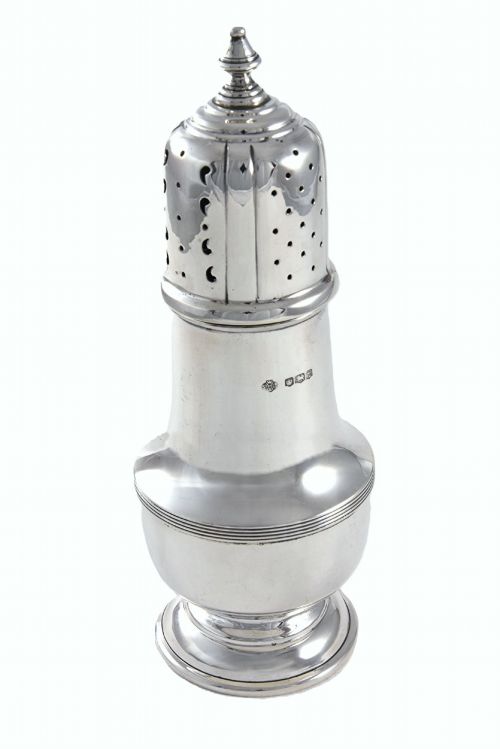
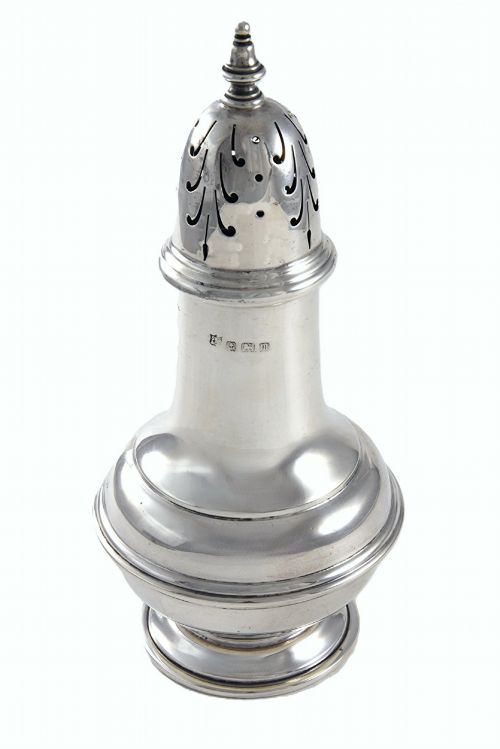
A george i caster is a vessel designed to hold and sprinkle sugar or spices, originating in the early eighteenth century with octagonal or baluster silhouettes.
The versions most commonly met in these records include pieces from the 18th Century alongside later Georgian, George V, and George VI examples.
Beyond standalone sugar casters, the selection spans pounce pots, condiment sets, and cruet frames incorporating cut glass bottles.
Materials and Technique
Pieces from this category are formed predominantly from sterling silver, occasionally paired with cut glass or supported by wooden frames like ebonised wood.
Silversmiths shaped the metal through raising and casting, piercing the lids with geometric or floral patterns to allow the contents to scatter evenly.
Listings feature sterling silver, cut glass, and ebonised wood across periods from the 18th Century through to the mid-20th Century.
Defining Characteristics of Quality
Quality rests upon the crispness of the piercing on the lid and the weight of the silver relative to the height of the body.
Early examples benefit from the hand of notable makers, while later revivals depend on the precision of the hallmark and the integrity of any associated glass.
James Goodwin·Simon Pantin·Barker Brothers·James Dixon & Sons Ltd·Charles Alchorne·Viners·Mappin & Webb·Langlands and Robertson·Samuel Wood·John Delmester·John Sherwood & Son·Walker & Hall·Jabez Daniell·Robert Palmer I
The George I Caster Glossary
- Caster
- A small cylindrical or baluster-shaped container with a pierced domed top used for sprinkling sugar or spices. These vessels evolved from earlier spice dredgers.
- Pounce Pot
- A small container with a perforated lid used to sprinkle resin powder over parchment to prepare it for ink. They share a similar form to early sugar casters.
- Cruet Set
- A collection of glass bottles fitted with silver mounts for holding condiments like oil, vinegar, salt, and pepper. They sit together within a wooden or metal frame.
- Huguenot
- A term describing French Protestant refugees who fled to Britain and brought advanced silversmithing techniques. Their work often displays exceptional craftsmanship.
George I Caster: Frequently Asked Questions
What is a george i caster used for?
These vessels were originally used at the dining table for dusting fine sugar onto food or sprinkling spices. Wealthy households utilised them during meals before refined sugar became widely available in blocks.
Over time, their function expanded to include dispensing pounce powder for writing or holding condiments within fitted cruet frames. Today, they remain decorative tabletop items that reflect historic dining customs.
How do I date a silver caster?
Dating relies heavily on the hallmarks stamped into the silver, which record the assay office, the maker's mark, and a specific date letter. Examining the shape also helps distinguish periods.
Early eighteenth-century pieces often feature octagonal panels, while later Georgian examples lean towards baluster forms. Mid-twentieth-century revivals copy these historic silhouettes but show modern assay marks.
What is the difference between a caster and a shaker?
Casters are typically taller, more substantial vessels made of solid silver or glass with pierced slip-in or bayonet-fitting lids. They were designed for free-flowing granulated sugar or dried spices.
Shakers often refer to later twentieth-century condiment pieces meant for salt or pepper. Antique examples from the Georgian and early twentieth-century periods are almost universally designated as casters or dredgers.
How should I clean antique silver casters?
Silver casters require gentle maintenance using a non-abrasive silver cloth to preserve the hallmarks and original surface detail. Liquid dips should be avoided, especially on pieces with glass liners or weighted bases.
Storing them away from direct sunlight and damp environments prevents tarnishing. If the piece includes cut glass or wooden stands, treat each material according to its specific conservation needs.