
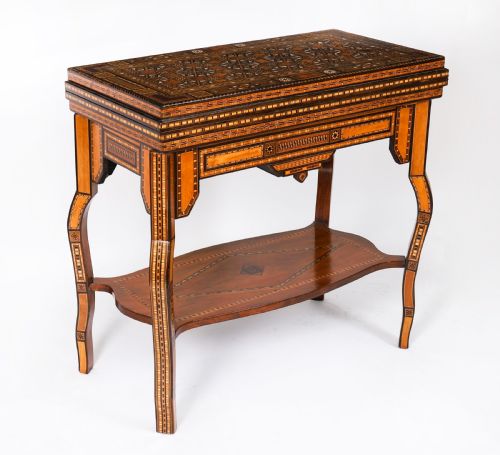
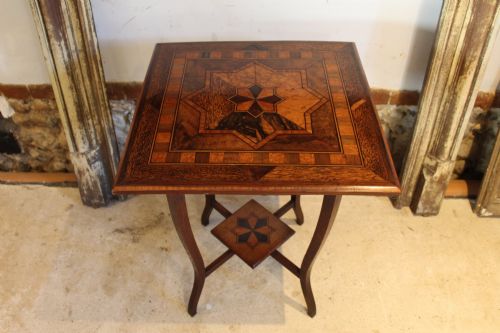
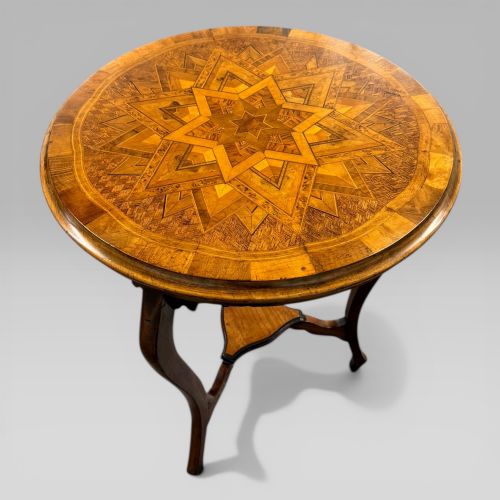


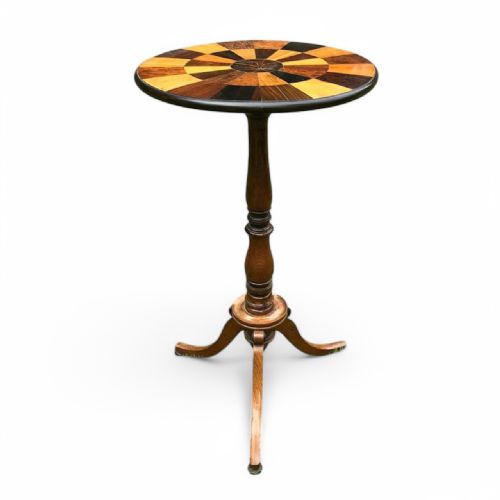


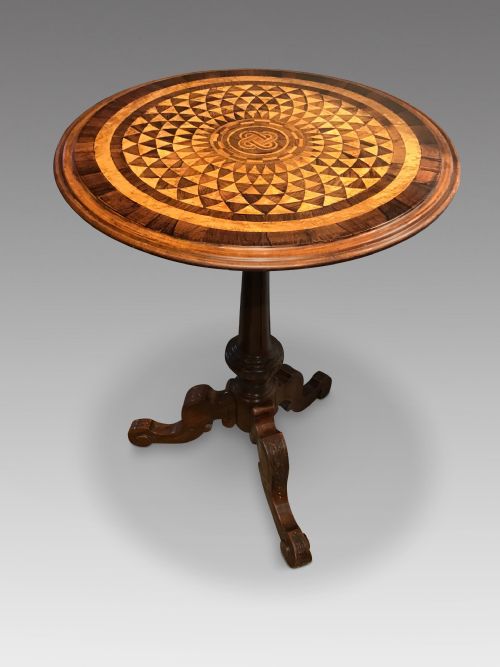
Geometric Wood Parquetry Table
A geometric wood parquetry table brings complex patterned surfaces of timber into daily use, offering the enduring appeal of intricate geometric design.
Geometric Wood Parquetry Table
A geometric wood parquetry table is a functional surface defined by meticulously arranged wooden tiles forming geometric patterns across the top. Buyers searching for a geometric wood parquetry table frequently encounter occasional, centre, and side tables dating from the seventeenth century through the early twentieth century.
The selection ranges from compact occasional tables and nests to large games tables and hall tables. Victorian examples and nineteenth century specimen wood pieces appear most often, alongside earlier seventeenth century interpretations.
Forms include circular pedestal tables, tripod bases, octagonal shapes, and low occasional designs. Many incorporate multi-timber compositions that showcase contrasting shades of walnut, oak, rosewood, and native timbers.
How they were made
Craftsmen built these pieces by cutting precise individual pieces of veneer or solid timber and fitting them together to form geometric arrangements. Woods such as walnut, oak, mahogany, rosewood, and kauri wood provided natural variations in tone and grain.
Specialised workshops also utilised specimen woods, bone, and native timbers to create contrasting geometric motifs. The assembled parquetry tops were then secured to robust bases of oak, walnut, or turned pedestals.
Listings feature geometric wood parquetry tables spanning from the late seventeenth century through the Edwardian period.
What varies in quality
The standard of a geometric wood parquetry table depends on the precision of the geometric layout and the complexity of the timber selection. Finer examples display seamless joints between individual wooden tiles and sophisticated multi-timber contrasts.
Anton Seuffert
The Geometric Wood Parquetry Table Glossary
- Parquetry
- A geometric mosaic of wood pieces used for decorative surfaces, particularly table tops. It relies on precise carpentry to create repeating patterns.
- Specimen wood
- Timber gathered from various distinct tree species, chosen for natural colour and grain variation rather than structural uniformity. These woods are assembled to highlight botanical diversity.
- Occasional table
- A small, versatile table designed for specific, intermittent use within a room. Common forms include pedestal and tripod designs.
- Marquetry
- The art and craft of applying pieces of veneer to a structure to form decorative designs. It differs from parquetry by often depicting pictorial scenes rather than geometric patterns.
- Tunbridge ware
- A type of nineteenth century woodwork characterised by tiny wooden mosaic tiles forming pictorial or geometric designs. It is frequently associated with small boxes and tabletop items.
Geometric Wood Parquetry Table: Frequently Asked Questions
How do I style a parquetry table?
These tables integrate well into traditional and contemporary spaces as centrepieces, side tables, or occasional surfaces. Their patterned tops add visual texture without overwhelming a room.
Keep surface accessories minimal to allow the intricate geometric woodwork to remain the primary focus of the interior arrangement.
What is specimen wood?
Specimen wood refers to a collection of different timber species gathered for their unique natural colours and grain patterns. Makers used them to introduce variety and contrast into inlaid decorative surfaces.
Tables utilising these woods often display a wide spectrum of natural hues derived from native and exotic forests.
How do I date a parquetry table?
Dating relies on examining the construction methods, timber types, base design, and overall furniture style. Seventeenth and eighteenth-century examples exhibit different structural joinery compared to Victorian or Edwardian pieces.
Associated styles such as William and Mary, Victorian, or French Neoclassical provide further chronological context for when the piece was made.