




Walnut Specimen Side Table
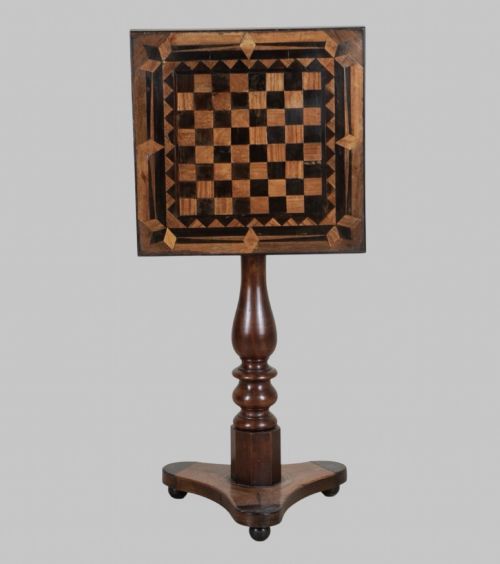
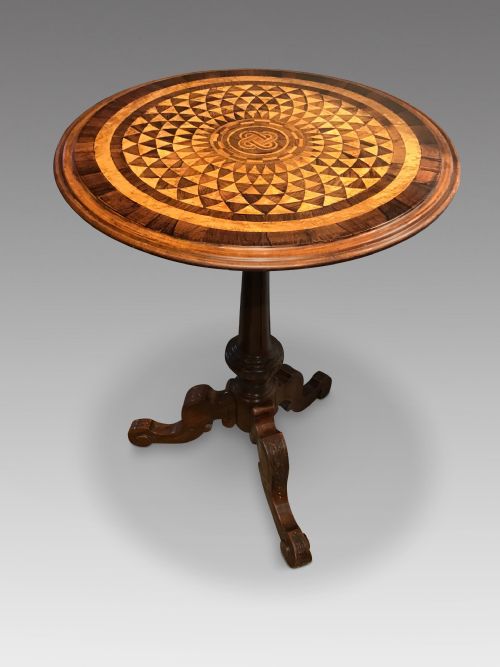
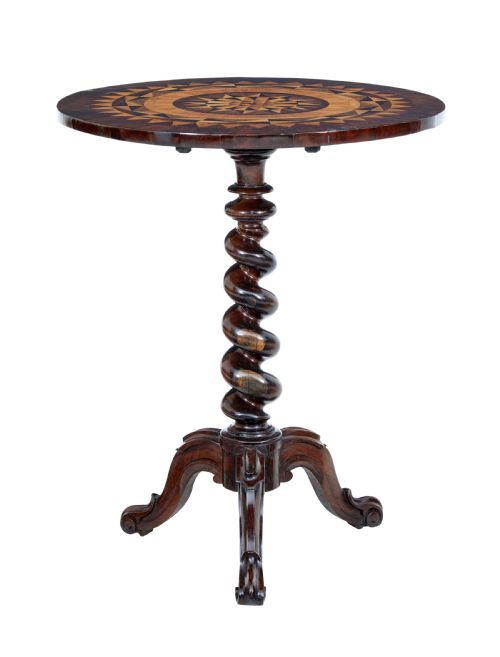
These walnut specimen side tables combine rich timber marquetry with practical surfaces, offering a striking centrepiece for any room.
Walnut Specimen Side Table
A walnut specimen side table brings together intricate geometric or floral marquetry using diverse timbers into a compact display surface. These pieces range from occasional and lamp tables to games tables and nest tables across various nineteenth-century eras.
Buyers will find many examples originating from the Victorian period, alongside Georgian, Regency, and William IV designs. Forms vary from circular pedestal tables and hexagonal tops to tilt-top mechanisms and marble inserts.
The integration of multiple specimen woods creates a mosaic effect across the tabletop, supported by walnut pedestals, tripod bases, or four-legged frames. Each table reflects the decorative ambitions of its period, from classical restraint to elaborate nineteenth-century craftsmanship.
How they were made
Cabinet makers utilised walnut as the primary structural and framing timber, complemented by boxwood, mahogany, rosewood, and various specimen wood veneers. These contrasting timbers were meticulously cut and inlaid to form complex geometric patterns or pictorial top surfaces.
Many tables incorporate sturdy pedestal bases or tripod legs, occasionally accented with brass fittings or detailed turning. Tops were frequently constructed using specimen wood veneers applied over a stable core, sometimes paired with marble inserts for durability.
Some nineteenth-century makers treated table tops like botanical albums, gathering timber samples from across the globe into a single surface.
What varies in quality
Structural integrity of the pedestal base, the smoothness of tilt-top mechanisms, and the selection of figured walnut for the main body also determine the standing of an individual table.
Emile Galle
The Walnut Specimen Side Table Glossary
- Specimen wood
- Timber selected for its distinct colour, grain, or rarity, used in combination with other woods to create decorative inlaid table tops.
- Marquetry
- The art of applying pieces of veneer to a structure to form decorative patterns, highly visible on nineteenth-century table tops.
- Tilt-top
- A table mechanism allowing the surface to pivot vertically when not in use, saving space in domestic interiors.
- Pedestal table
- A standalone table supported by a single central pillar rising from a weighted base or tripod feet.
- Tripod base
- A three-legged support structure commonly found beneath nineteenth-century occasional and lamp tables.
Walnut Specimen Side Table: Frequently Asked Questions
How do I date a Victorian walnut table?
Dating relies on examining the construction methods, timber selection, and prevailing design styles of the nineteenth century. Details such as pedestal turning, veneer thickness, and joinery provide clear chronological markers.
Reference points include Georgian influences, William IV heaviness, and later Victorian or Art Nouveau flourishes.
Where should I place a tilt-top table?
Tilt-top tables suit corners or quiet seating areas where their decorative top can be appreciated when tilted upright. They also function flat as lamp or occasional surfaces.
Ensure placement avoids direct sunlight to protect the varied wood veneers from fading.
Are these tables suitable for daily use?
These tables are robust enough for holding lamps, books, or decorative objects during daily activities. Care should be taken with moisture and heat to protect the delicate inlaid wood surfaces.
Using coasters and placing them away from direct heat sources helps preserve the antique finish.