






French Neoclassical Foyer Table
A french neoclassical foyer table brings architectural discipline and classical symmetry straight to your hallway.
French Neoclassical Foyer Table
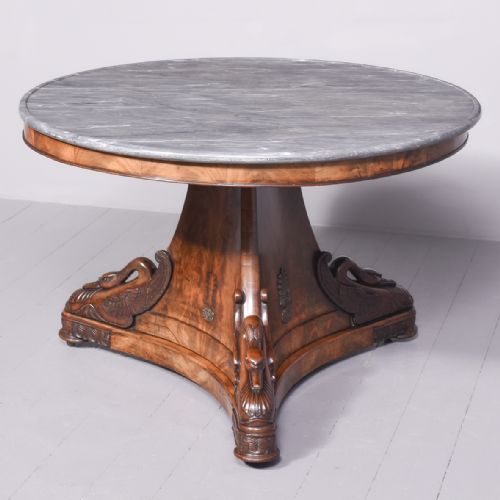
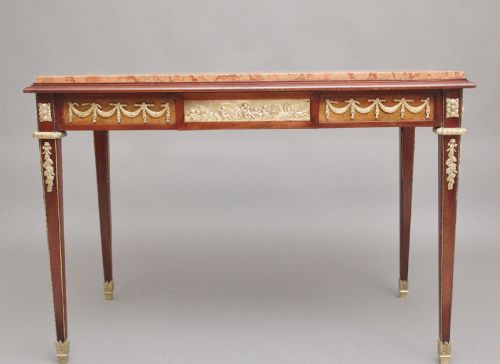
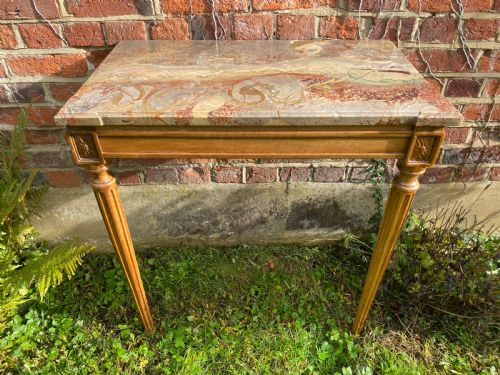
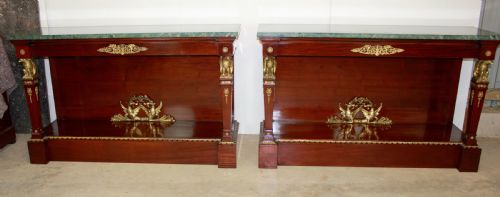
When you search for a french neoclassical foyer table, you are looking at formal hall furniture rooted in classical design, often taking the form of console tables or centre tables designed to anchor an entrance space. These pieces draw heavily on historical motifs from the eighteenth and nineteenth centuries, spanning distinct revivals like Louis XVI and the French Empire style.
On this page, the pieces you are most likely to meet originate from the nineteenth century, alongside examples from the eighteenth, twentieth, and early twentieth centuries. They appear predominantly as marble-topped console tables or round centre tables, utilising forms such as the guéridon and oval occasional tables.
The regional origins and stylistic revivals are clearly defined by historical periods including eighteen-eighty, eighteen-ninety, nineteen-hundred, nineteen-twenty, and nineteen-forty. They provide a structured focal point for an interior, combining practical surface space with heavy classical ornament.
Materials and Construction
The primary woods utilised in these tables include mahogany, walnut, specimen wood, and giltwood, frequently paired with heavy stone surfaces. Marble and porphyry serve as the standard tabletops, providing a cool, durable counterpoint to the timber frames.
Metal ornament defines the decorative vocabulary, with cast or chased ormolu and brass applied to capitals, feet, and friezes. Bronze ornaments and painted finishes also appear, securing the neoclassical preference for mixed media and contrasting textures.
Object forms span console tables, centre tables, guéridons, and oval occasional tables across Empire and Neoclassical styles.
Assessing Quality
Quality rests upon the crispness of the carving and the fidelity of the cast metal mounts, where sharp detail separates superior work from softer, mass-produced alternatives. The choice of timber also dictates standing, with figured mahogany and intricate specimen wood inlay showing greater ambition than plain painted wood.
The integration of the marble or porphyry top into the wooden framework reveals the maker's hand, particularly in the precision of the fit and the weight of the stone slab. Structural integrity in heavy console tables relies on solid joinery that supports substantial stone tops without sagging.
The French Neoclassical Foyer Table Glossary
- Guéridon
- A small round table, typically supported by a central pillar or three legs, originating in seventeenth-century France. These pieces often feature marble tops and heavy classical mounts.
- Console Table
- A table fixed against a wall, traditionally supported by front legs or brackets with the rear secured to the masonry. In a foyer, they provide a shallow surface that maximises floor space.
- Ormolu
- Gilded bronze, applied as decorative mounts to furniture frames during the eighteenth and nineteenth centuries. The technique involves coating bronze with a mercury and gold amalgam.
- Porphyry
- An extremely hard igneous rock with large crystals, highly prized in antiquity and later revivals for tabletops. Its distinct purple or red hue signalled immense wealth and status.
French Neoclassical Foyer Table: Frequently Asked Questions
Where should I place a foyer table?
These tables are designed for entrance halls, corridors, and reception rooms where floor space is measured. They sit flat against a wall in the case of consoles, or float in the middle of larger spaces as centre tables.
Position them beneath a mirror or painting to create a balanced focal point upon entering the home.
How do I care for a marble top?
Marble is a porous stone that reacts to acidic liquids, so coasters and placemats are essential for everyday use. Wipe the surface down regularly with a soft, damp cloth and neutral soap.
Avoid harsh chemical cleaners that can strip the polished finish of the stone over time.
What is the difference between Empire and Louis XVI styles?
Louis XVI style favours lighter, straighter lines, classical columns, and restrained ornamentation drawn from ancient Greece and Rome. It is often characterised by elegance and mathematical proportion.
Empire style, emerging later under Napoleon, is heavier, more militaristic, and bolder, featuring sphinxes, swans, rams' heads, and extensive ormolu mounts.
Can I use an antique centre table in a modern room?
Placing a nineteenth-century centre table in a contemporary interior creates a deliberate contrast between historic craftsmanship and minimalist architecture. The natural warmth of mahogany, walnut, and giltwood grounds a modern room.
Ensure there is enough clearance around the table for comfortable movement through the space.