

Geometric Panelled Drawers
Geometric panelled drawers offer tactile depth through applied mouldings, bringing sturdy seventeenth-century character and rich timber grain directly into modern interiors.
Geometric Panelled Drawers
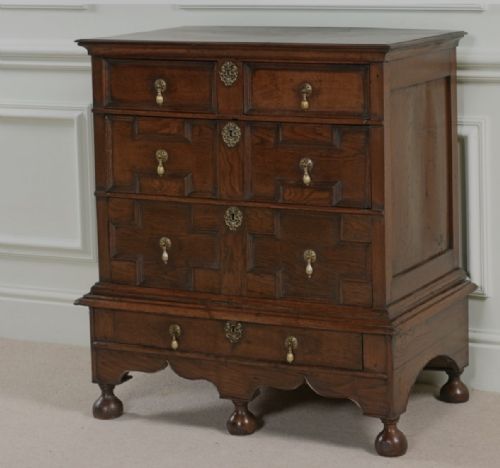
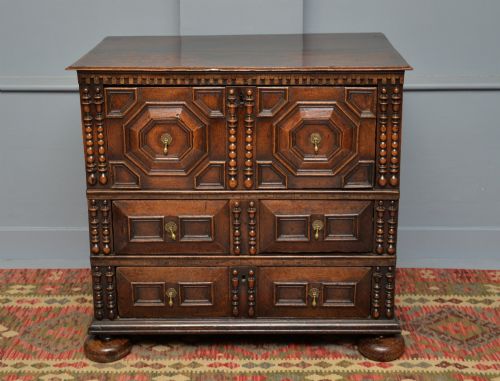
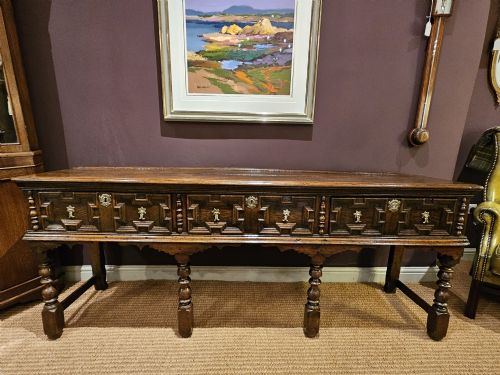
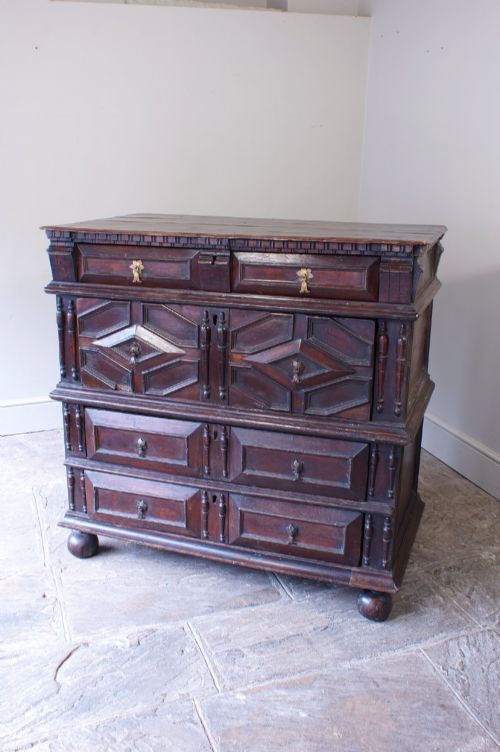
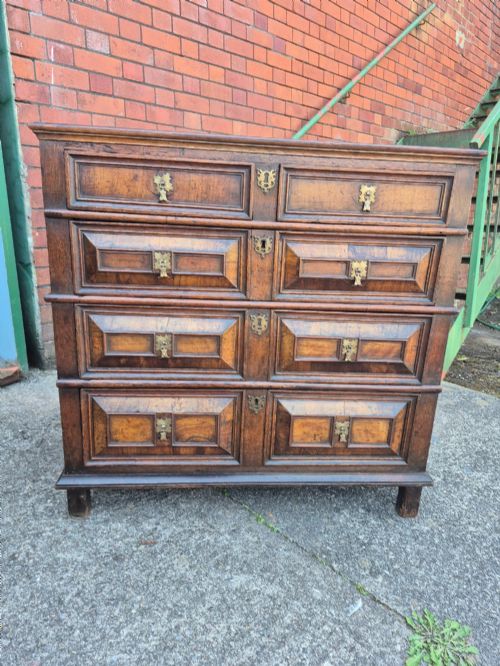
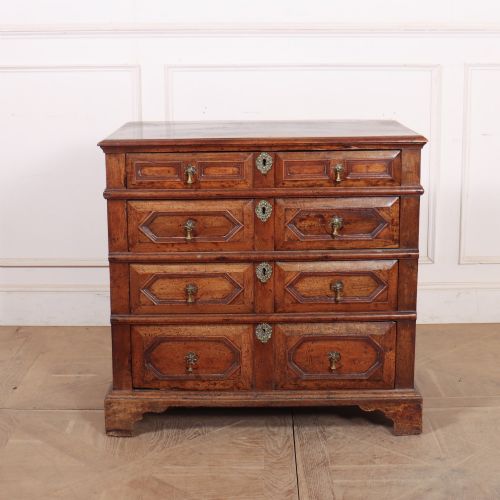
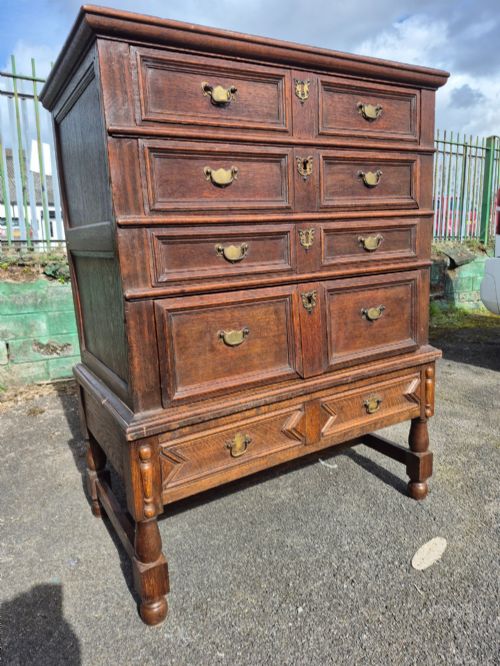
When you search for geometric panelled drawers, you encounter robust storage furniture primarily rooted in the seventeenth century, alongside later revival pieces from the Edwardian era and the early twentieth century. The forms appearing here include chests of drawers, mule chests, dresser bases, and sideboards built from heavy timbers.
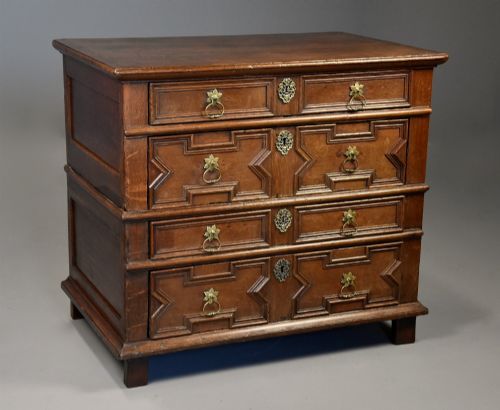
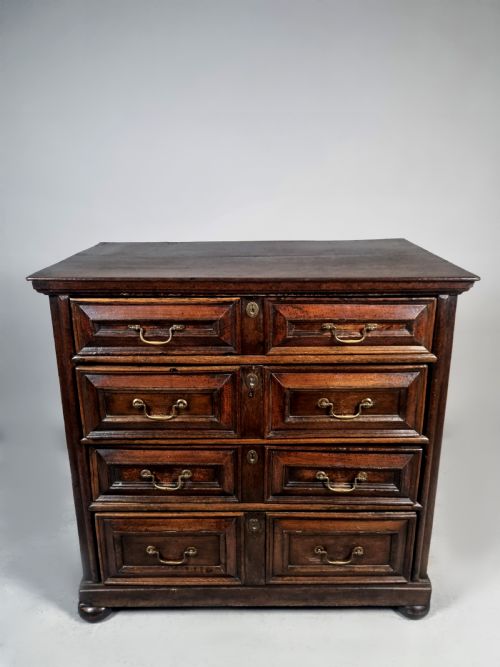
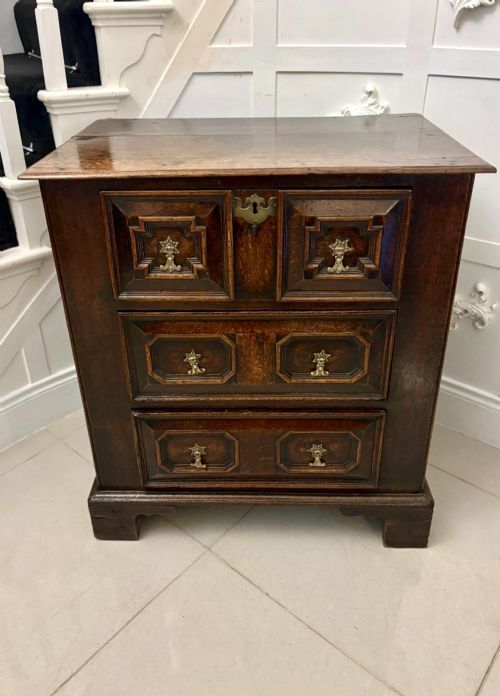
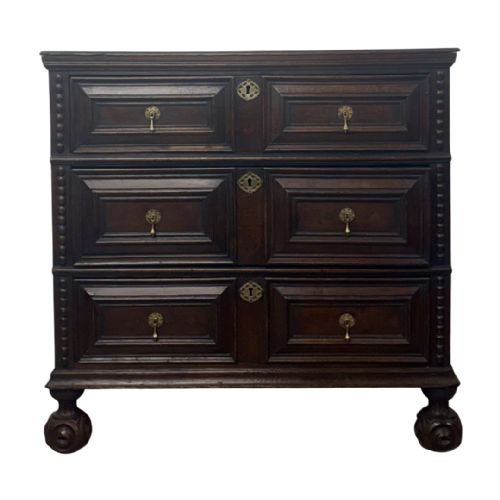
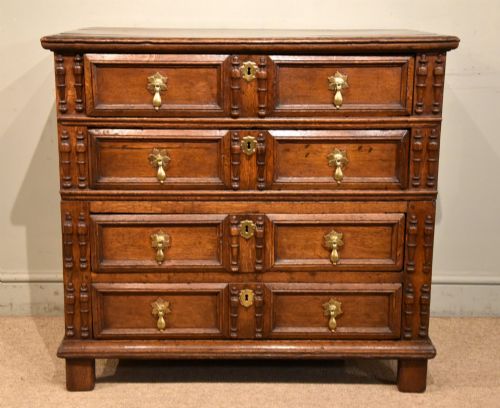
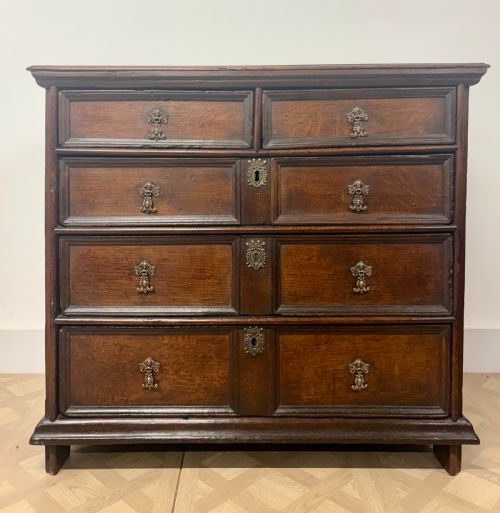
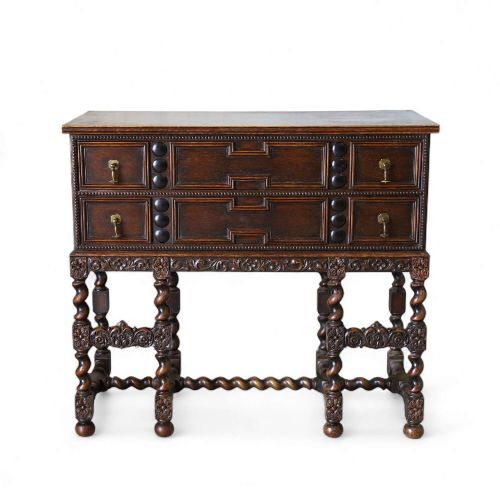
The majority of pieces date from the seventeenth century, specifically the Charles II, Carolean, and Jacobean periods, showcasing distinct architectural fronts. Chests of drawers are the most common format, often structured as two-part pieces or standing on elevated bases with brass hardware.
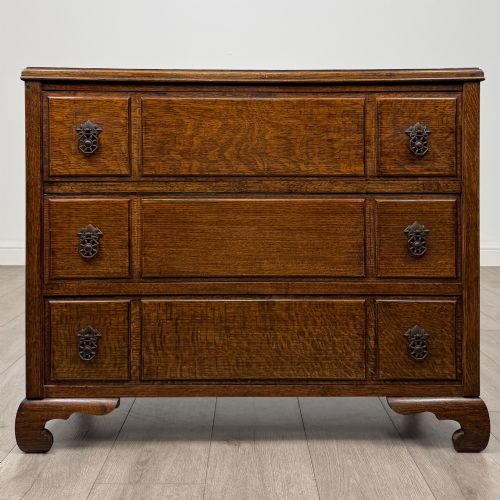
Alongside standard oak chests, variations include walnut and fruitwood constructions, alongside dresser bases and servers featuring low profiles. Later revivals from the 1920s and 1930s replicate these early seventeenth-century details, providing similar geometric visual weight.
How they were made
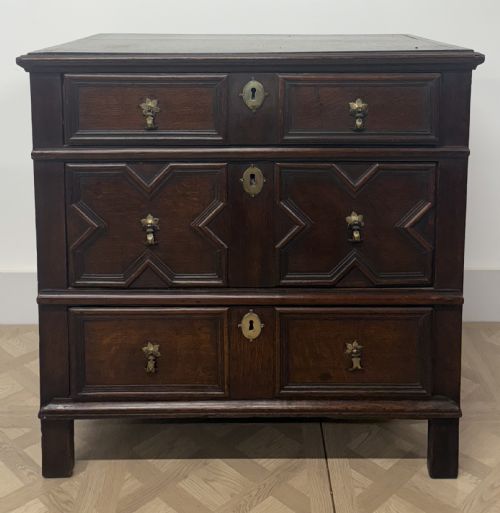
Cabinet makers constructed these pieces predominantly from solid oak, frequently incorporating contrasting secondary timbers such as walnut, fruitwood, and snakewood for decorative embellishment. Drawer fronts were typically detailed with applied mitred mouldings arranged in geometric patterns, creating strong shadow lines across the facade.
Joinery relied on traditional pegged mortise and tenon construction for the primary carcass, ensuring structural rigidity that endured across centuries. Surfaces often received hand-carved elements, panelled sides, and occasionally painted finishes or faded patinas developed through age and wax polishing.
Geometric Panelled Drawers Retail Price Guide 2026
Typical asking prices for geometric panelled drawers among the pieces listed under this phrase on Sellingantiques today, from the lower quarter to the upper quarter. They describe what is for sale here now, not the wider market.
Listings span from the 17th century through the Edwardian period to the 1930s, uniting early oak construction with later revival movements.
What varies in quality
The sophistication of the applied moulding work dictates much of the visual hierarchy, where intricate geometric layouts demand precise carpentry and tight mitres. The selection of timber grain also separates standard examples from exceptional ones, particularly where contrasting fruitwood, snakewood, or walnut veneers enhance the oak carcass.
Proportion and originality of the hardware, including brass drop handles and escutcheons, influence the integrity of each piece. Surviving period elements, such as untouched two-part structures and authentic standing bases, command greater appreciation than heavily altered or later amalgamated examples.
The Geometric Panelled Drawers Glossary
- Geometric moulding
- Applied wooden strips arranged in repeating shapes on drawer fronts to create a panelled, three-dimensional effect. This technique defined much of the decorative output during the late seventeenth century.
- Dresser base
- A low wooden storage unit featuring drawers and sometimes cupboards beneath a flat top surface, originating from early domestic kitchens and halls. These pieces often display the same moulded drawer fronts as standard chests.
- Mule chest
- A storage chest fitted with one or more drawers at the base beneath the main compartment. They combine the traditional lift-lid trunk storage with accessible drawer space.
- Two-part chest
- A chest of drawers constructed in upper and lower sections to ease transportation within homes. This modular seventeenth-century method stacks one cabinet squarely on top of another.
- Patina
- The deep surface sheen and mellowed tone developed by timber over centuries of handling, light, and waxing. A desirable patination reflects genuine age and continuous use.
Geometric Panelled Drawers: Frequently Asked Questions
How do I date a geometric chest?
Dating relies on examining the construction methods, timber species, and moulding styles used across the piece. Seventeenth-century examples typically feature hand-riven oak, pegged joints, and characteristic mitred geometric panels.
Revival pieces from the Edwardian era or the 1930s mimic these early Carolean and Jacobean details but often reveal more uniform machine sawing and modern internal framing upon closer inspection.
Where were these chests used?
In seventeenth-century households, these chests served primarily in bedchambers and private living quarters to store linens, garments, and valuables. Their robust build suited daily domestic use.
Today, they function well in contemporary hallways, living rooms, and bedrooms, offering practical drawer space while anchoring a room with historic timber texture.
What woods were used?
Oak is the predominant timber found in these listings, valued for its strength, availability, and distinct grain pattern. Cabinet makers frequently utilised it for the main carcass and structural elements.
Finer decorative elements often employed contrasting timbers such as walnut, fruitwood, cedar, and exotic snakewood to highlight the complex geometric moulding patterns on the drawer fronts.