
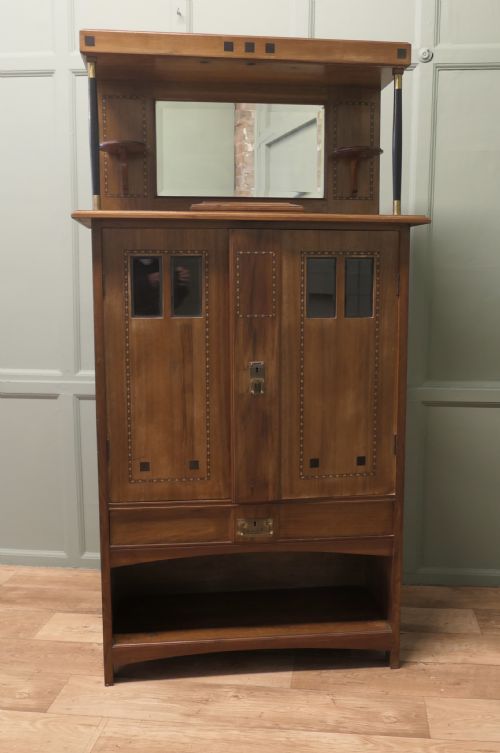
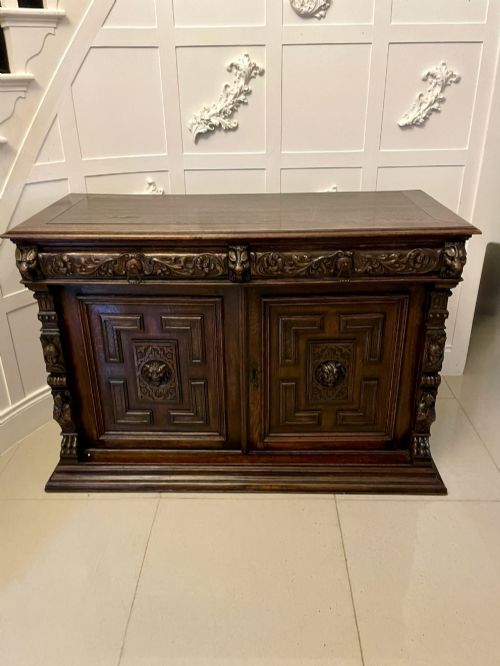
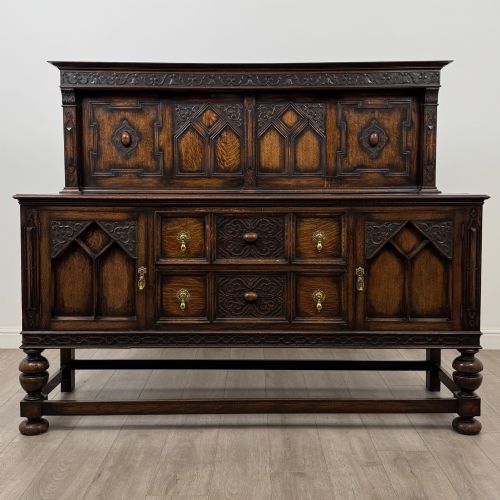
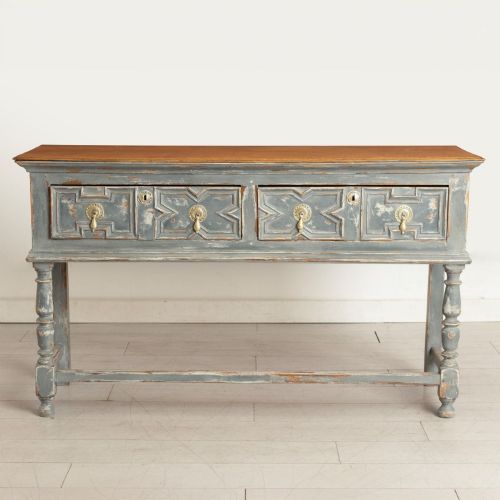
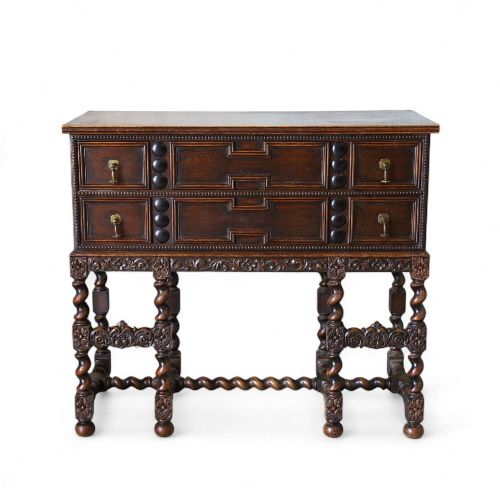
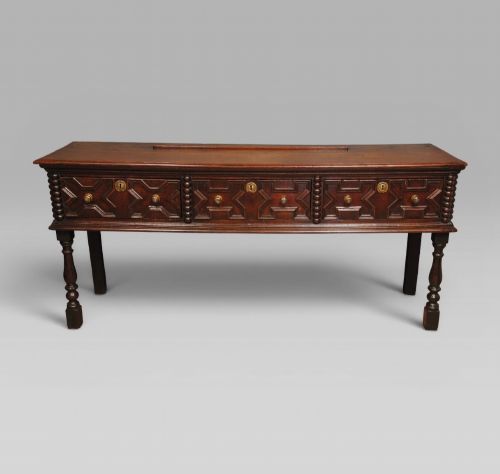


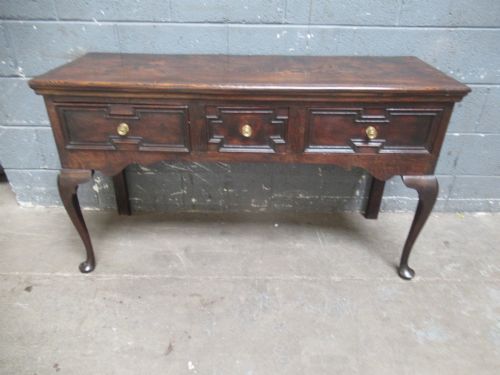


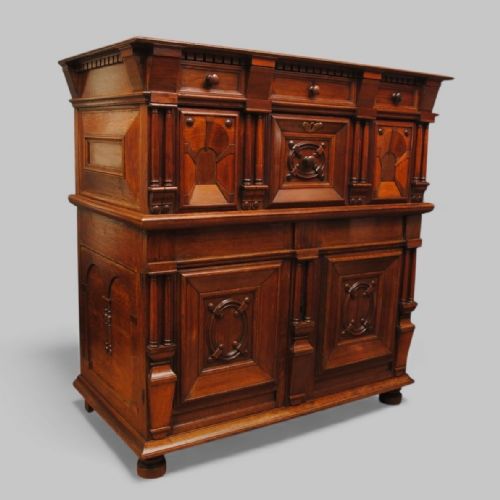
Geometric Oak Sideboard
A geometric oak sideboard brings architectural moulding and hard timber together to anchor a room.
Geometric Oak Sideboard
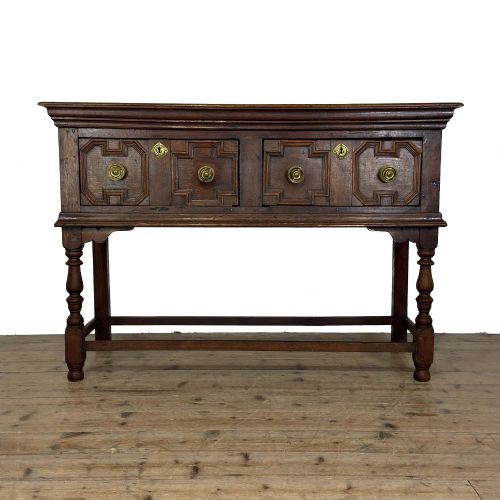
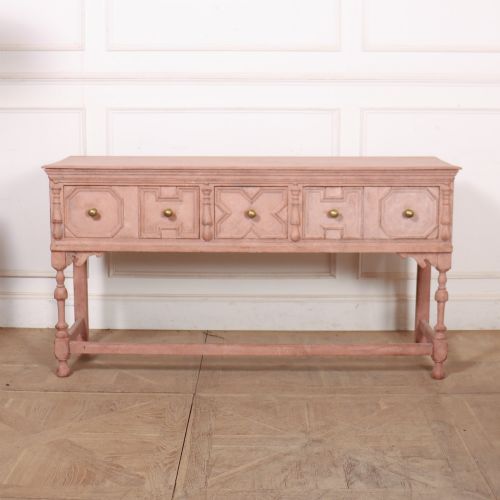
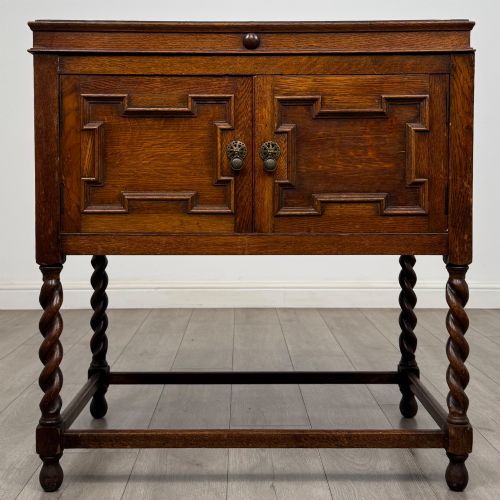
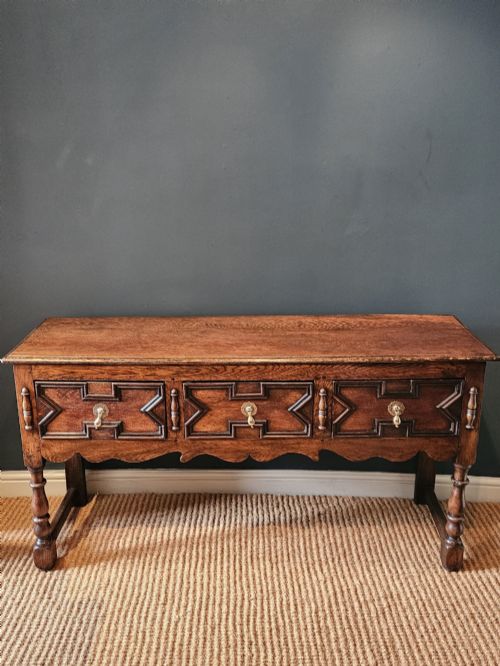
A geometric oak sideboard is a heavy storage piece defined by panelled or panel-moulded drawer fronts and cupboard doors. These pieces emerge primarily from the seventeenth century, with later revivals appearing through the nineteenth and twentieth centuries in styles such as Jacobean, Carolean, and Art Deco.
The most common formats met on this page include low dresser bases, serving dressers, and server cabinets fitted with multiple drawers. Forms span from simple panelled cupboards to intricate carved servers incorporating fruitwood and walnut details alongside the principal timber.
Origins stretch across English workshops as well as continental centres, including pieces attributed to Dutch and French makers. Buyers encounter vernacular English country items alongside formal revival commissions from later periods.
How they were made
Construction relies heavily on solid oak joined by traditional methods, often incorporating secondary timbers such as fruitwood, walnut, and snakewood for contrasting inlay and decoration. Iron and brass hardware, including drop handles and hinges, secure the doors and drawers.
Surface decoration depends on applied geometric mouldings that create raised panels on drawer fronts and cupboard doors. Skilled joinery shapes the timber into block fronts and panelled frameworks, sometimes finished with paint, liming, or leaded glass elements.
Listings feature oak items spanning the seventeenth century through to the mid-twentieth century, alongside walnut and fruitwood.
What varies in quality
Quality separates in the precision of the geometric mouldings and the integrity of the timber joints. Pieces built with crisp, deeply cut applied mouldings and dense, richly grained oak sit at the upper end of the range.
The degree of original surface survival and the harmony of secondary timbers like fruitwood or walnut define the distinction between standard vernacular items and exceptional revival or period examples.
Heals of London·Charles Dudouyt·Étienne Kohlmann
The Geometric Oak Sideboard Glossary
- Dresser base
- A low wooden storage unit featuring drawers above cupboards, designed for serving and domestic utility.
- Geometric moulding
- Applied wooden strips arranged in repeating angular patterns to create a panelled, three-dimensional facade.
- Block front
- A cabinet or drawer front divided vertically into three sections, with the central portion recessed.
- Jacobean style
- An English design aesthetic from the seventeenth century characterised by heavy proportions and rectilinear panelling.
- Barley-twist
- A turned wooden furniture support carved into a helical spiral shape.
Geometric Oak Sideboard: Frequently Asked Questions
What is a geometric oak sideboard?
A geometric oak sideboard is a heavy storage cabinet distinguished by applied wooden mouldings arranged in patterns upon its doors and drawers. These pieces function as serving tables or storage units in dining rooms and living spaces.
Most examples rely on solid oak construction, sometimes enhanced with contrasting timbers like walnut or fruitwood. The form bridges centuries of cabinetmaking, ranging from seventeenth-century originals to later nineteenth and twentieth-century revival pieces.
How do I date an oak sideboard?
Dating requires examining the construction methods, tool marks, and the style of the geometric mouldings. Seventeenth-century pieces typically show pegged mortise and tenon joinery alongside hand-riven oak boards.
Revival pieces from the nineteenth and twentieth centuries often display machine-cut elements and standardised fixings beneath their Jacobean-style exteriors. Comparing the hardware and secondary woods helps clarify the exact period of manufacture.
How were these sideboards used?
These pieces served primarily for food preparation, serving meals, and storing household plate and textiles. The top surface held dishes during feasts while the drawers and cupboards contained linens and cutlery.
Over subsequent centuries, their role shifted toward display and general living room storage. Today, they function as credenzas or cocktail cabinets within domestic interiors.
How do I care for antique oak?
Antique oak benefits from stable indoor humidity levels away from direct heat sources and strong sunlight. Maintaining a consistent environment prevents the timber and applied geometric mouldings from drying out or splitting.
Occasional treatment with traditional wax feeds the wood and preserves the surface sheen. Avoid harsh chemical cleaners that strip the historic finish or damage the secondary fruitwood and walnut inlays.