


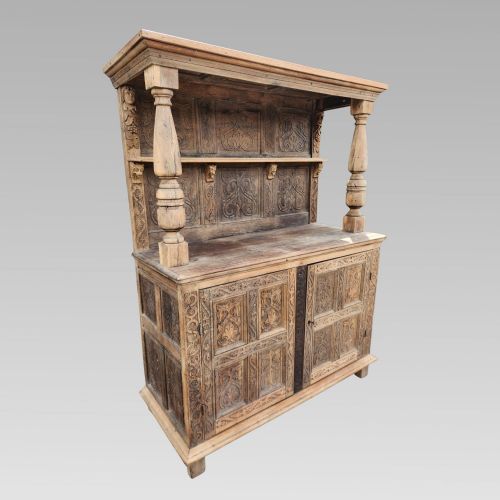


Light Oak Buffet
A light oak buffet brings bright, honest grain and practical storage to a room, offering sturdy surface space and deep cupboards for daily dining use.
Light Oak Buffet
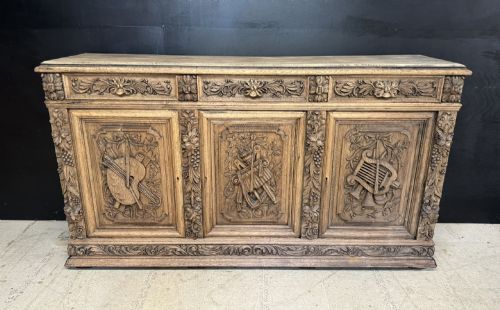
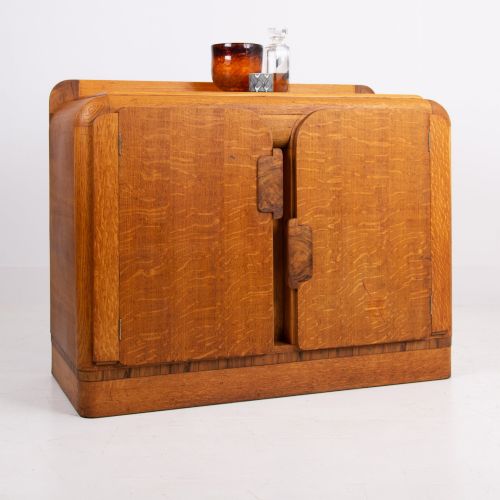
When you search for light oak buffet, you are looking at substantial storage furniture built from pale timber, spanning periods from the eighteenth century through to the art deco era and the early twentieth century.
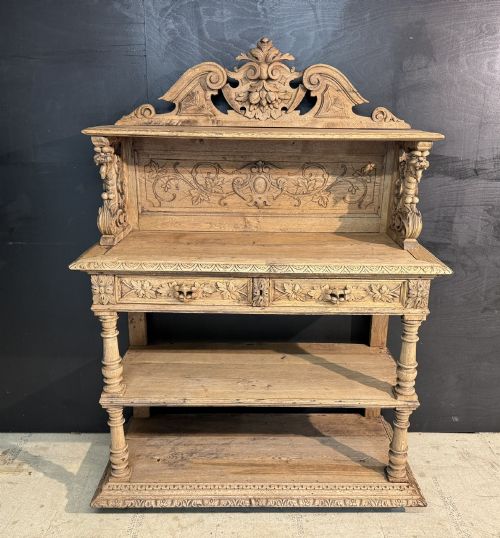
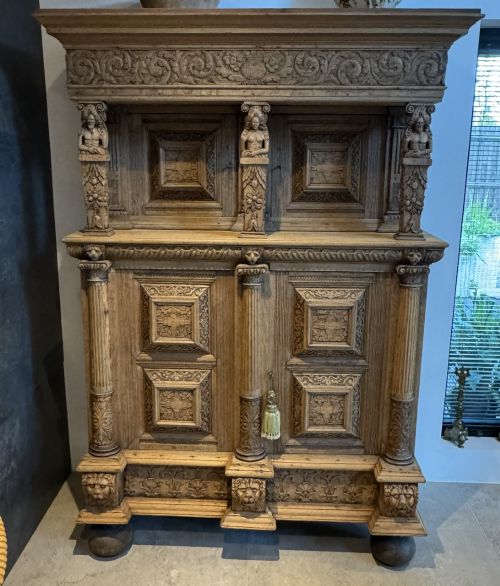
The pieces listed here appear in diverse regional styles, ranging from French provincial and chateau designs to English Victorian, Edwardian, and Flemish baroque forms.
You are most likely to encounter nineteenth-century French carved examples alongside stripped, limed, or bleached variants from the 1920s and 1930s that bring a lighter tone to contemporary interiors.
Materials and construction methods
Makers built these pieces primarily using solid oak, occasionally combining it with walnut, ash, or pine carcasing, and pairing the timber with brass handles, glass panels, and wrought iron mounts.
Construction relies heavily on traditional joinery techniques, supporting heavy carved doors, potboard shelves, and mirror backs that characterise the larger Victorian and continental iterations.
Some nineteenth-century French models hid their daily bread behind deeply carved oak panels depicting cheerful rural harvests.
Assessing quality in construction and finish
The standard of carving and the crispness of relief work set individual cabinets apart, distinguishing robust vernacular work from finely detailed revival pieces.
Surface treatment dictates much of the character, where deliberate bleaching or liming sits alongside deep natural patination developed over centuries of use.
Gomme·Heals of London
The Light Oak Buffet Glossary
- Buffet
- A low sideboard or cabinet traditionally used for serving food and storing tableware. These pieces often feature cupboards and drawers beneath a flat top.
- Potboard
- An open slatted lower shelf found beneath dressers and sideboards, originally designed for storing heavy pots and dishes.
- Limed oak
- Timber treated with a specialised finish that leaves a white or pale pigment in the grain pores, creating a lighter, softened appearance popular in the twentieth century.
- Mirror back
- A superstructure incorporating a mirror above the main sideboard surface, commonly added during the Victorian and Edwardian periods to reflect light.
- Flemish baroque
- A decorative style characterised by exuberant carved scrolls, heavy mouldings, and robust proportions frequently seen in seventeenth and eighteenth-century continental furniture.
Light Oak Buffet: Frequently Asked Questions
How do I clean a light oak buffet?
Dust the timber regularly with a soft, dry cloth to prevent grit accumulation in the grain.
Avoid silicone polishes, using instead a traditional beeswax sparingly to nourish the surface without dulling the pale finish.
Where should I place a buffet in my home?
These cabinets suit dining rooms, large kitchens, and hallways where their surface provides a practical station for serving or display.
Keep them away from direct heat sources and strong sunlight to prevent the oak from drying out or splitting.
What is the difference between a buffet and a sideboard?
Historically, a buffet was lower and used specifically for food service, whereas a sideboard often included additional cupboards and drawers for cutlery and linens.
Over time, the terms became largely interchangeable in furniture descriptions.
How can I tell an older buffet from a 1920s piece?
Examine the backboards, drawer linings, and tool marks, as eighteenth and nineteenth-century pieces often display hand-sawn timber and older joinery methods.
Twentieth-century examples, particularly those with limed or bleached finishes, tend to feature cleaner, more uniform milling.