
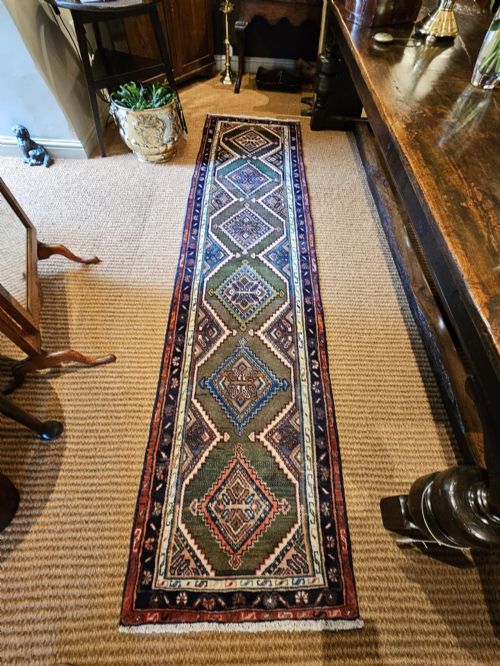
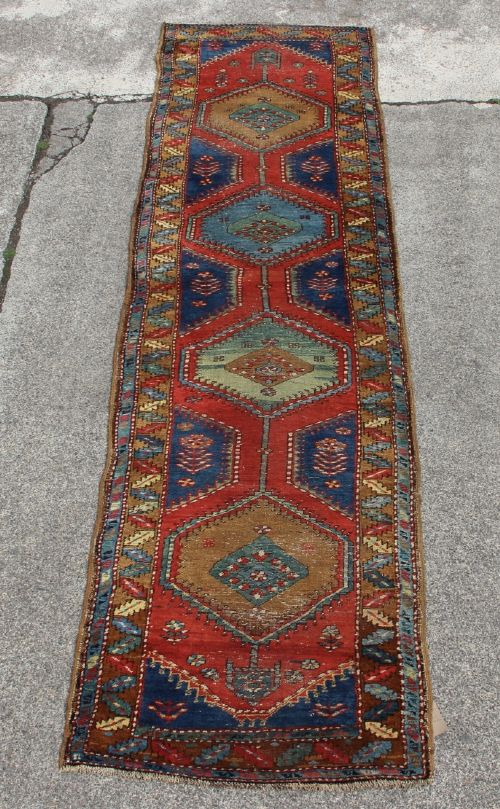
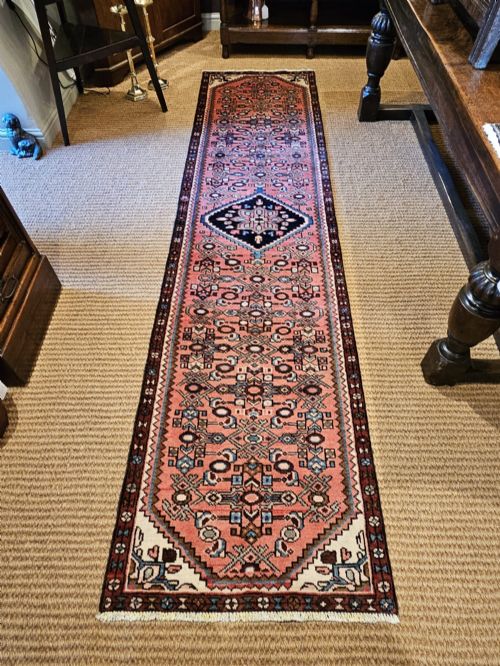
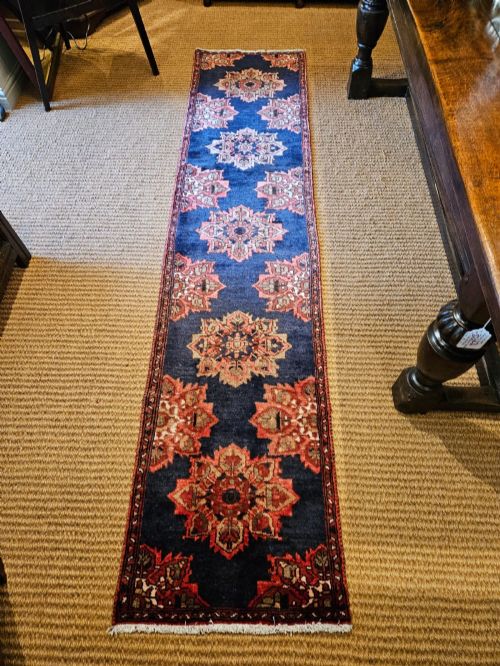
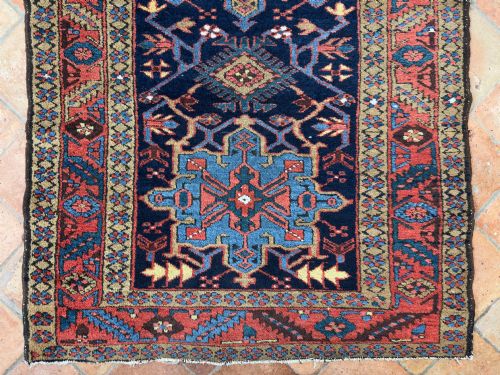
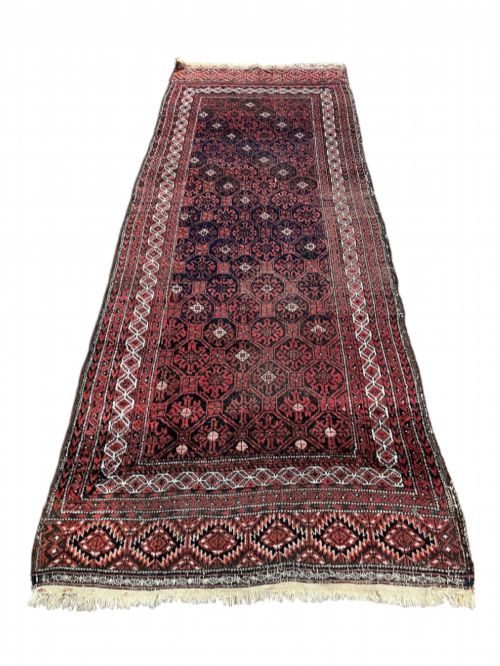
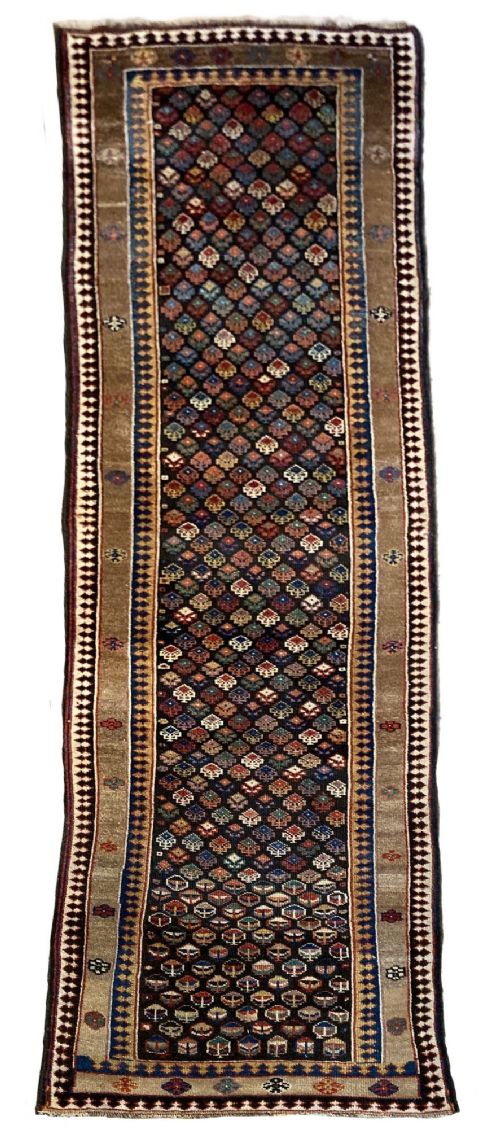


Geometric Narrow Runner
A geometric narrow runner provides linear floor coverage for hallways and corridors using repeating tribal motifs.
Geometric Narrow Runner
A geometric narrow runner is a long, slender floor covering designed primarily for corridors, halls and tight spaces. The selection on this page spans from the late nineteenth century through to the nineteen thirties, originating predominantly from Persian, Turkish, Caucasian and Moroccan weaving traditions.
The most frequent examples encountered here are village and tribal rugs from regions such as Heriz, Hamadan, Kurdish territories and Morocco. These pieces utilise elongated formats to fit narrow architectural spaces while displaying traditional regional patterns.
Makers varied from village workshops to nomadic weavers producing pieces for functional domestic use rather than court commissions. This background accounts for the robust wool construction and straightforward geometric compositions found across the inventory.
Materials and construction methods
The physical build relies heavily on wool, hand-spun wool and cotton foundations, occasionally incorporating camel hair for natural tones. Weavers knotted or flat-wove these materials by hand on vertical looms to create durable textiles intended for heavy foot traffic.
Natural dye sources provided the foundational palette seen in these runners, yielding mellow colours that age with stability. Foundation warps and wefts of cotton or wool gave the long formats the necessary tensile strength to lie flat along a hallway.
Listings span production dates from eighteen seventy through to nineteen thirty, using wool, cotton and camel hair.
What determines quality in these runners
Quality rests on the precision of the tribal knotting, the density of the wool pile and the integrity of the original selvedges and ends. Examples with balanced proportions and tightly packed foundations demonstrate superior structural discipline from the weaver.
The clarity of the geometric drawing and the harmonious ageing of the palette separate standard village production from exceptional regional pieces. Wear that respects the integrity of the wool structure differs significantly from compromised foundations.
Heriz·Hamadan·Kurdish·Moroccan Berber
The Geometric Narrow Runner Glossary
- Runner
- A long, narrow carpet format traditionally utilised in hallways, corridors and alongside beds.
- Kilim
- A flat-woven carpet or runner produced without a pile by tightly interweaving warp and weft strands.
- Selvedge
- The reinforced outer side edges of a runner that prevent the structure from fraying or unravelling.
- Warp
- The stationary vertical threads stretched across a loom that form the foundational skeleton of the rug.
- Weft
- The horizontal threads passed through the warp threads to lock the knots or flat-weave rows firmly in place.
Geometric Narrow Runner: Frequently Asked Questions
Where should a narrow runner be placed?
These elongated floor coverings suit hallways, corridors and narrow entryways where standard rectangular carpets fail to fit. Their proportions guide movement through domestic spaces while protecting wooden floorboards.
Positioning a runner in a passage also adds warmth and acoustic dampening to high-traffic areas of the home. Ensure the underlying floor surface is even to maintain the straight alignment of the piece.
How do I care for an old wool runner?
Regular gentle vacuuming without a rotating brush roll removes grit that settles deep within the wool pile. Professional cleaning suited to antique textiles preserves the natural lanolin in the fibres.
Avoid excessive moisture and direct, harsh sunlight to maintain the stability of the natural dyes. Rotating the rug periodically ensures even wear across the length of the runner.
How are regional styles identified?
Distinguishing regional origins relies on observing specific structural traits, palette choices and recurring geometric motifs. Hamadan and Heriz pieces often display distinct medallion structures and border arrangements unique to Persian village weaving.
Caucasian and Moroccan pieces introduce alternative geometric vocabularies and distinct wool textures. Comparing knot density and end finishes clarifies the specific tribal tradition behind each piece.
Why are these runners unusually narrow?
The narrow proportions derive from the architectural demands of traditional hallways and the structural limitations of village looms. Weavers adjusted their widths to fit domestic corridors and passage spaces effectively.
Narrow formats also suited the portable vertical looms used by nomadic and semi-nomadic weavers. This constraint produced the distinctive long aspect ratio valued by modern interior designers.