


Geometric Floral Area Carpet
A geometric floral area carpet brings structure and colour to a room through traditional patterns.
Geometric Floral Area Carpet
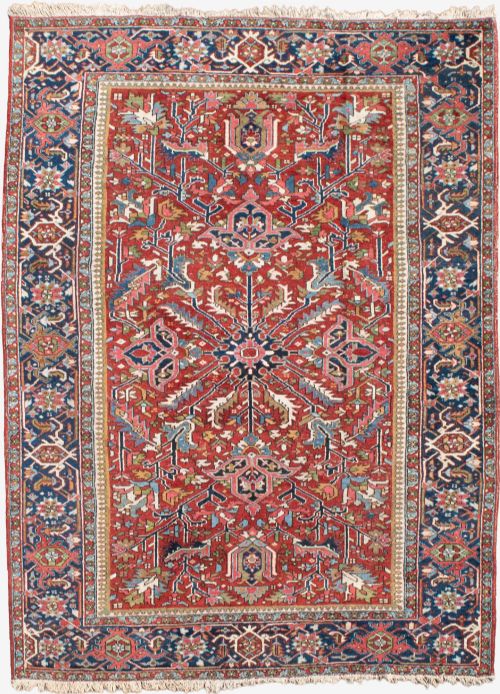
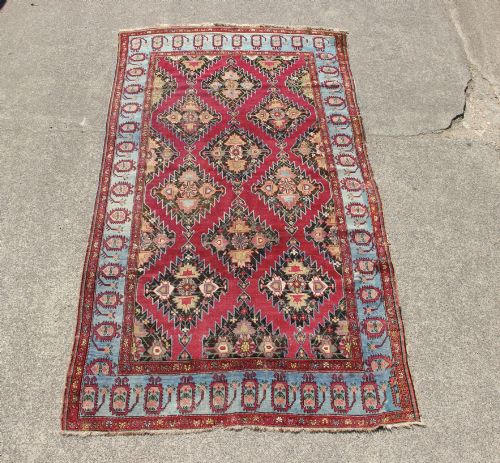
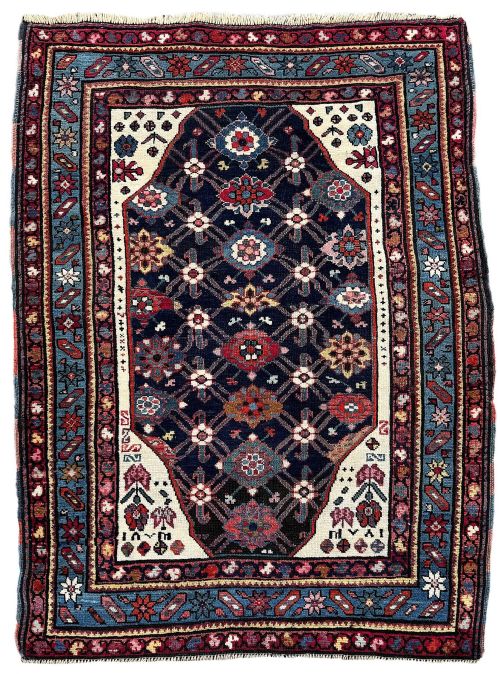
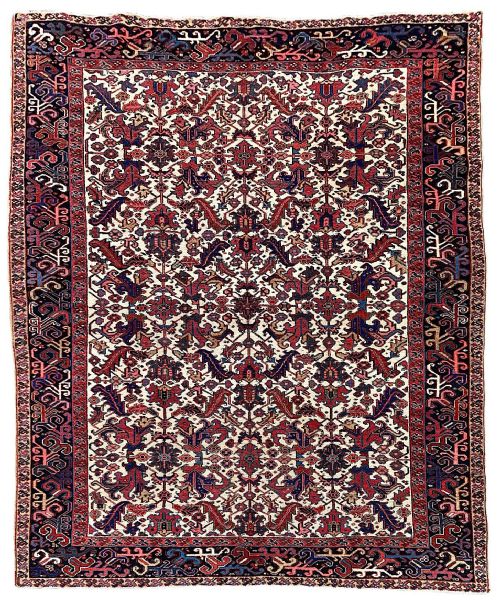
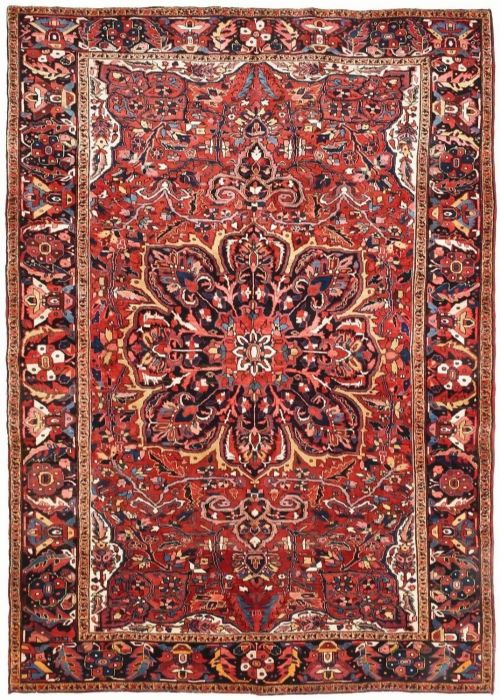
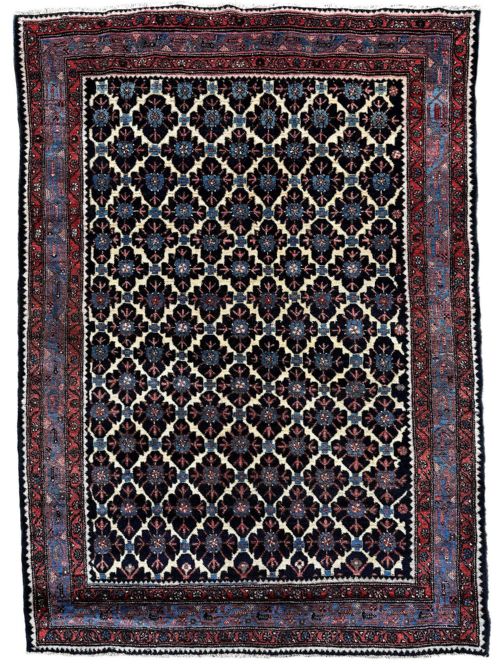
When you search for a geometric floral area carpet, you encounter hand-knotted floor coverings that bridge structured linear motifs and botanical patterns. These pieces originate from Persian and Caucasian weaving traditions, spanning regional styles such as Heriz, Karabagh, Shirvan, and Hamadan.
The version you are most likely to meet on this page is a room-sized or smaller carpet dating from the late nineteenth century to the early twentieth century. These floor coverings utilise traditional village and tribal designs, combining rectilinear lattice frameworks with stylised floral elements.
Materials and construction
These carpets are constructed using wool and cotton, combining durable wool pile on sturdy cotton foundations for daily resilience. Weavers knotted the yarn by hand, allowing complex patterns to form across the surface.
Natural variations in dye absorption and hand-spun fibres create subtle shifts in tone across the pile. The density of the knotting dictates the crispness of the linear and floral motifs.
The listings span periods from the 1870s to the 1930s, utilising wool and cotton materials across Persian and Caucasian styles.
What separates fine examples
The distinction between standard examples and superior pieces lies in the precision of the drawing and the clarity of the colour palette. Finer carpets display sharper definition within the geometric lattices and floral arrangements.
Condition and integrity of the original edges and fringe areas also influence the standing of a carpet. The overall balance of pattern and proportion across the field determines the visual impact.
The Geometric Floral Area Carpet Glossary
- Heriz
- A style of Persian carpet known for large-scale geometric medallions and robust structural designs. These pieces often feature bold rectilinear floral patterns.
- Karabagh
- A Caucasian weaving style characterised by distinctive colour palettes and structured floral or geometric motifs. These rugs frequently incorporate traditional regional symbolism.
- Prayer rug
- A small rug featuring a mihrab or niche design used historically for personal devotion. These pieces display intricate floral lattice work within the central field.
- Bakshaish
- An antique Persian carpet type originating from a specific village known for relaxed geometry and spacious floral compositions. They present softer interpretations of classic medallion formats.
- Lattice
- An open framework of crisscrossing lines that forms a repeating geometric grid. In these carpets, floral elements populate the compartments of the grid.
Geometric Floral Area Carpet: Frequently Asked Questions
How do I date a carpet?
Dating relies on stylistic indicators, structural characteristics, and material analysis. Examining the dyes, wool quality, and weave structure helps narrow the period.
Comparing the specific floral motifs and borders to documented regional examples provides a reliable timeframe for the creation of the piece.
Where were these carpets made?
These floor coverings originate from workshops and villages across Persia and the Caucasus. Regions such as Heriz, Shirvan, and Gendje developed distinct local styles.
Tribal groups and village weavers contributed specific design vocabularies that identify the geographical source of each piece.
How do I care for my carpet?
Maintenance involves regular gentle vacuuming without the use of a rotating brush. Professional cleaning by a specialist in antique textiles preserves the wool pile.
Avoiding direct sunlight prevents fading of natural dyes, and rotating the rug periodically ensures even wear over time.
What is a floral lattice?
A floral lattice is a repeating network of geometric lines filled with botanical motifs. This arrangement organises the field of the rug.
Weavers used this layout to create symmetry and balance while incorporating varied floral shapes within each section of the grid.