

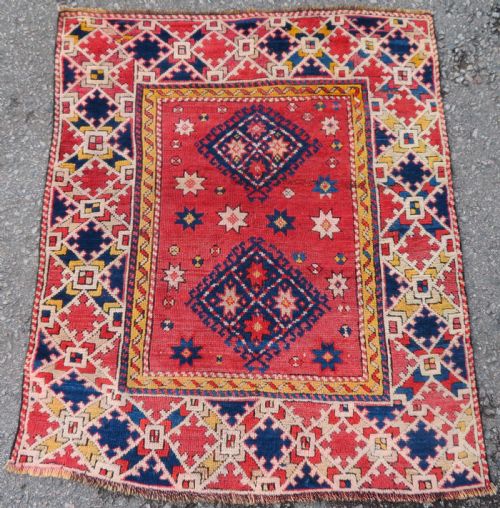


Geometric Blue Turkish Rug
A geometric blue turkish rug brings century-old Anatolian village craftsmanship and rich tribal patterns straight to your floor.
Geometric Blue Turkish Rug
A geometric blue turkish rug gathers together woven floor coverings originating from Anatolian regions, spanning centuries of traditional production. When searching for this phrase, you encounter village and tribal pieces originating from towns and regions such as Bergama, Ushak, Konya, and Yagcibedir.
The selection here includes various formats, ranging from long runner rugs to square area carpets and prayer rugs. These pieces showcase designs rooted in Anatolian tribal and traditional styles, executed by weavers working across different Turkish provinces.
Dating across the nineteenth and early twentieth centuries, these rugs demonstrate regional weaving habits that persist through generations. Village workshops and nomadic groups alike contributed to the diverse pool of patterns available in this category.
Evaluating the Weave
Quality within this category rests upon the consistency of the wool, the clarity of the geometric motifs, and the depth achieved by natural dyework. Finer knots and tightly packed foundations separate robust village carpets from looser, more distended examples.
The integrity of the edges and the preservation of the original format significantly influence the standing of each piece. Surviving examples retain their intended proportions, whereas distressed rugs show the natural wear of extended domestic use over generations.
Some village weavers split wide kilims down the middle just to weave them separately on narrow looms before stitching them back together.
The Geometric Blue Turkish Rug Glossary
- Kilim
- A flatwoven carpet or rug produced without a pile, traditionally utilised across Anatolia and the Balkans. These textiles rely on tightly interlocking warp and weft threads to create sharp geometric patterns.
- Runner
- A long, narrow carpet format designed specifically for hallways, corridors, or alongside furniture. These pieces maintain a rectangular proportion suited to linear spaces.
- Prayer Rug
- A small rug featuring a mihrab or niche design, historically used for individual daily prayers. These formats often display focused symbolic motifs directed towards Mecca.
- Yastik
- A small traditional Turkish cushion face or small rug, typically woven in village households for domestic seating. They represent intimate scales of Anatolian weaving.
- Medallion
- A central ornamental motif positioned in the middle of the carpet field. This focal design often anchors the surrounding geometric or floral patterns.
Geometric Blue Turkish Rug: Frequently Asked Questions
How do I clean an old wool rug?
Maintenance requires gentle surface brushing and professional specialist cleaning suited to antique textiles rather than standard domestic washing.
Avoiding harsh detergents preserves the natural lanolin within the wool fibres and protects the traditional dyes.
Where were these rugs made?
Production centres span various Anatolian towns and tribal regions, including Bergama, Ushak, Konya, and Yagcibedir.
Local weavers in these areas developed distinct regional patterns using locally sourced materials.
Can I use runners in hallways?
Runner formats suit narrow spaces such as corridors, hallways, and bedside placements perfectly.
Placing an appropriate underlay beneath the rug prevents sliding and cushions the historic foundation.
How do I date an antique rug?
Dating relies on assessing the material composition, dye characteristics, wear patterns, and structural knotting styles.
Comparing specific regional motifs against documented nineteenth and early twentieth-century examples helps narrow the period of origin.