

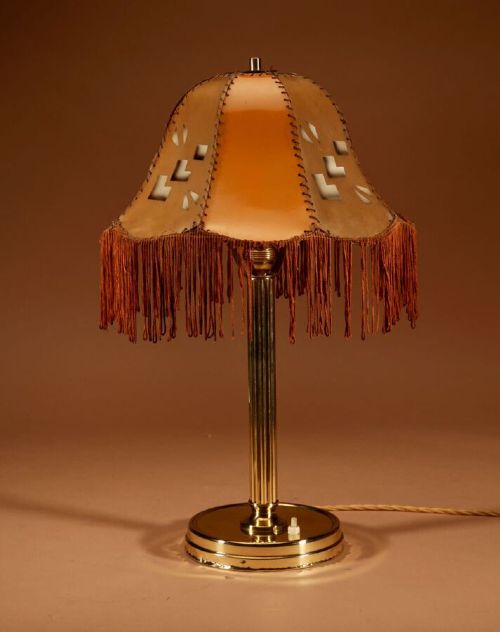
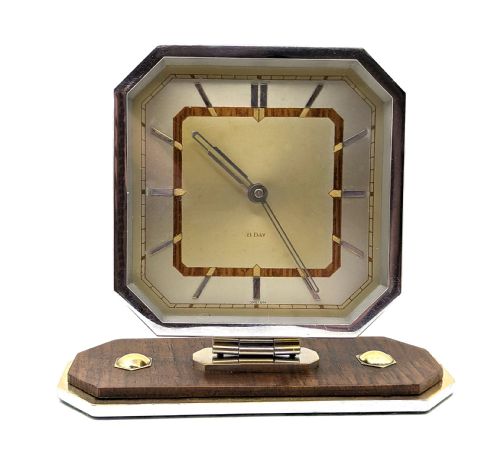


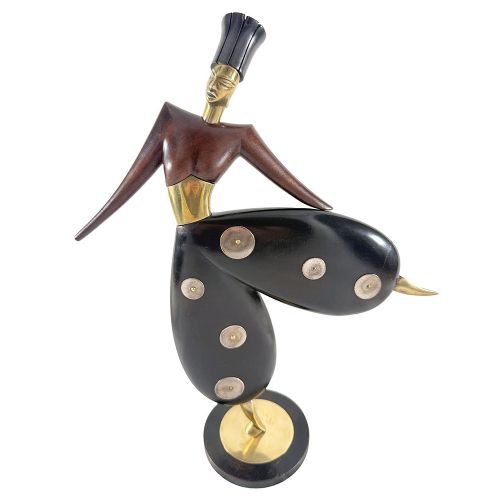


Geometric Art Deco Desk
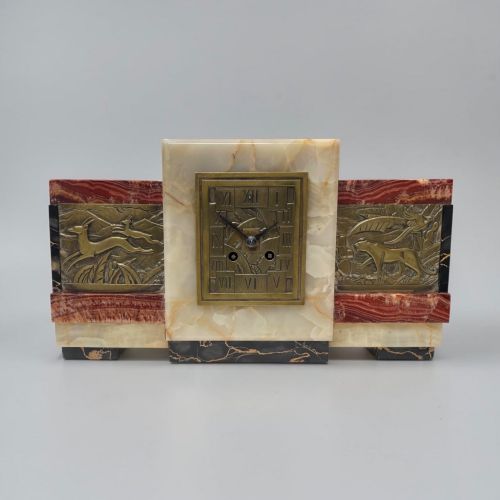
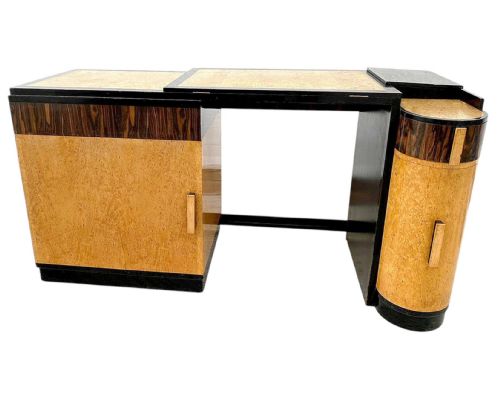
These pieces of geometric art deco desk furniture bring clean lines and striking materials together for a workspace.
Geometric Art Deco Desk
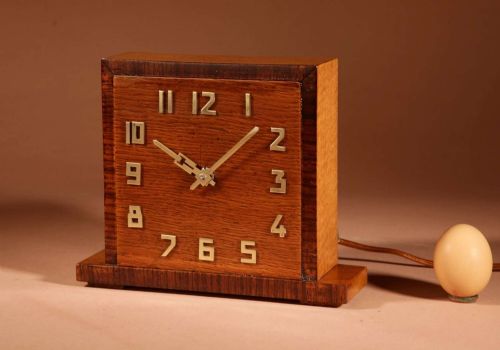
A geometric art deco desk brings together linear forms and architectural shapes typical of the period from the 1920s to the 1940s. These pieces often utilise distinctive timbers like oak, walnut, maple, and macassar.
Buyers searching for a geometric art deco desk will find examples that incorporate related forms such as bureau bookcases and matching side chairs alongside writing surfaces. The design vocabulary relies heavily on symmetry, chevrons, and stepped profiles.
French and English workshops produced many of the surviving examples found in this category, often pairing wood structures with contrasting metallic details.
Materials and construction methods
Cabinet makers utilised dense hardwoods such as oak, walnut, and exotic veneers like macassar to build the primary structures of desks and bureau bookcases. These timbers were selected for their grain patterns and stability.
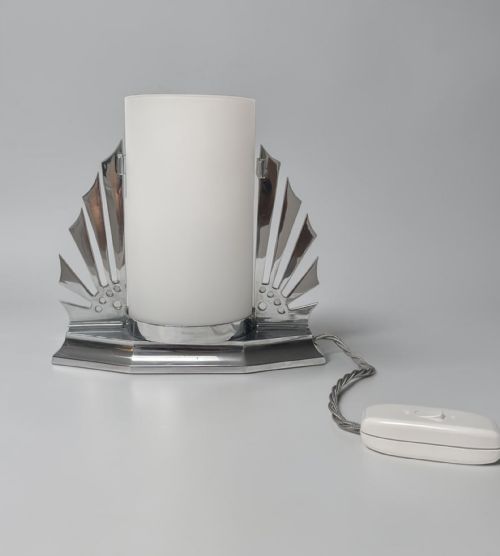
Metal elements in chrome, brass, and silver plating appeared frequently as handles, trims, and structural supports, providing a sharp contrast to the warm wood tones. Bakelite and glass were also integrated into functional components and decorative accents.
Geometric Art Deco Desk Retail Price Guide 2026
Typical asking prices for geometric art deco desk among the pieces listed under this phrase on Sellingantiques today, from the lower quarter to the upper quarter. They describe what is for sale here now, not the wider market.
Listings feature items spanning the 1910s to the 1940s, constructed from oak, walnut, chrome, brass, glass, and bakelite.
Qualities that separate the standard from the exceptional
The precision of the veneer work and the integration of contrasting materials dictate the distinction between standard production and higher tier pieces. Master workshops paid strict attention to how metal mounts met timber surfaces.
Proportion and structural integrity play major roles, as pieces with balanced geometric massing and original hardware retain greater integrity than altered examples.
Elkington·E Gomme·Sier Kunst·Étienne Kohlmann·Eileen Grey·Muller Bros·Smiths Clockmakers·Mappin & Webb·P.M. Favre·Blangy Clockmakers·Smith Electric·Hille·Bravingtons Ltd of London·Asprey·Karl Palda·Walther and Sohne
The Geometric Art Deco Desk Glossary
- Art Deco
- A design style spanning the 1910s to the 1940s characterised by geometric shapes, stylised motifs, and modern industrial materials. It replaced the organic curves of the preceding Art Nouveau movement.
- Bakelite
- An early synthetic plastic introduced in the early twentieth century, valued for its durability and smooth finish in dark tones or bright colours. Makers utilised it extensively for clock casings and desk accessories.
- Macassar
- A heavily figured tropical hardwood featuring dark brown and black streaks against a warm reddish-brown background. Cabinet makers used it as a veneer to create striking symmetrical patterns on furniture fronts.
- Bureau Bookcase
- A combination furniture form featuring a sloping writing flap that folds down above drawers, surmounted by shelving enclosed by doors. Examples from the period often incorporate oak or walnut construction.
Geometric Art Deco Desk: Frequently Asked Questions
What defines a geometric art deco desk?
A geometric art deco desk relies on sharp angles, stepped profiles, and symmetrical patterns rather than flowing organic curves. These pieces often feature contrasting materials such as polished chrome against dark hardwoods.
They reflect the architectural influences of the interwar period, bringing a structured aesthetic to a home office or study.
How do I care for wooden art deco surfaces?
Wood surfaces require simple dusting with a soft, dry cloth to prevent micro-abrasions. Avoid commercial polishes containing silicone, which can build up on vintage veneers over time.
Keep desks away from direct heat sources and strong sunlight to prevent the timber and clear finishes from drying out or fading.
Are these desks suitable for daily computer work?
Many vintage desks accommodate modern technology, though original writing heights can occasionally sit lower than contemporary office furniture. Checking the kneehole clearance and surface dimensions ensures proper ergonomics.
Protecting the writing surface with a blotter helps prevent scratches on delicate polished wood or inlaid veneers during daily use.
How can I tell a 1930s desk from a later reproduction?
Authentic pieces from the period display construction techniques consistent with mid-twentieth-century cabinet making, such as hand-cut dovetails in drawer construction and traditional shellac or lacquer finishes. The hardware and metal plating methods also align with manufacturing standards of the era.
Examining the underside and drawer interiors reveals the natural ageing of woods and metals that modern reproductions cannot replicate accurately.