


Gentleman Lounge Chairs
Gentleman lounge chairs are substantial upholstered armchairs built for deep comfort, offering solid timber frames and supportive backs suited to period interiors.
Gentleman Lounge Chairs
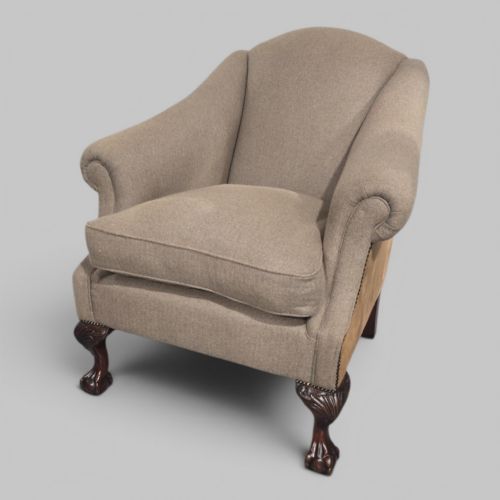
When you search for gentleman lounge chairs, you encounter robust seating largely originating from the nineteenth and early twentieth centuries. These pieces encompass Victorian open armchairs, fireside chairs, and heavy club chairs designed primarily for domestic studies, libraries, and drawing rooms.
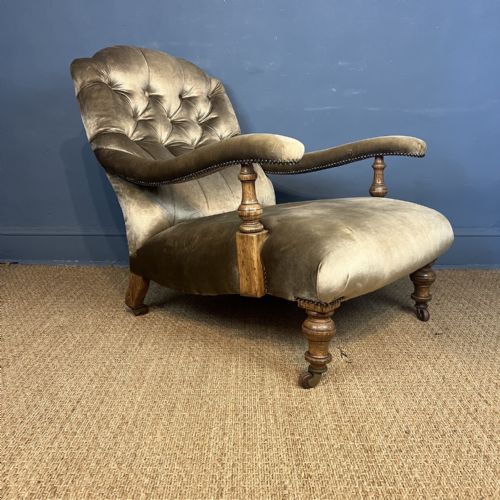
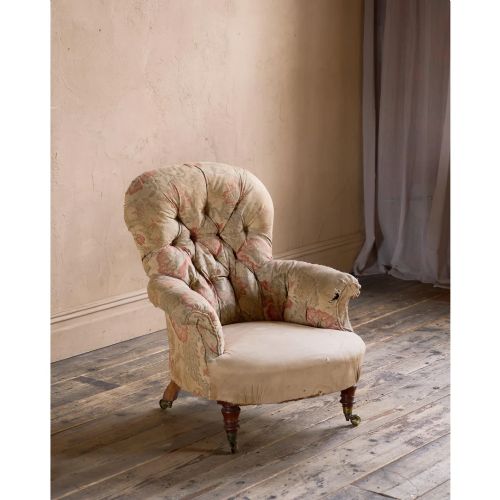
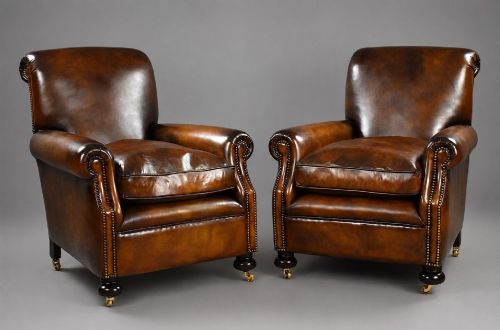
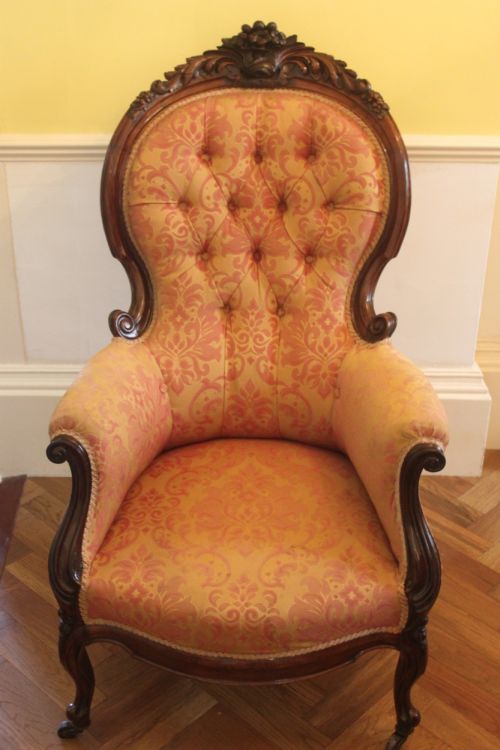
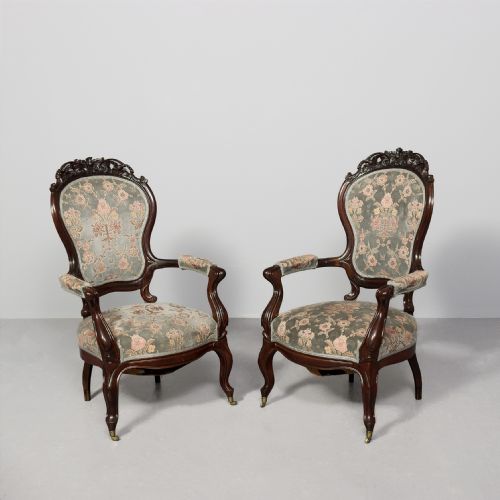
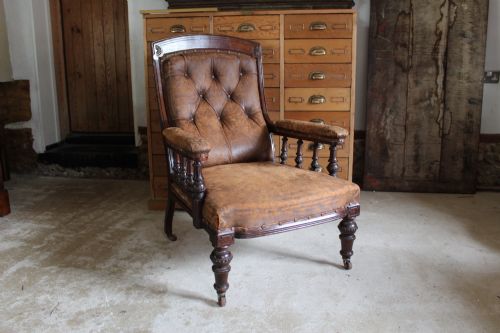
The version you are most likely to meet on this page is the Victorian walnut or mahogany framed armchair, often featuring buttoned upholstery and carved cabriole legs. Alongside these, early twentieth century leather club chairs and pairs of library armchairs appear frequently within the listings.
How they were made
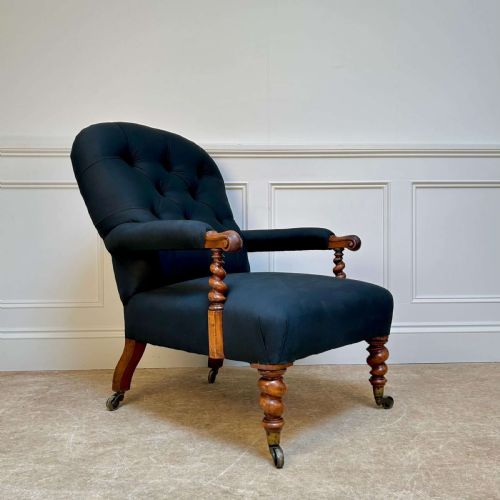
The structural frames rely predominantly on dense hardwoods such as mahogany, walnut, oak, and rosewood, shaped through traditional joinery and carved detail. Timber elements frequently incorporate turned components, barley twists, or elaborate scrollwork.
Upholstery relies on textiles ranging from leather and velvet to fabric and calico, secured over supportive interior padding. Brass detailing often appears on castors or hardware associated with heavier library and club forms.
Several armchairs arrive with matching footstools, ensuring nineteenth century feet stayed safely off cold floors.
What varies in quality
The standard of carving and timber selection determines the visual authority of each frame. Subtly shaped cabriole legs and crisp hand-carved ornamentation separate superior nineteenth century examples from simpler vernacular seating.
Integrity of construction and material retention govern the enduring appeal of these chairs. Original leather patination, substantial timber density, and the retention of maker attribution elevate specific pieces within the broader range.
Holland and Sons·Hindley and Sons·C. Hindley and Sons
The Gentleman Lounge Chairs Glossary
- Spoon back
- An upholstered chair back shaped to resemble the bowl of a spoon, providing ergonomic support popular during the Victorian period. This contour fits the human spine closely.
- Cabriole leg
- A furniture leg that curves outward and then tapers inward, typically finishing in a pad or scroll foot. This form draws inspiration from animal limbs.
- Barley twist
- A turning technique resembling a spiral rope, frequently utilised on the wooden uprights and legs of nineteenth century seating. It adds visual movement to the frame.
- Button back
- An upholstery method where depressions are created by pulling strings or buttons deep into the padding in a diamond pattern. This technique secures internal stuffing firmly.
- Club chair
- A heavy, deep-seated armchair traditionally upholstered in leather. These chairs originated to provide maximum comfort in private gentlemen's clubs.
Gentleman Lounge Chairs: Frequently Asked Questions
How do I identify a Victorian gentleman chair?
Victorian gentleman chairs typically present sturdy walnut or mahogany frames with deep buttoned upholstery and generous proportions designed for male sitters of the era.
They frequently appear alongside smaller companion chairs intended for ladies, sharing matching wood finishes and carved details.
Where were these armchairs placed originally?
These seating pieces belonged in libraries, studies, smoking rooms, and formal drawing rooms of substantial nineteenth and early twentieth century houses.
Their robust construction and comfortable padding suited long hours of reading or conversation by the fireplace.
Are leather club chairs from this period?
Leather club chairs listed here span from the Victorian era into the early twentieth century, including robust cigar brown leather examples.
These pieces prioritise deep cushioning and durable hides over exposed wood framing.
What is the difference between open and fireside armchairs?
Open armchairs generally expose more of the carved timber frame around the arms and back, whilst fireside variants often feature enclosed upholstered wings or lower profiles designed to block drafts.
Both types utilise dense hardwoods like mahogany and walnut for structural support.