




Brass Stud Leather Seating
Brass stud leather seating brings together sturdy timber frames and hides secured by metal fastenings, offering robust comfort for libraries, studies and hearths.
Brass Stud Leather Seating
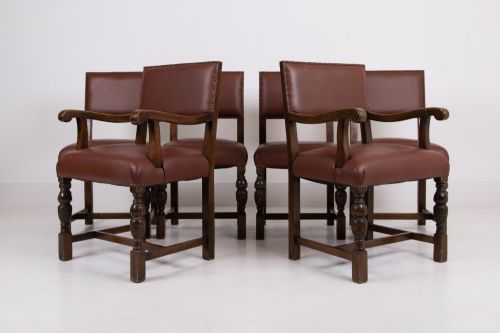
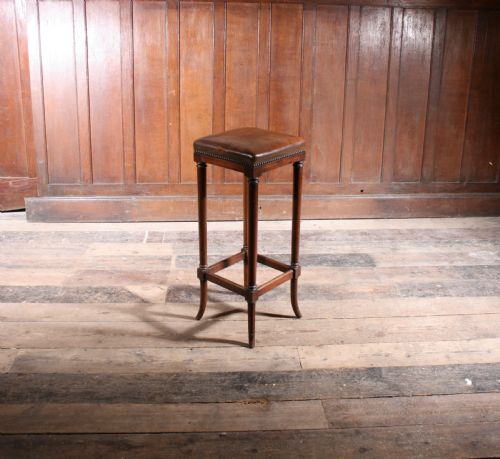
Brass stud leather seating encompasses diverse domestic forms including armchairs, dining chairs, club fenders, sofas and stools spanning the eighteenth century through to the early decades of the twentieth century.
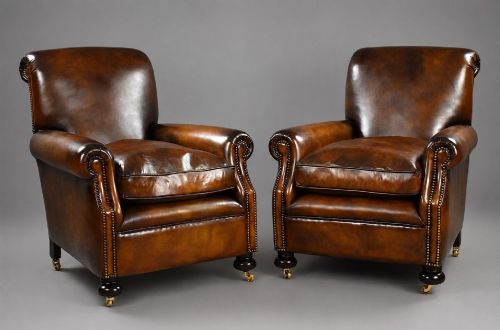
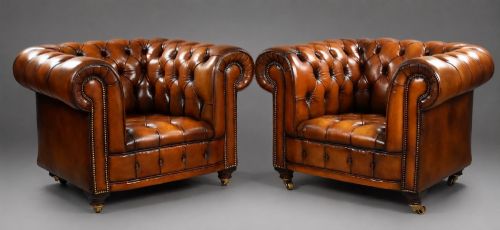
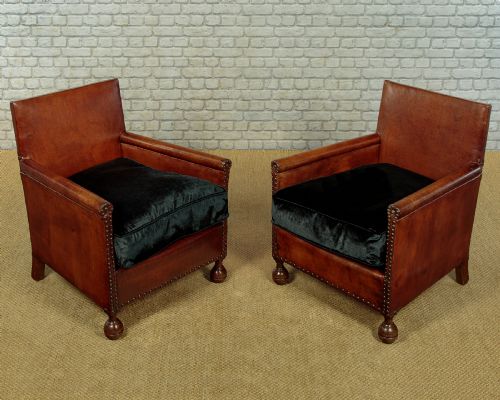
Buyers frequently encounter nineteenth-century library armchairs and Chesterfield sofas alongside Edwardian and 1920s club armchairs, all united by their leather upholstery and metal detailing.
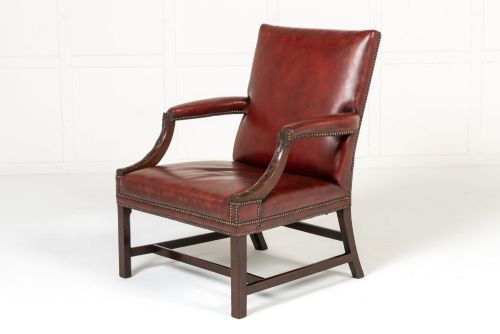
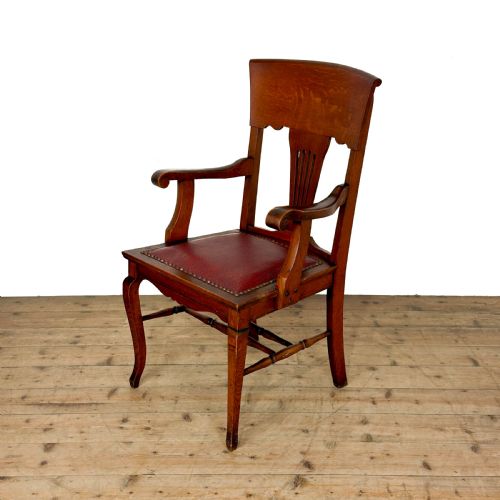
The selection ranges from formal Georgian mahogany Gainsborough chairs and Regency benches to sturdy oak dining sets and low-slung fireside club fenders with padded leather seats.
Materials and construction
Frames are constructed predominantly from hardwoods such as mahogany, oak, walnut and yew, providing a rigid structural skeleton for the upholstered components.
Hides are stretched over padding and secured to the timber or metal frameworks using individual brass studs, which trace the structural contours and lines of the upholstery.
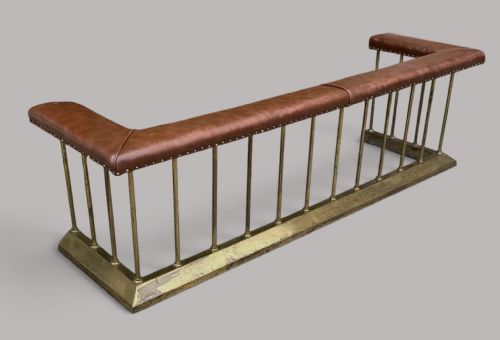
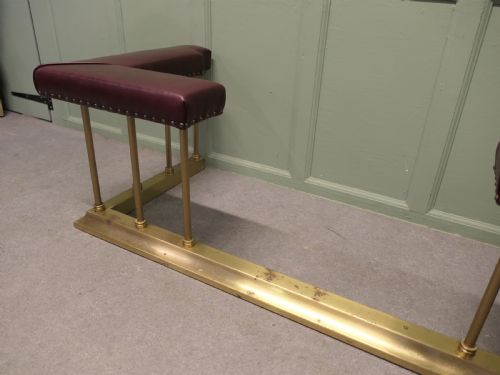
Metal components also appear in structural settings, notably in brass and steel club fenders designed to sit around domestic fireplaces.
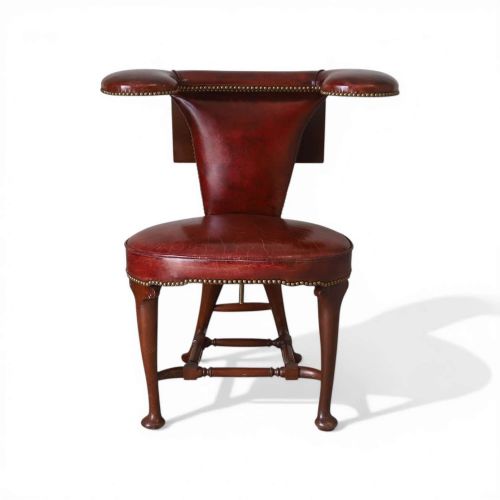
Cockfighting chairs feature an unusual curved backrest designed to support a gentleman while straddling the seat backwards.
Assessing quality
Quality rests in the integrity of the underlying timber frame and the depth of character in the leather, where maturity and natural grain separation dictate visual weight.
The precision with which individual brass studs are spaced and driven reflects the standard of workshop execution during original manufacture.
Proportion and timber selection separate standard utility pieces from finer library chairs and bespoke seating designed for formal domestic interiors.
The Brass Stud Leather Seating Glossary
- Club fender
- A low fireside seat with a metal frame and padded leather top, originally designed to keep occupants close to the hearth while protecting them from heat.
- Chesterfield
- A large upholstered sofa or armchair characterised by deep buttoning and rolled arms of equal height, traditionally covered in dark leather.
- Gainsborough chair
- A wide, open-armed armchair with an upholstered seat and back, standing on square legs, dating back to the mid-eighteenth century.
- Cockfighting chair
- A low, specialised reading or gaming chair with a padded wooden rest on the back rail, designed for straddling.
- Ottoman
- A low, upholstered seat or bench without a back or arms, often built with an internal storage compartment beneath a hinged leather top.
Brass Stud Leather Seating: Frequently Asked Questions
What is a club fender?
A club fender is a low, metal-framed seat designed to fit around a fireplace hearth. The top rail is padded with leather to provide seating for warming by the fire.
These pieces typically incorporate brass or steel uprights and bases, often featuring open wire mesh panels beneath the seats.
How do I date a leather armchair?
Dating relies on examining the timber frame construction, leg style, and upholstery methods under the hide. Georgian and Victorian pieces show distinct cabinetmaking techniques and wood species.
Later pieces from the 1920s and 1930s often feature broader proportions, sprung seats, and club chair designs suited to relaxed lounging.
How should I care for antique leather?
Antique leather benefits from regular dusting and occasional treatment with appropriate leather dressings or balms to keep the hide supple. Avoiding direct sunlight and intense heat sources prevents the material from drying and cracking.
Maintaining a stable room climate preserves both the leather upholstery and the underlying timber and padding.
Are these chairs comfortable for daily use?
Many of these pieces, particularly library armchairs and Chesterfields, were built for extended periods of reading and study. Their sprung seats and padded arms provide substantial support.
Stools and dining chairs offer firmer seating, designed for upright posture around a dining table or desk rather than lounging.