
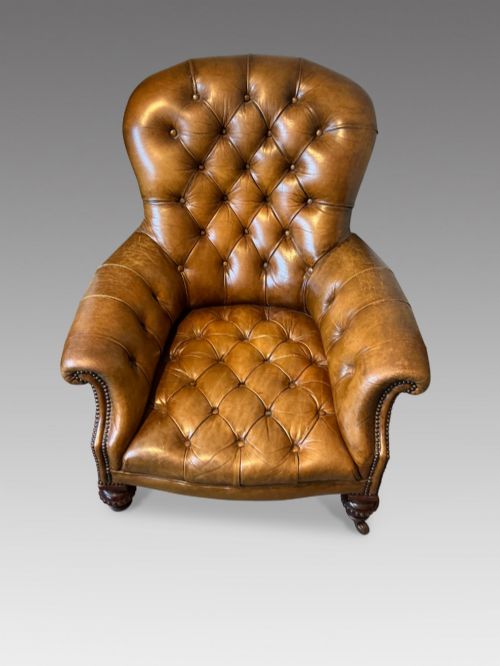
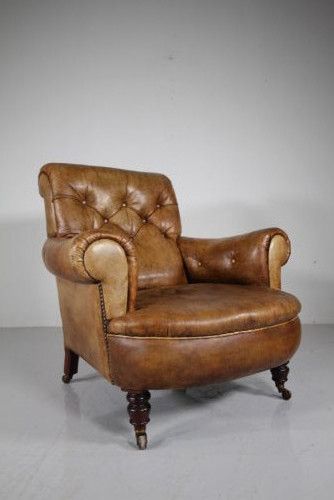
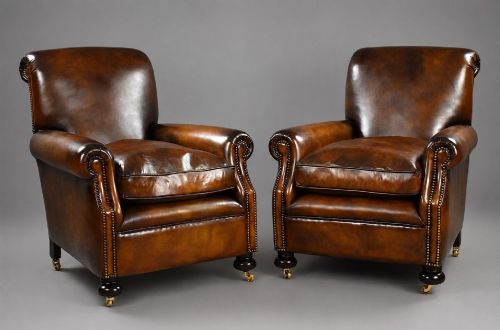
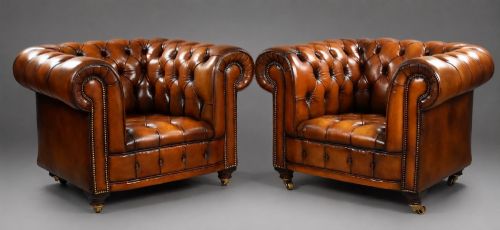




Deep Seat Leather Chair
A deep seat leather chair invites hours of reading, offering low proportions and a generous pitch that holds you properly.
Deep Seat Leather Chair
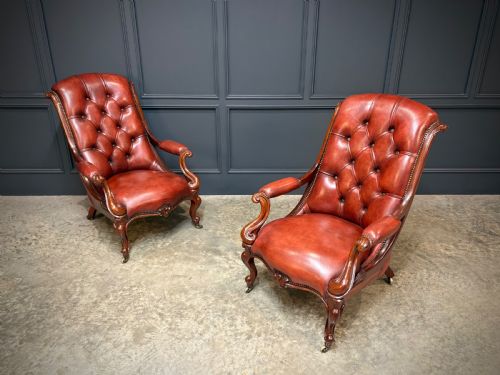
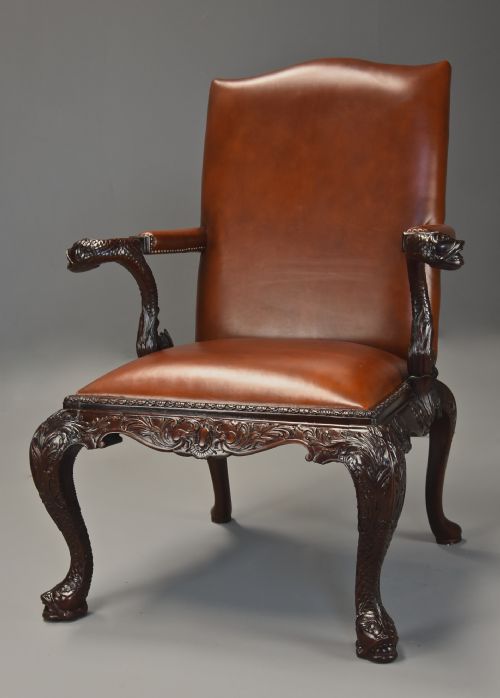
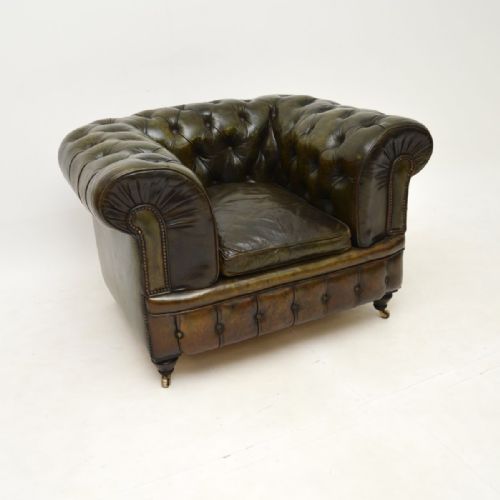
A deep seat leather chair brings together low, generous proportions and heavy hides designed for sustained use. When you search for a deep seat leather chair, you encounter sturdy armchairs, low library seats, and club chairs built for comfort rather than formal upright posture.
The pieces appearing here span the Victorian era, the Edwardian period, and the nineteen-thirties, alongside earlier Regency and Georgian interpretations. English country house examples and club chairs dominate the selection, often featuring buttoned backs, brass castors, and substantial wooden frames.
Armchairs and library seats are the most frequent forms you will meet, alongside occasional desk chairs and wingback variants. Walnut, mahogany, and oak frames provide the internal structure beneath patinated cattle hide.
Materials and Construction
Makers built the foundational frames of these chairs using hardwoods such as mahogany, walnut, and oak, joined with traditional pegged or dowelled joints. Metal components appear as brass castors on the feet and hand-hammered brass tacks securing the hide.
Upholstery relied on natural cattle leather stretched over coil spring systems and stuffed with horsehair or wool fibre. Buttoning and pleating kept the heavy leather securely tensioned across the deep seat and backrest.
Several armchairs still retain their original brass castors, ready to roll across nineteenth-century library floors once more.
Judging Quality and Craftsmanship
The primary distinction in quality lies in the depth of hand-finishing and the integrity of the underlying frame. Superior examples display dense secondary timbers, well-sprung seats that retain their supportive pitch, and hides that have aged gracefully without hardening.
Execution of detail separates workshop output from standard production, seen in the crispness of carved wooden legs, the placement of individual brass nails, and the quality of the leather dressing. Chairs retaining their original castor wheels and deep buttoning command greater respect.
Howard & Sons·Gillows
The Deep Seat Leather Chair Glossary
- Club chair
- A deep, low-slung armchair with upholstered arms, originating in French and English smoking rooms. These chairs prioritize padded comfort and heavy leather coverings.
- Gainsborough chair
- A wide, open-armed desk chair with a padded back and seat, typically standing on square or cabriole legs. The form dates to the eighteenth century but remained popular in later revivals.
- Chesterfield
- A style characterised by deep button tufting and rolled arms of equal height to the back. Originally associated with nineteenth-century upholstery.
- Library chair
- A heavy, substantial armchair designed for reading rooms, frequently upholstered in leather with generous seat depths. These pieces often incorporate mahogany or walnut frames.
- Patina
- The surface sheen and soft wear developed on leather and wood through decades of handling and use. This quality indicates age and careful maintenance.
Deep Seat Leather Chair: Frequently Asked Questions
How do I identify a Victorian leather chair?
Victorian examples typically rely on mahogany or walnut frames paired with dark buttoned leather. Look for heavy proportions and turned wooden legs fitted with brass castors.
Construction details from this period include hand-hammered brass tacks and dense horsehair stuffing beneath the hide.
What is a club chair?
A club chair is a deep, low-slung seat designed for relaxation, featuring fully upholstered arms and substantial padding. They emerged in the early twentieth century as heavily cushioned reading seats.
These chairs often utilise caramel or brown leather hides that develop a distinct patina over time.
How do I care for antique leather?
Preserve antique leather by keeping it away from direct sunlight and heat sources that cause drying and cracking. Apply specialised leather balms sparingly to maintain suppleness.
Avoid modern chemical cleaners, using only a soft, dry cloth to remove dust from the surface.
Are these chairs comfortable for daily use?
Most of these chairs were engineered specifically for long periods of reading or resting, offering deep seat dimensions and supportive spring systems. The low pitch and generous width make them practical for modern living spaces.
Original internal stuffing may feel firmer or softer depending on previous restoration work and the materials used by the maker.
What wood types appear most often?
Mahogany, walnut, and oak form the structural chassis of the majority of these seating pieces. Secondary hardwoods also appear beneath the leather upholstery.
Visible timber elements on legs and arm supports usually match the prevalent furniture woods of their respective period.