

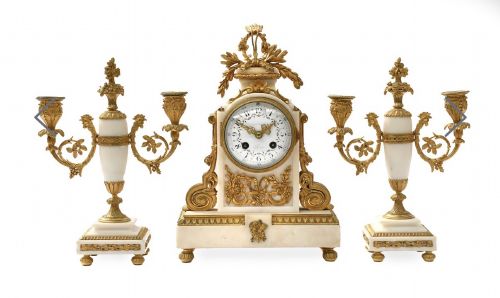
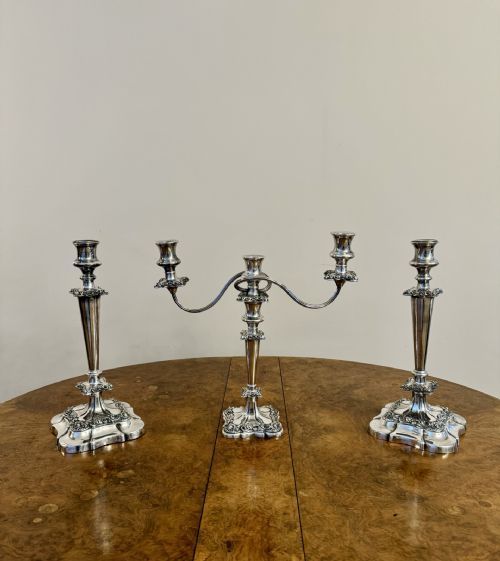
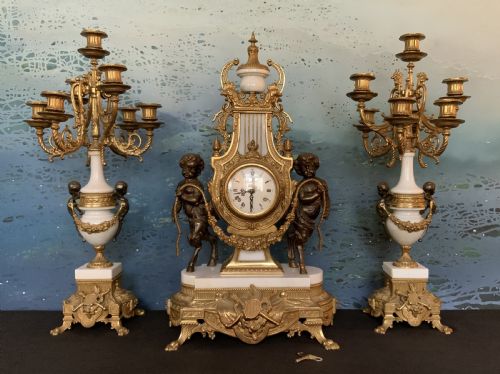


Garniture Candelabra Set
These garniture candelabra sets combine a central mantel clock with matching sidepieces to anchor a room.
Garniture Candelabra Set
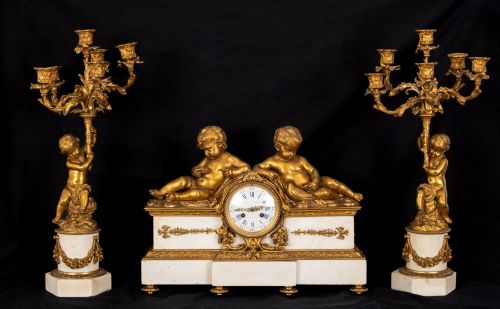
A garniture candelabra set groups a mantel clock alongside matching candelabra or urns designed to sit together on a fireplace or sideboard. The pieces seen here emerge predominantly from the nineteenth century, including Victorian and various French revival aesthetics.
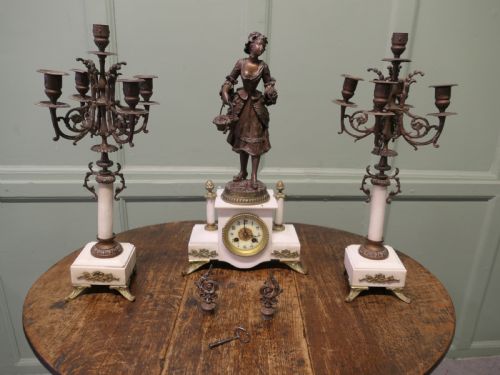
Most compositions pair a marble or slate clock body with matching metal sidepieces configured for multiple candles or lights. These matched groupings create a unified decorative scheme typical of formal nineteenth-century interiors.
Materials and construction
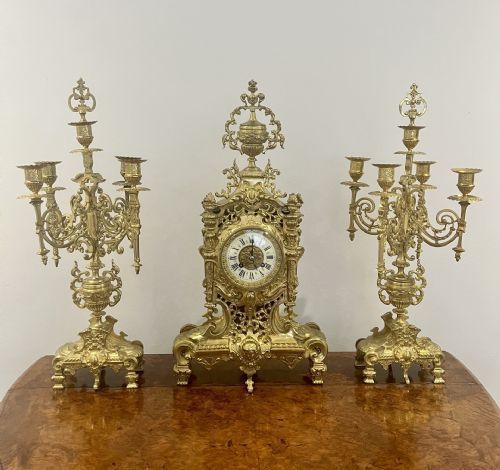
Foundry work relied heavily on cast bronze finished with mercury gilding or patination, alongside spun or chased brass components. These metal elements were frequently paired with turned white marble, black slate, or onyx bases.
Porcelain panels and enamel dials add colour and detail, often hand-painted in floral or figurative motifs. Mechanical movements inside the clocks required precision brass gear trains housed within the stone or metal chassis.
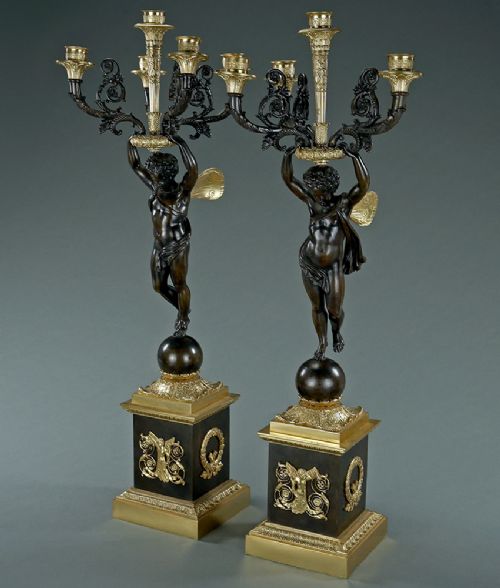
Several cherubs and cupids watch over the time, cast in bronze across multiple centuries.
Factors determining quality
The crispness of the bronze chasing and the depth of the ormolu finish separate standard sets from superior works. Finer examples display sharp relief in cast details like foliage and figures without soft edges or smoothing.
The harmony of the materials dictates overall success, particularly where marble bases match metal mounts precisely. Complete sets retaining their original matching components show greater cohesion than assembled groups.
Henry Dasson·Raingo Fres Paris·H Luppens Paris
The Garniture Candelabra Set Glossary
- Garniture
- A set of ornamental objects designed to match and display together, typically consisting of a clock and paired candelabra. These suites were centrepieces for nineteenth-century mantelpieces.
- Ormolu
- Gilt bronze produced by applying a gold and mercury amalgam to cast bronze before heating. This technique creates a durable golden finish characteristic of French decorative metalwork.
- Candelabra
- A branched candlestick holding multiple lights. In a garniture set, these match the central clock in style and material.
- Bleu de Roi
- A rich deep blue ceramic glaze often seen on porcelain panels incorporated into clock cases. The colour provides a strong contrast to surrounding gilt bronze mounts.
- Patinated bronze
- Bronze treated with chemicals to produce a darkened surface colour rather than a gold-gilt finish. This method highlights brighter gilt details by contrast.
Garniture Candelabra Set: Frequently Asked Questions
How do I clean ormolu?
Dust gently with a soft brush and avoid abrasive cleaners or metal polishes that strip the gold layer.
Water and harsh chemicals can damage the underlying bronze and any attached marble or porcelain elements.
Are these clocks still running?
Many retain their original mechanical movements, though working order varies across individual items.
Professional servicing is often recommended to ensure accuracy for antique eight-day striking movements.
Can I separate the set?
Keeping the clock and candelabra together maintains the visual balance and historical integrity of the garniture.
Separating the pieces diminishes their decorative purpose as a unified mantel display.
What is Louis XVI style?
This aesthetic draws on classical symmetry, straight lines, and refined neoclassical motifs like urns and swags.
Sets from the nineteenth century frequently revived these eighteenth-century design principles.