




Gallery Top Tray
A gallery top tray brings raised edges and fine timber to tables and stands, offering a practical surface with a refined outline.
Gallery Top Tray
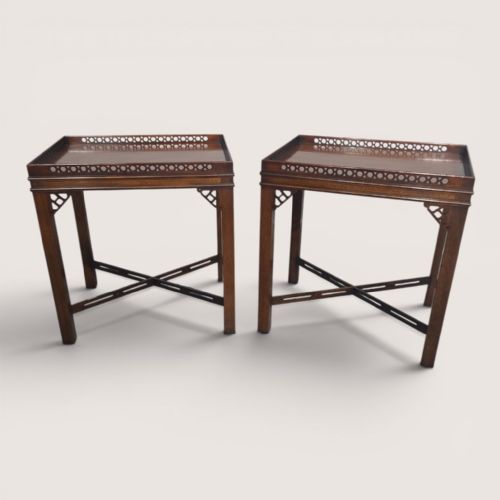
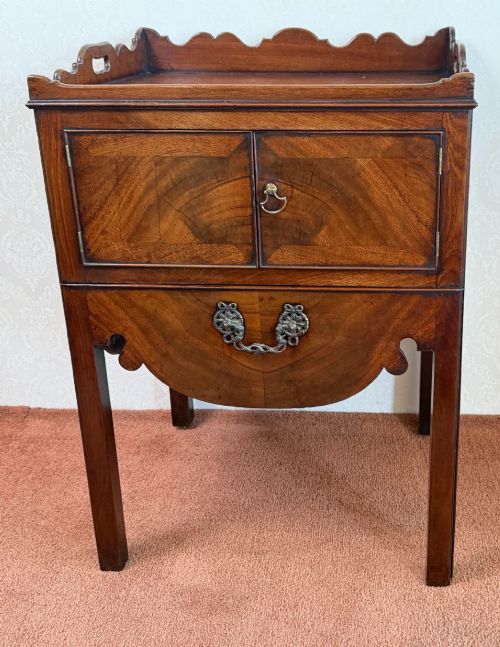
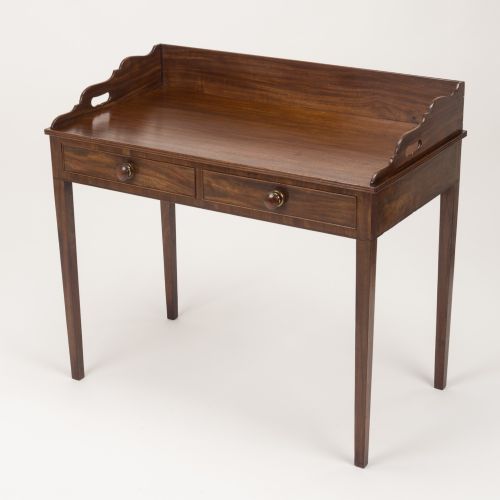
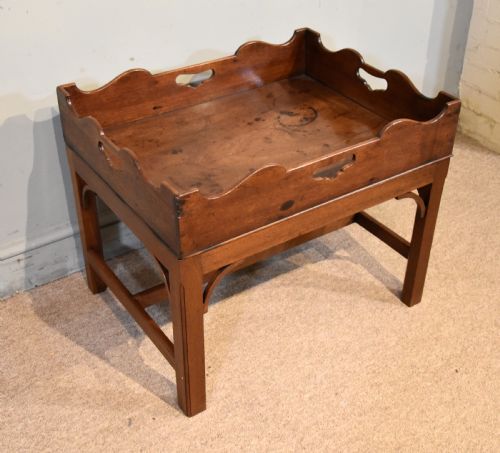
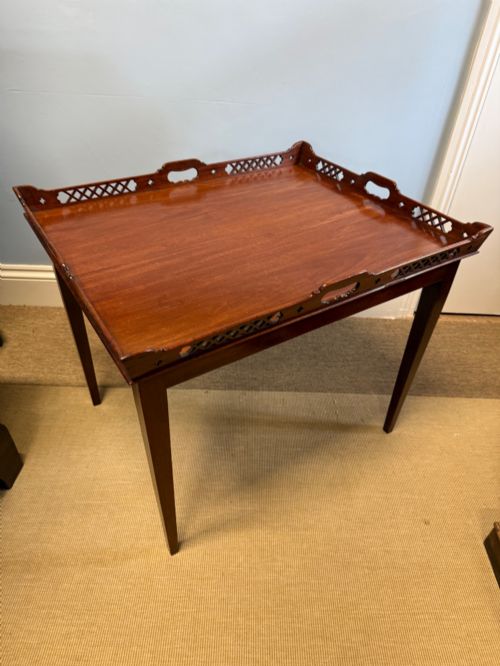
A gallery top tray search reveals tables, commodes, and serving trays defined by raised borders designed to stop items from rolling off. The selection spans Georgian, Victorian, and Edwardian periods, with occasional pieces stretching into the early twentieth century.
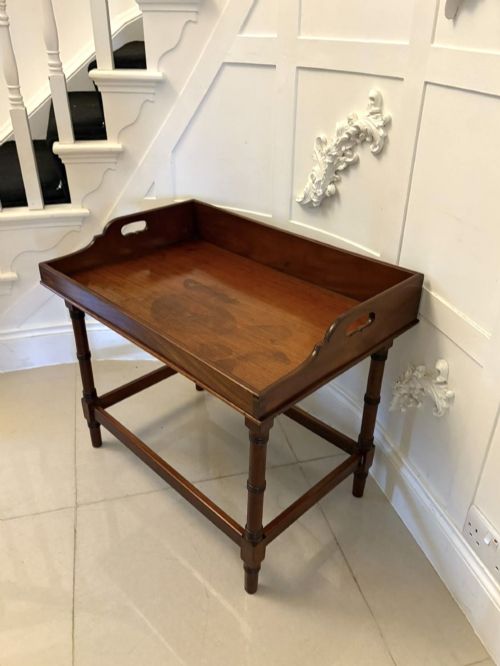
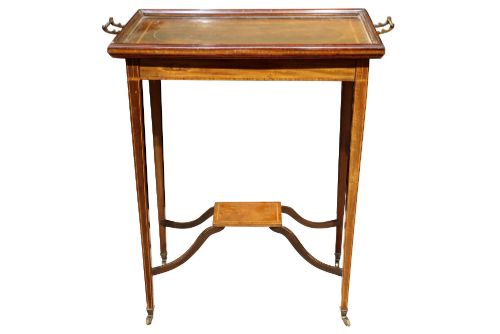
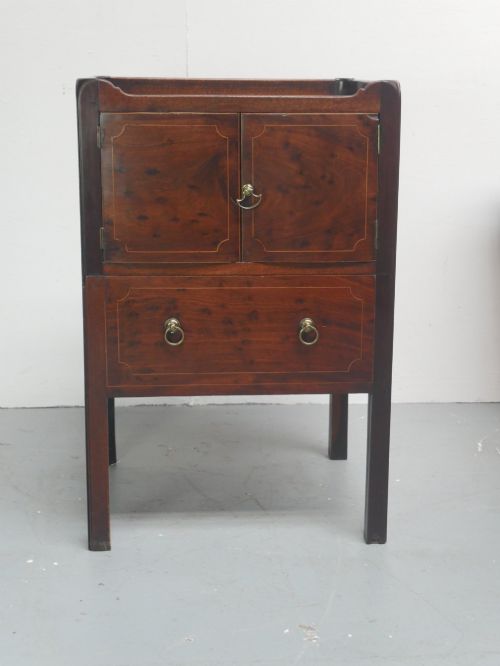
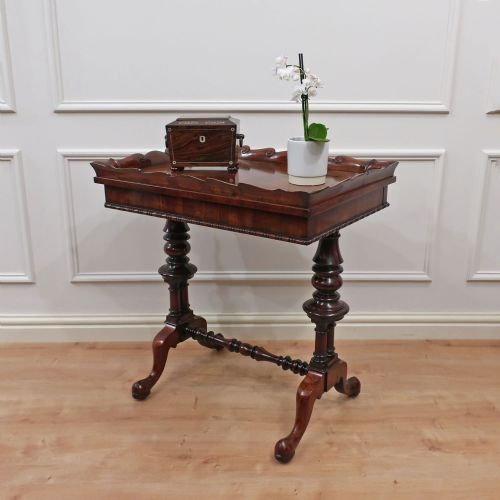
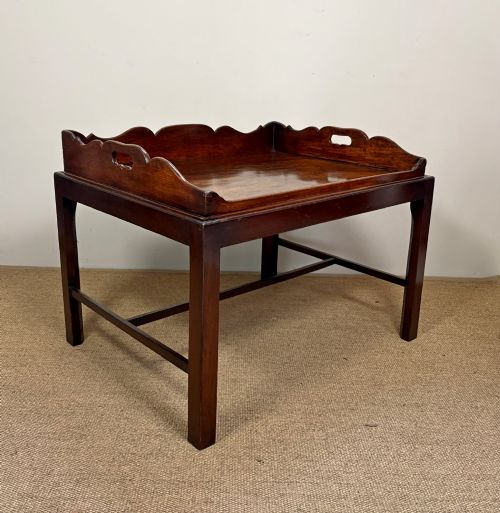
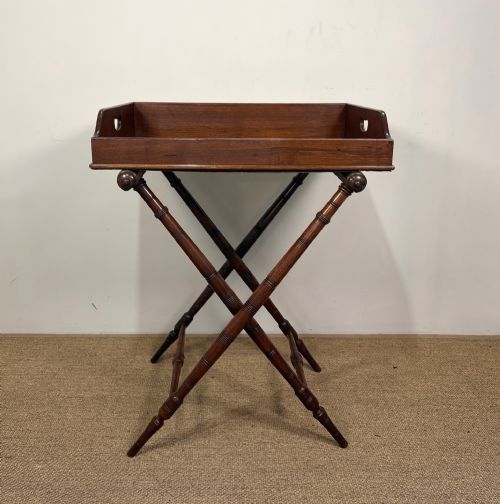
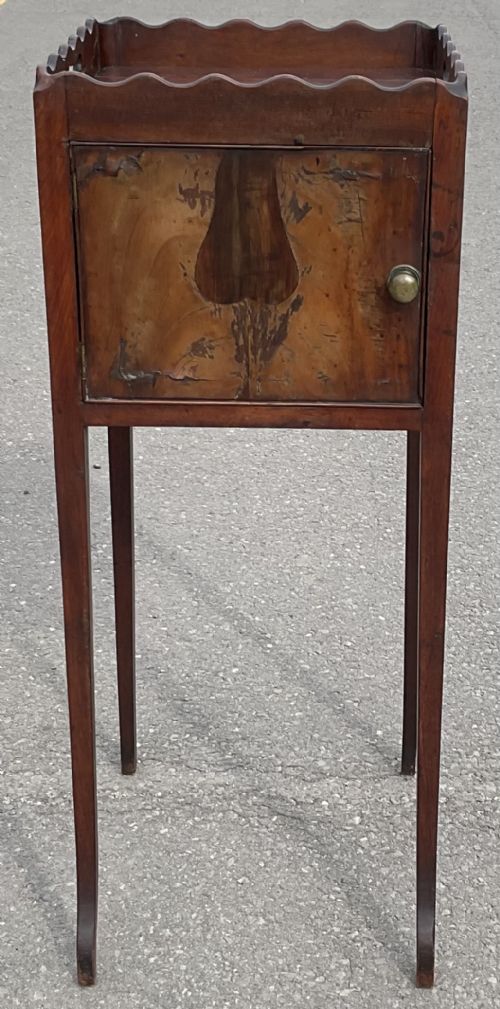
The most common form on this page is the occasional or lamp table featuring a shaped mahogany top, alongside folding butler's trays paired with folding stands. These items function as small side tables, bedside cabinets, and silver tables across domestic interiors.
How they were made
Cabinetmakers constructed these surfaces primarily in solid mahogany and rosewood, frequently incorporating burr walnut, satinwood, and boxwood inlay for decorative contrast. Timber was selected for grain pattern and strength, particularly where raised galleries required secure corner joints.
Stands and folding frames relied on traditional joinery to support portable trays or fixed table tops. Brass handles and fittings appeared on functional serving pieces, while finer occasional tables integrated detailed stringing and polished finishes.
One listed butler's tray travelled all the way from Bäckaskog Castle.
What varies in quality
Quality rests in the crispness of the raised gallery and the execution of any inlay work. Finer examples display precise timber matching, clean mitred corners on the tray rim, and well-proportioned stands rather than plain or heavy framework.
The integration between tray and support dictates the piece's utility and finish. Superior items retain original surfaces, crisp mouldings, and subtle decorative stringing that mark higher-grade cabinetmaking.
Gillows
The Gallery Top Tray Glossary
- Gallery tray
- A serving tray or tabletop surrounded by a raised wooden, brass, or pierced metal border. This edge prevented glassware and silver from sliding off during transit or use.
- Commode
- A small enclosed bedside cabinet or cupboard, frequently featuring a tray top. In eighteenth-century usage, this form often doubled as a night table.
- Butler's tray
- A removable rectangular tray with hinged or fixed sides, typically mounted on a folding wooden stand. These were designed to be packed away when not in service.
- Silver table
- A high-sided occasional table intended for displaying or serving silver tea services. They date largely from the eighteenth and nineteenth centuries.
- Stringing
- Thin inlaid lines of contrasting wood, such as boxwood, set into the primary timber. This technique outlined drawers, tabletops, and borders on fine furniture.
Gallery Top Tray: Frequently Asked Questions
How were butler's trays used?
Butler's trays acted as portable surfaces for carrying food, drink, or silver from the kitchen to the parlour. The removable tray sat securely upon a collapsible wooden stand.
Once the meal or tea service concluded, the tray could be lifted off and the stand folded flat for storage.
How do I date a mahogany tray top table?
Dating relies on timber choice, construction methods, and overall style characteristics. Georgian examples often display solid mahogany construction with understated proportions and fine bracket feet.
Later Victorian and Edwardian iterations frequently incorporate revival styles, satinwood inlay, or machine-finished secondary woods.
Are these trays fixed or removable?
Some pieces feature a permanent tray top built directly onto a side table or cabinet frame. Others consist of a detachable tray resting on a separate folding or rigid stand.
Both configurations appeared across the eighteenth and nineteenth centuries depending on whether the primary function was stationary display or portable service.