




Gallery Top Tray Table
A gallery top tray table combines portable serving utility with rigid framing, making it a practical addition to period interiors.
Gallery Top Tray Table
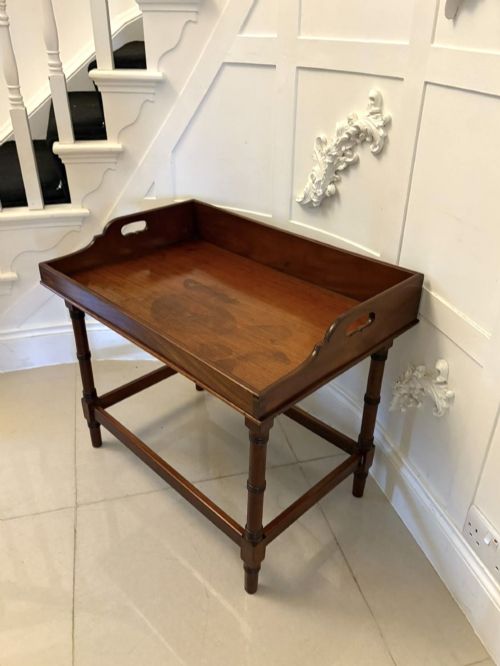
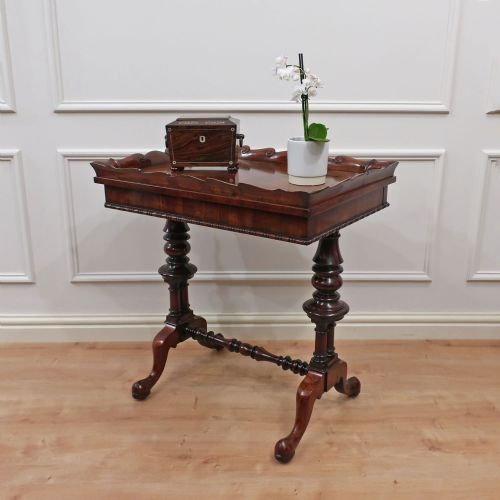
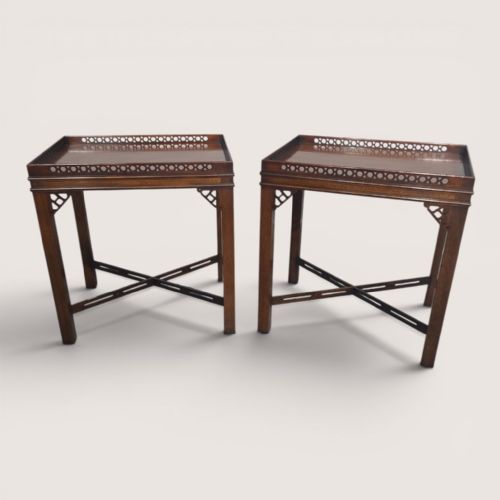
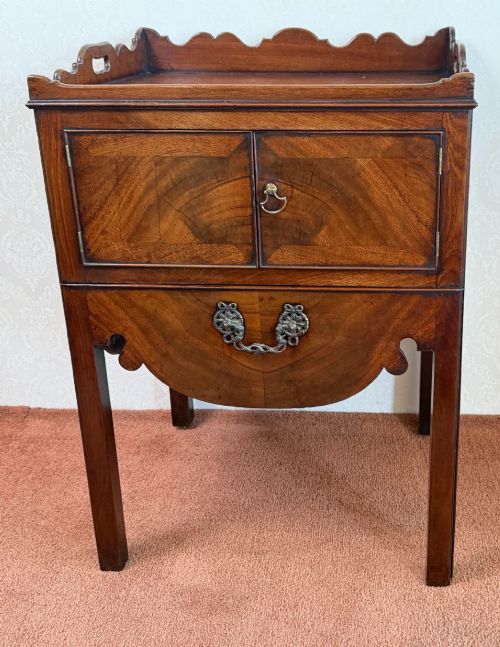
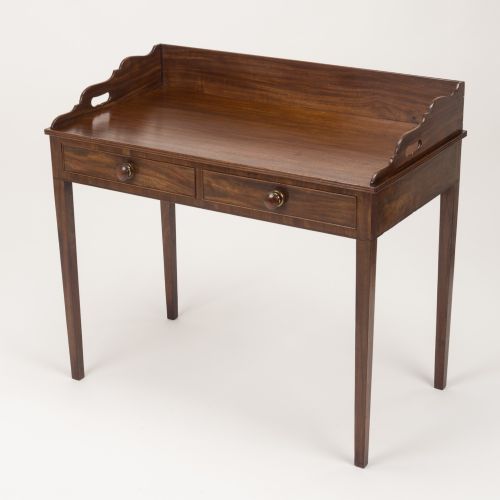
A gallery top tray table brings together low-sided serving surfaces and rigid wooden stands, appearing most frequently in eighteenth-century and nineteenth-century forms. These pieces serve as functional side tables, bedside cupboards, or dedicated writing desks depending on their understructure.
The defining characteristic is the raised rim or gallery surrounding the perimeter, designed to keep items secure when moved. Mahogany forms the backbone of these pieces, alongside occasional examples in rosewood, walnut, and oak.
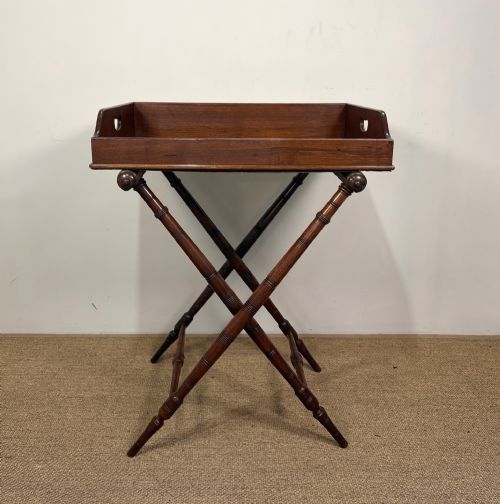
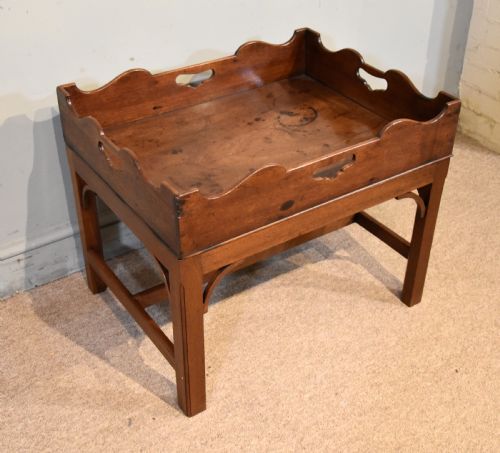
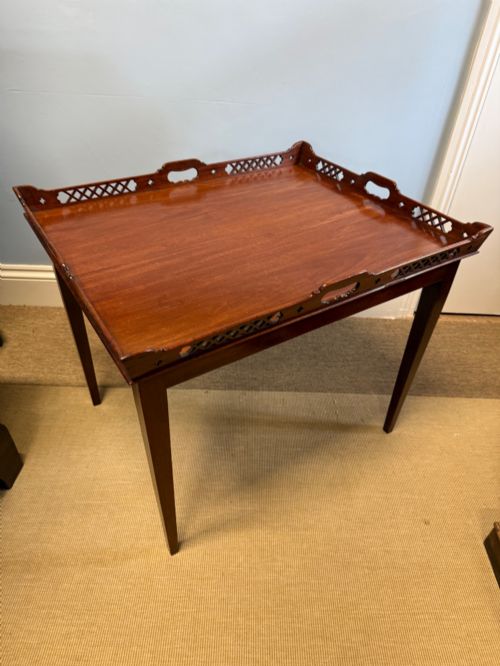
Buyers encounter distinct variants ranging from folding butler trays on separate stands to fixed lamp tables with intricate pierced or moulded borders. Georgian and Regency pieces dominate the selection, accompanied by Edwardian revivals.
Materials and construction methods
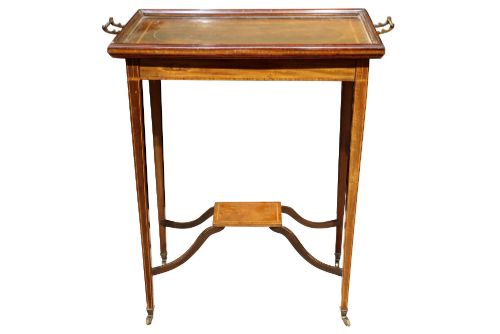
Cabinetmakers constructed these tables primarily in solid mahogany and figured veneers, utilising dense timber capable of taking a sharp carved edge. Finer examples incorporate satinwood or boxwood inlay to define the borders of the tray and frame.
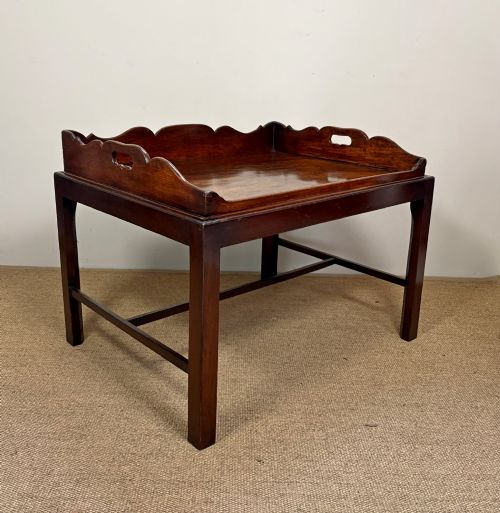
The raised gallery was typically formed either from a single board rebated and shaped on the workbench or built up from separate mouldings joined at the corners. Stands range from simple folding X-frames to sturdy four-legged structures with cross-stretchers.
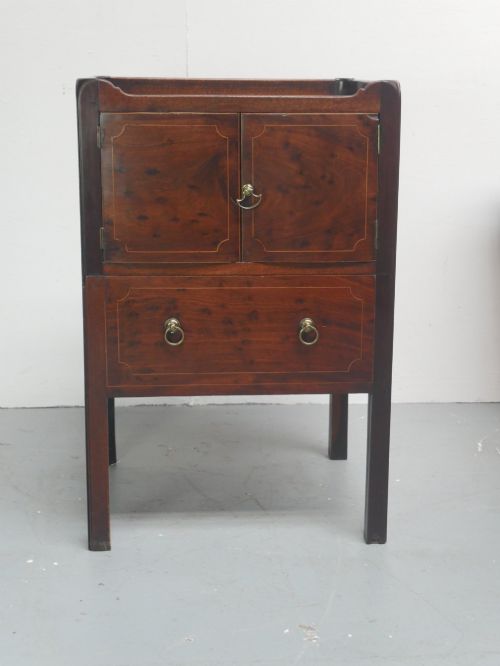
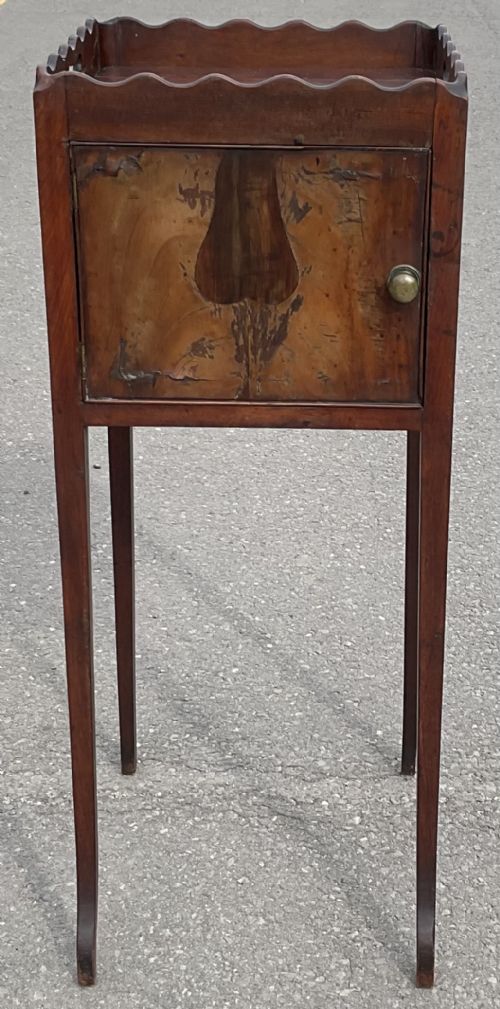
Forms span from bedside pot cupboards and commodes to folding butler trays, writing desks, and dedicated silver tables.
Distinctions in craftsmanship
Quality rests heavily on the crispness of the mouldings around the tray perimeter and the grain selection of the primary timber. Pieces featuring finely figured mahogany or delicate inlay demonstrate superior workshop origin compared to plain utilitarian versions.
The integration between tray and stand dictates structural integrity, where bespoke fitted seating beats generic adaptation. Original brass carrying handles and uncompromised corner joints elevate an individual piece within its period.
Gillows
The Gallery Top Tray Table Glossary
- Butler tray
- A removable shallow tray with hinged or fixed sides, designed to sit upon a folding or rigid wooden stand. These items allowed servants to transport silver and porcelain between rooms.
- Commode
- A low enclosed cabinet or cupboard, frequently fitted with a tray top during the Georgian period. They often served bedside functions or held chamber utensils.
- Silver table
- A specialised display table with a raised gallery designed to hold afternoon tea services or silver plate. They emerge primarily in eighteenth-century and nineteenth-century forms.
- Inlay
- A decorative technique where contrasting woods such as satinwood or boxwood are inserted into recesses within the primary mahogany surface.
Gallery Top Tray Table: Frequently Asked Questions
What is a gallery top tray table?
A gallery top tray table is a low surface enclosed by a raised wooden border, supported by a fixed or folding stand. They function as side tables, lamp stands, or bedside cabinets.
Originating largely in the Georgian and Victorian eras, these tables allowed households to move serving trays securely from room to room while maintaining a stable furniture base.
How were butler trays used?
Butler trays were lifted directly off their folding stands to transport glasses, china, and silverware around the house. Once unloaded, the tray could be set aside or returned to its frame.
In period homes, this dual-purpose design saved space and provided flexible surface area for entertaining guests during afternoon tea.
How do I date a tray table?
Dating relies on timber selection, leg styling, and construction methods visible beneath the tray. Georgian examples display dense mahogany and hand-cut joinery, while Edwardian pieces often show revival styling and lighter internal framing.
Examining the underside reveals tool marks and wood oxidation that help distinguish eighteenth-century originals from later nineteenth-century and Edwardian copies.
Where should I place one at home?
These tables fit easily beside a sofa as a lamp stand or next to a bed as a night table. Their raised edges make them secure spots for drinks or books.
Because many versions have compact footprints, they suit smaller reception rooms where traditional coffee tables might overwhelm the floor space.