

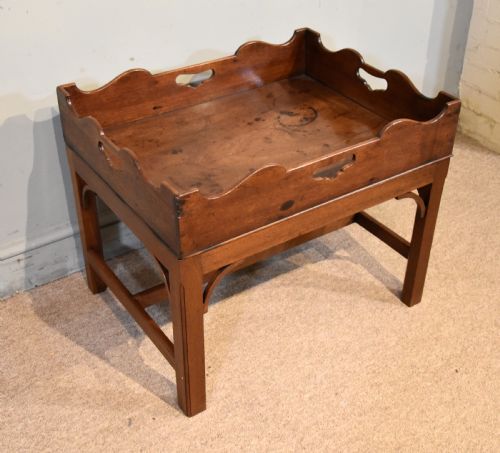


Period Butler Tray
Period butler tray pieces are practical serving tables and folding trays from the eighteenth and nineteenth centuries that bring understated utility to modern rooms.
Period Butler Tray
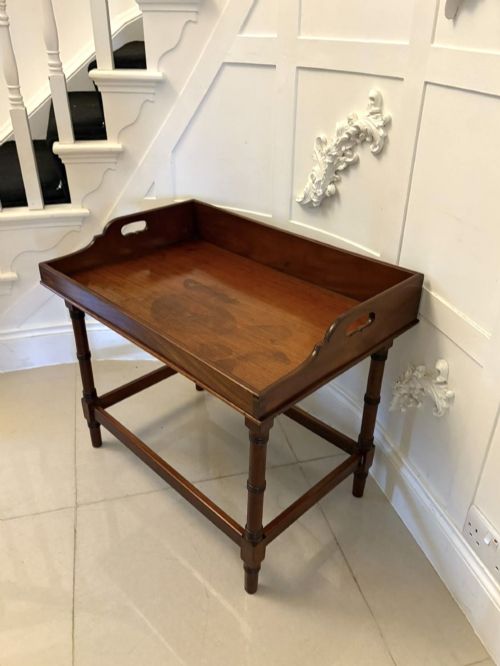
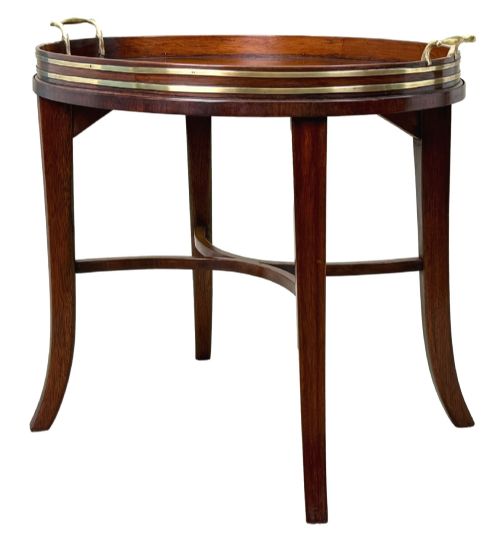
A period butler tray is a portable serving surface, often oval in shape, designed to be lifted off its folding stand for service.
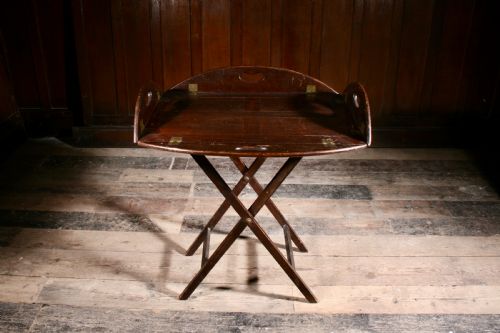
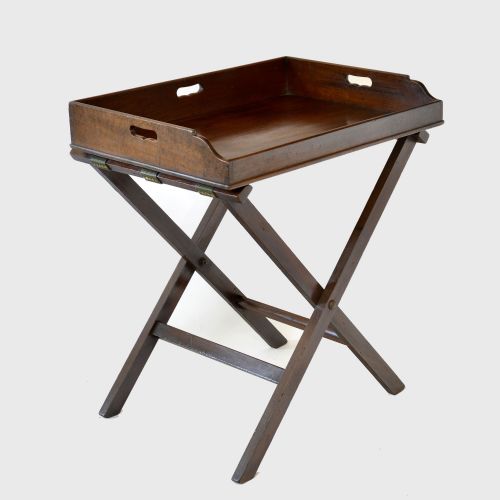
The version most commonly met on this page is the Georgian or Regency mahogany tray on stand, frequently featuring hinged folding sides.
Examples range from freestanding trays to complete combinations with dedicated stands dating from the eighteenth century through the Victorian era.
How they were made
Carpenters constructed these pieces primarily from solid mahogany, utilising brass hinges to allow the tray sides to fold down flat when not in use.
Alternative finishes include papier-mâché and lacquer enhanced with gold leaf, particularly on pieces from the Regency period.
Sides fold down so the tray can double as a tabletop.
What varies in quality
Quality rests in the timber selection and the precision of the brass hardware, where crisply fitted hinges and hand-cut dovetails distinguish finer examples.
The presence of an original folding stand alongside the tray elevates the integrity of the piece compared to later marriages.
Clay
The Period Butler Tray Glossary
- Butler tray
- A portable wooden tray with raised sides, traditionally used for carrying dining items and often paired with a folding X-frame stand.
- Hinged sides
- Drop-leaf edges fitted with brass hinges that fold flat to allow the tray to double as a tabletop.
- Stand
- The collapsible wooden base designed to support the tray at a convenient height for serving.
- Papier-mâché
- A durable composite material made from paper pulp mixed with glue, pressed and lacquered to create smooth decorative surfaces.
Period Butler Tray: Frequently Asked Questions
What is a period butler tray?
A period butler tray is a portable wooden tray with raised edges, originally used by household staff to carry food and drink before being placed on a folding stand.
Today, these eighteenth and nineteenth-century pieces serve as versatile coffee tables or occasional tables in living spaces.
How do I use a butler tray today?
These pieces function well as compact coffee tables or side tables where surface space can be adjusted by folding the tray sides down.
The removable tray top also allows the piece to double as a serving tray when entertaining.
Are the stands original to the trays?
Many examples retain their original folding wooden stands, which were designed specifically to match the dimensions and period of the tray top.
Some pieces found today combine older trays with later stands constructed in a matching timber style.
How do I tell a Georgian tray from a Victorian one?
Georgian trays typically date from the eighteenth and early nineteenth centuries, featuring understated mahogany construction and hand-forged brass fittings.
Victorian versions often show heavier timber proportions and alternative decorative treatments reflecting later nineteenth-century tastes.