




Gallery Top Tray Stand
A gallery top tray stand is a portable serving surface raised on a folding or fixed frame, prized for practical entertaining and timeless proportion.
Gallery Top Tray Stand
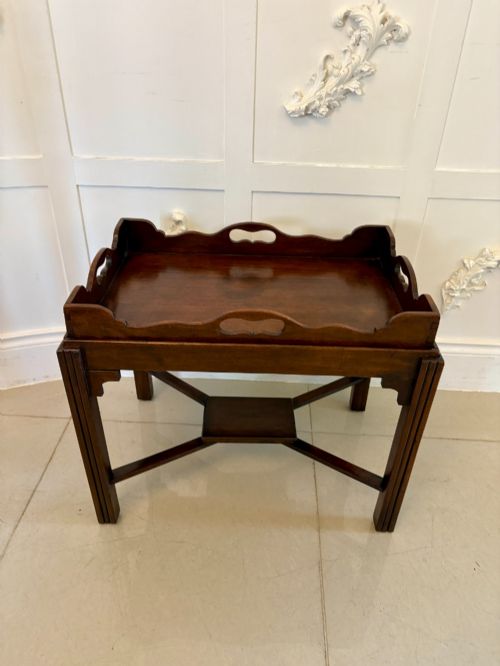
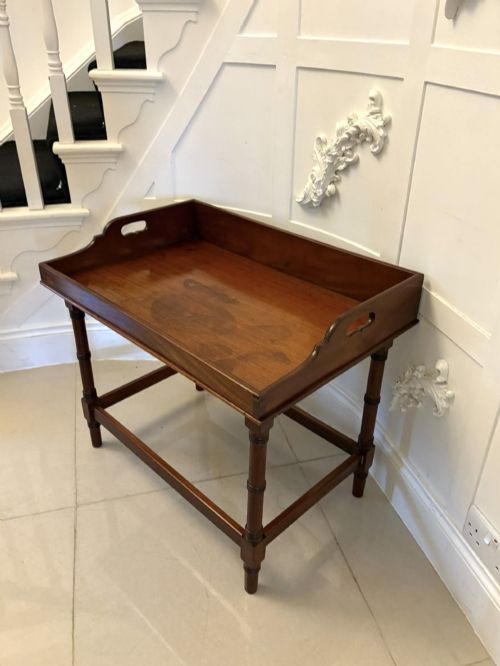
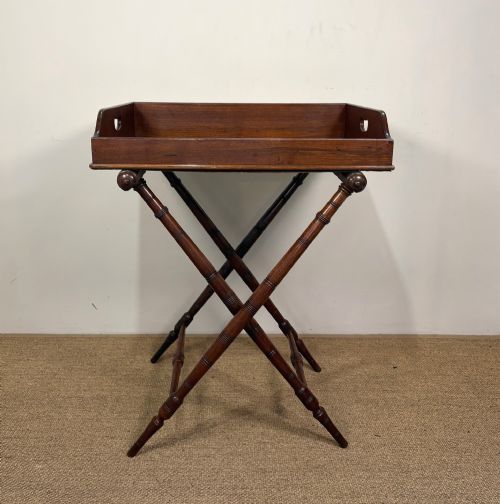
A gallery top tray stand combines a removable or fixed timber tray with an elevated base, creating a versatile piece of furniture suitable for service or display. When people search for a gallery top tray stand, they encounter portable serving trays paired with dedicated folding frames, lamp tables, and occasional tables designed for compact utility.
The pieces on this page span the eighteenth, nineteenth, and early twentieth centuries, encompassing Georgian, Victorian, and Edwardian eras. Mahogany dominates the selection, accompanied by oak and satinwood, alongside occasional pieces featuring boxwood inlay or brass fittings.
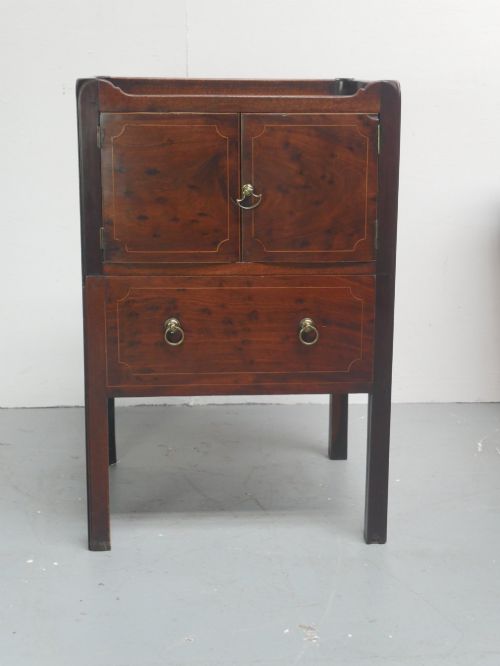
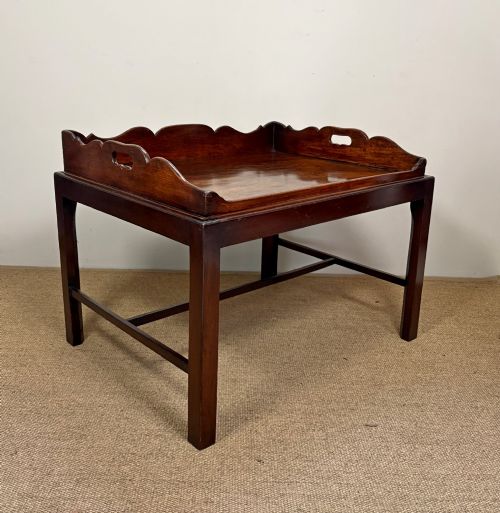
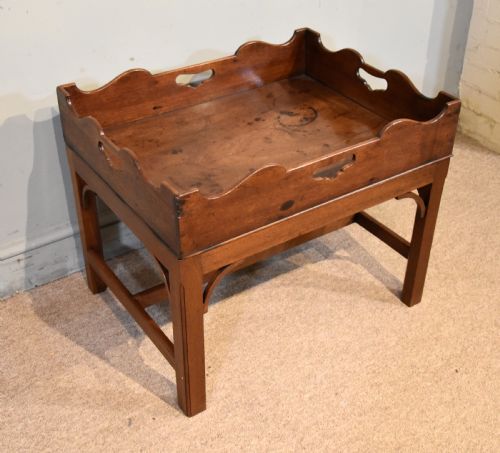
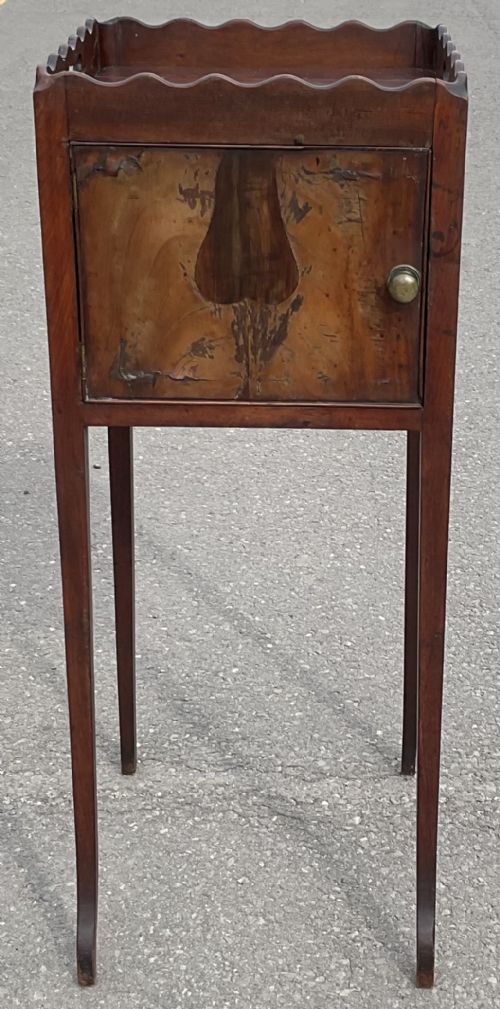
Forms range from traditional butler trays with raised shaped edges to lamp tables, bedside cabinets, and coffee tables adapted from earlier serving furniture. Most examples reflect British cabinet-making traditions, with revival styles such as Chippendale interpretation appearing alongside authentic period items.
Materials and construction methods
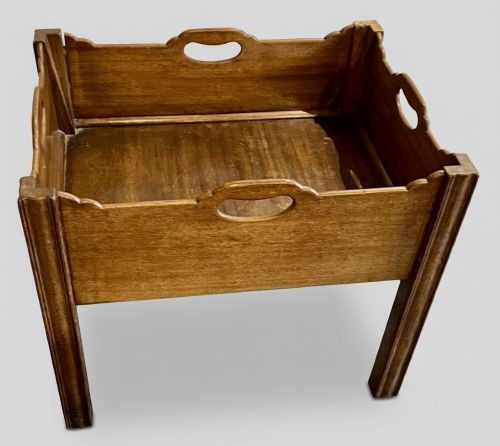
Makers relied primarily on solid mahogany and oak for structural stability and durability, frequently employing figured veneers to enhance visual depth on the tray surfaces. Raised gallery edges were often shaped from single timbers or constructed with meticulous mitred joints to withstand daily movement and weight.
Folding stands utilised hinged cross-frame designs that allowed the entire unit to collapse flat for storage when not in use. Secondary woods such as boxwood provided contrasting stringing and inlay details around the tray borders.
Gallery Top Tray Stand Retail Price Guide 2026
Typical asking prices for gallery top tray stand among the pieces listed under this phrase on Sellingantiques today, from the lower quarter to the upper quarter. They describe what is for sale here now, not the wider market.
Mahogany is the predominant wood across these listings, appearing alongside oak, satinwood, and boxwood inlay from the Georgian era to the Edwardian period.
Assessing quality and craftsmanship
Superior examples demonstrate crisp joinery in the gallery rim and precise hand-cut dovetails where drawers or frame joints occur. The selection of timber grain, particularly matched flame mahogany or carefully figured oak, distinguishes standard utility items from fine drawing-room pieces.
Hardware integrity also signals grade, with original brass hinges, handles, and subtle boxwood inlay reflecting higher workshop standards. The balance between the tray and its supporting stand reveals whether the components were made as a unified commission or assembled later.
The Gallery Top Tray Stand Glossary
- Butler tray
- A shallow rectangular wooden tray with hinged or fixed sides, traditionally used for serving drinks or food. These trays lift off their supporting folding stands entirely.
- Occasional table
- A small, versatile table designed for a specific, transient use in a principal room. They appear frequently in various woods throughout the nineteenth and early twentieth centuries.
- Stringing
- A narrow strip of contrasting wood, such as boxwood, inlaid into the surface of furniture to create decorative borders and linear patterns. This technique highlights panel edges.
- Chippendale revival
- A late nineteenth or early twentieth-century design movement inspired by the mid-eighteenth-century furniture of Thomas Chippendale. It reinterprets classic proportions using period timber methods.
Gallery Top Tray Stand: Frequently Asked Questions
What is a gallery top tray stand used for?
These stands serve as flexible furniture pieces originally intended for carrying and presenting refreshments in formal rooms. Today, they function effectively as portable drinks tables, lamp stands, or decorative surfaces.
Because the tray lifts away from the frame, the design allows for easy clearing and compact storage when space is at a premium.
How do I date a mahogany tray stand?
Dating relies on examining the timber species, construction joints, edge profiles, and the style of the folding stand. Eighteenth-century versions often feature simpler hand-finished frames and dense timber patination.
Later Edwardian and revival interpretations introduce machine-cut joints, brighter brass hinges, and decorative elements like boxwood stringing that reflect nineteenth-century taste.
Are the trays removable from the stands?
Traditional butler trays lift straight off their folding X-frame supports to allow independent use for serving. Other variations, such as lamp tables or cabinets with gallery tops, have fixed surfaces integrated directly into the frame structure.
Where were these pieces made?
Most items originate from British workshops spanning the Georgian, Victorian, and Edwardian periods. Regional cabinet makers utilised locally available hardwoods alongside imported colonial timber like mahogany.
Occasional continental examples also appear, reflecting broader European neoclassical design influences during the nineteenth century.