
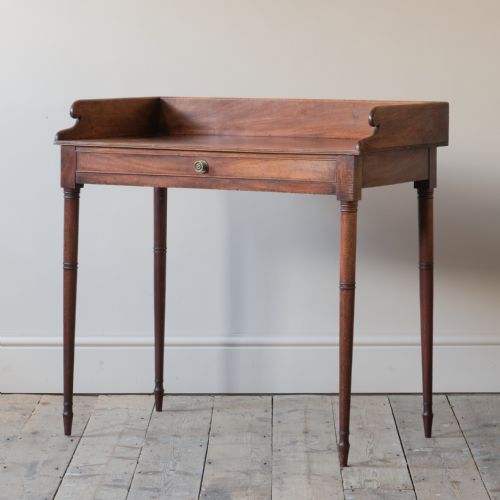
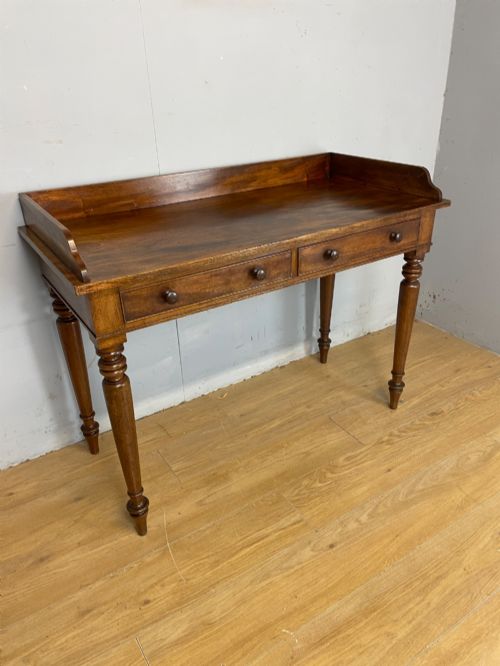
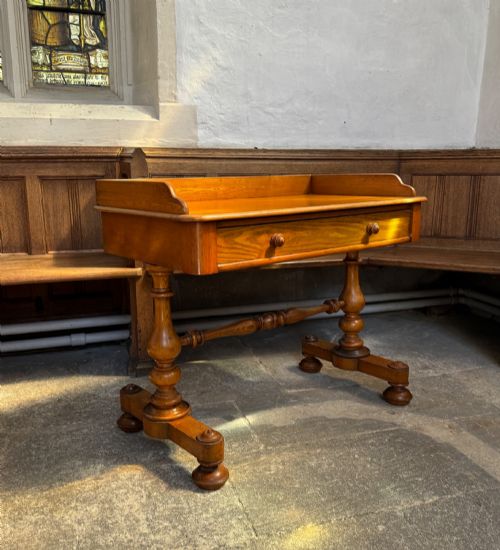


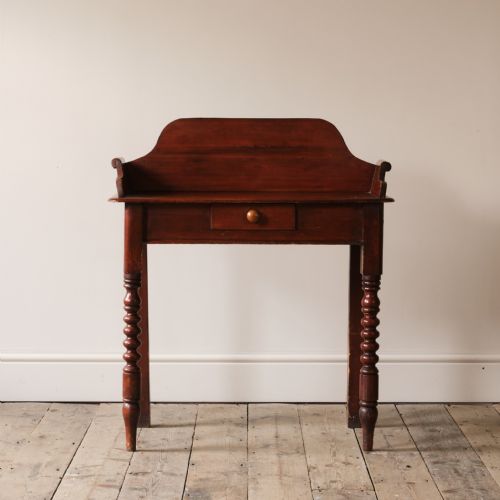


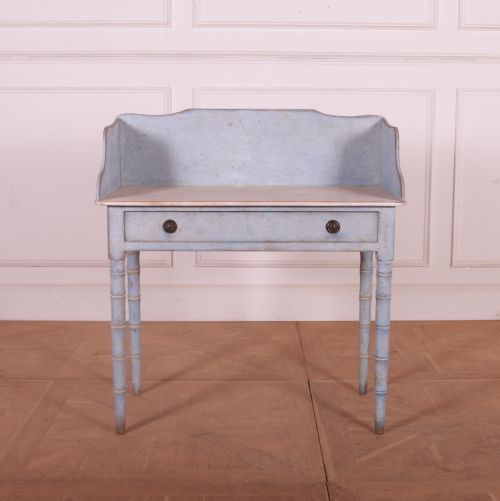


Gallery Back Washstand
A gallery back washstand brings practical nineteenth-century utility to a bedroom, offering a raised rear barrier to protect walls from splashes during washing.
Gallery Back Washstand
A gallery back washstand is a piece of antique bedroom furniture designed to hold washing equipment safely away from the wall. The listings show these practical items emerging primarily across the nineteenth century, encompassing both Georgian origins and later Victorian examples.
Most pieces seen here take the form of washstands or side tables, frequently incorporating drawers for storage. The evidence records utilitarian pine alongside formal mahogany, reflecting the range of domestic settings these stands originally inhabited.
Makers from the period produced these items in various regional styles, including English country interpretations and refined George III designs. Buyers are most likely to encounter nineteenth-century pine and mahogany variants equipped with timber, tile, or marble splashbacks.
How they were made
Cabinetmakers constructed these stands using solid timbers such as mahogany, pitch pine, and walnut, often applying flame mahogany veneer to primary surfaces for visual depth. Drawer linings and secondary elements frequently utilise straightforward pine.
Surfaces designed to withstand moisture utilised specific materials, with marble tops and glazed tiles integrated into the rear gallery to prevent water damage to the woodwork. Painted faux marble finishes also appear on earlier pine surfaces.
Hardware details such as brass fittings complemented the timber construction, while raised three-quarter gallery surrounds and shaped wooden upstands were joined directly to the main table structure.
Listings for this phrase combine nineteenth-century pine and mahogany with decorative additions like marble tops and tiled splashbacks.
What varies in quality
The choice of primary timber sets the tone for the piece, shifting from utilitarian native pine to finely figured flame mahogany veneers and rich walnut. Cabinetmaking proficiency shows in the neatness of drawer construction and the stability of the gallery back.
Integrated materials like original marble tops and decorative tiled splashbacks elevate certain examples above standard timber versions. The retention of original painted grain finishes and brass hardware also distinguishes more intact specimens.
Maples
The Gallery Back Washstand Glossary
- Gallery back
- A raised timber, tile, or marble barrier attached to the rear and sides of a washstand top to protect walls from water splashes. This feature defines the primary search category.
- Flame mahogany veneer
- A thin slice of mahogany timber cut from the fork of the tree where the branch meets the trunk, producing a distinctive flickering flame pattern. Cabinetmakers applied this to prominent surfaces for visual impact.
- Pitch pine
- A durable North American pine species with a high resin content and pronounced grain, utilised for robust nineteenth-century furniture construction.
- George III period
- The era spanning the reign of King George III from seventeen sixty to eighteen twenty, associated with refined cabinet proportions and classical mahogany designs.
- Three-quarter gallery
- A raised wooden border enclosing the back and partial sides of a table top to prevent items from sliding off.
Gallery Back Washstand: Frequently Asked Questions
What is a gallery back washstand?
A gallery back washstand is a nineteenth-century furniture piece designed for bedroom washing facilities, featuring a raised barrier at the back to protect walls.
These stands often include drawers, side tables, or marble tops to support basins and jugs.
How were these washstands used originally?
They served as personal washing stations in bedrooms before plumbed bathrooms became common in homes.
The flat top held a basin and water jug, while the raised gallery contained splashes during daily routines.
What woods are commonly found on these pieces?
The listings show a division between utilitarian pine and more formal hardwoods like mahogany and walnut.
Some examples also incorporate flame mahogany veneer for decorative effect on the drawer fronts.
How do I identify a Victorian washstand?
Victorian examples often feature pitch pine or mahogany construction, occasionally with applied tile galleries or shaped wooden upstands.
The proportions and turning on the legs typically reflect nineteenth-century cabinetmaking trends.
Can I use a washstand as a side table?
Many buyers repurpose these stands as hallway side tables, dressing tables, or bathroom sink surrounds.
Their compact footprints and useful drawer storage suit modern domestic layouts well.