

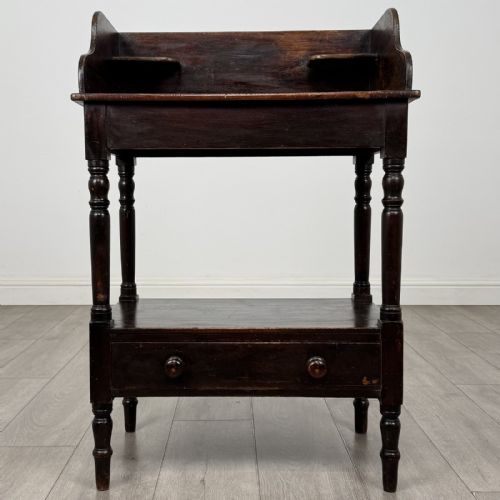
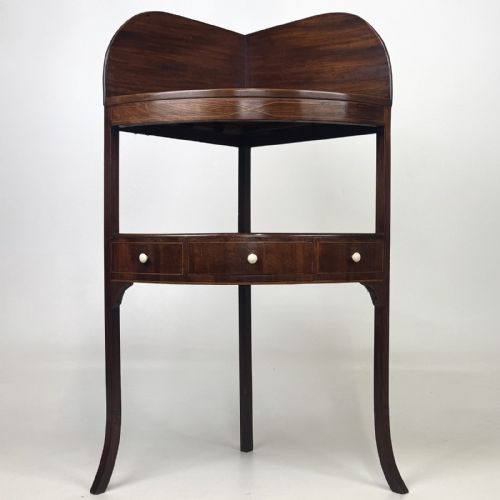
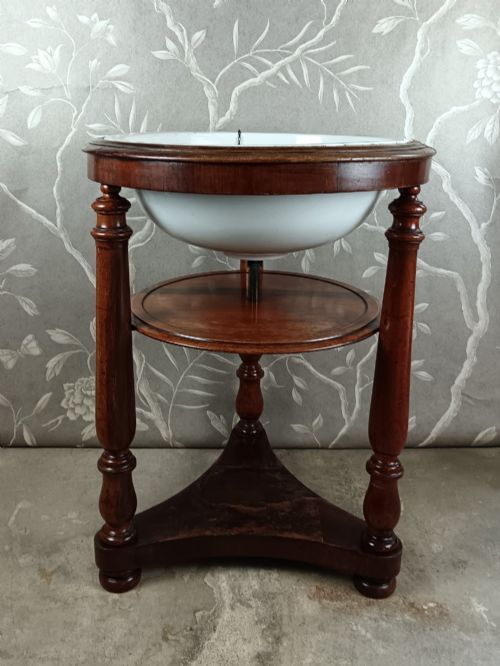
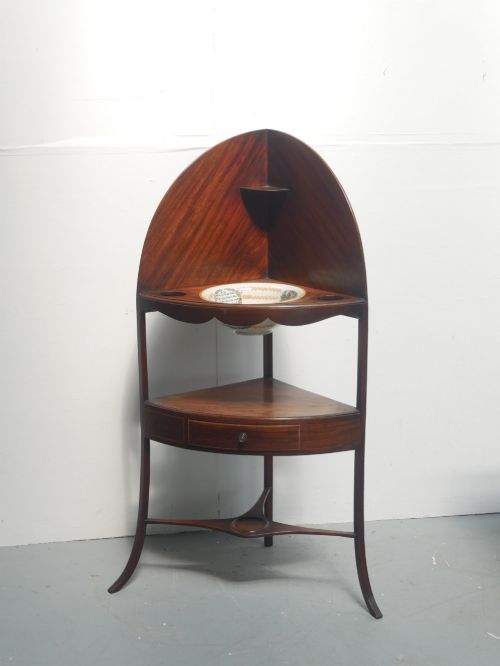


Dark Wood Wash Stand
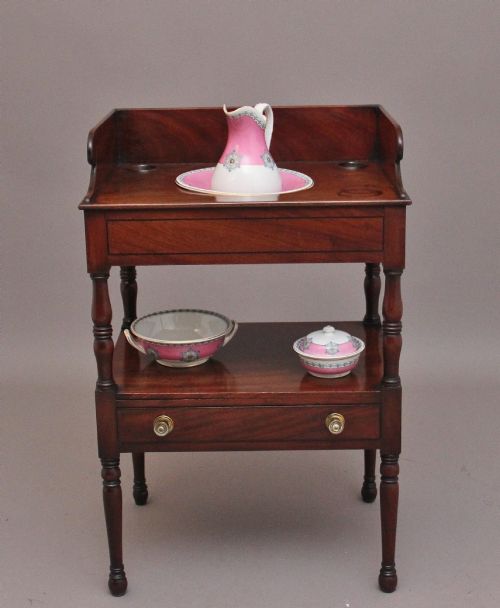
These dark wood wash stand pieces offer practical heritage utility, crafted in mahogany from Georgian and Victorian periods for daily bedroom use.
Dark Wood Wash Stand
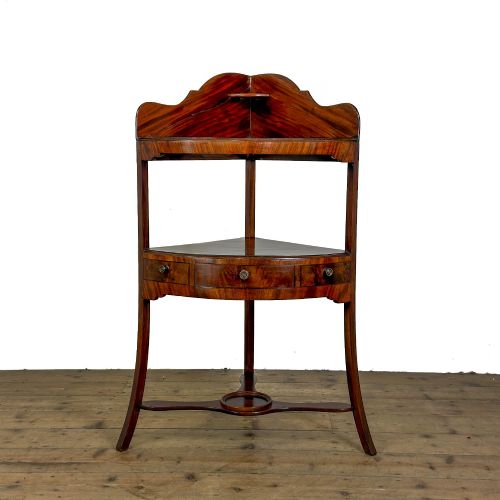
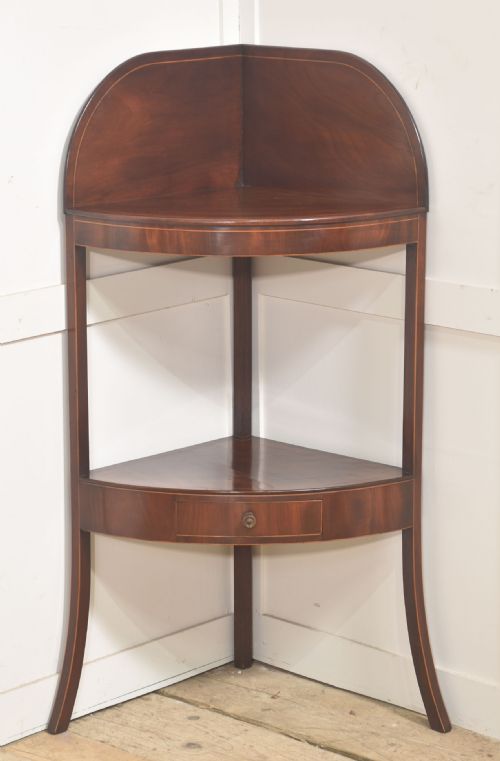
Buyers frequently find corner washstands designed to utilise bedroom space efficiently. These functional pieces often include compartments or surfaces originally intended to hold basins and jugs for morning routines.
Materials and construction
Mahogany serves as the primary timber across these pieces, sometimes accented with boxwood inlay for subtle decorative contrast. Brass fittings appear alongside ceramic components in certain examples, particularly where integrated wash accessories are included.
Cabinetmakers utilised traditional joinery techniques suited to hardwood furniture production. Selected pieces also incorporate bentwood methods, demonstrating the evolution of construction styles into the Edwardian period.
Dark Wood Wash Stand Retail Price Guide 2026
Typical asking prices for dark wood wash stand among the pieces listed under this phrase on Sellingantiques today, from the lower quarter to the upper quarter. They describe what is for sale here now, not the wider market.
Current listings feature mahogany as the dominant material, spanning Georgian, Victorian, and Edwardian periods.
Judging quality and craftsmanship
Quality rests upon the crispness of the timber grain and the precision of any inlaid boxwood detailing. Finer examples display superior proportion in their corner or round configurations, maintaining structural integrity across joints and legs.
The sophistication of the secondary materials, such as original brass hardware or incorporated ceramics, distinguishes standard utility items from more refined cabinetwork. Surface finish and timber selection ultimately dictate the standing of an individual piece.
The Dark Wood Wash Stand Glossary
- Corner washstand
- A triangular furniture form designed to fit neatly into room angles, common in Georgian domestic interiors.
- Mahogany
- A durable tropical hardwood prized for its deep reddish-brown colour and stability, heavily utilised throughout the 18th and 19th centuries.
- Boxwood inlay
- Contrasting pale wood inserted into dark timber surfaces to create linear or geometric decorative borders.
- Basin stand
- A dedicated wooden frame or table designed specifically to support a washing bowl and jug.
- Bentwood
- Wood softened by steam and bent into curved structural shapes, typical of later manufacturing methods.
Dark Wood Wash Stand: Frequently Asked Questions
Where were wash stands placed?
These items traditionally stood in bedrooms or dressing rooms to facilitate morning washing routines before the widespread adoption of plumbed bathrooms. Corner variants maximised floor space in smaller chambers.
Today, they function well in hallways or modern bathrooms as decorative display surfaces or unique vanity bases.
What is a corner washstand?
A corner washstand is a specialised furniture piece built with a 90-degree angle to tuck into room corners. They often include tiered shelves or cut-outs for bowls.
This intelligent space-saving design made them extremely popular in domestic British interiors across the eighteenth and nineteenth centuries.
Can I use it as a basin stand?
Many surviving examples retain the structural capacity to support bowls and jugs, particularly those supplied with original ceramic items. However, modern plumbing integration requires careful custom adaptation.
Most buyers choose to utilise them as decorative console tables or plant stands rather than active plumbing fixtures.