


Victorian Pine Washstand Gallery
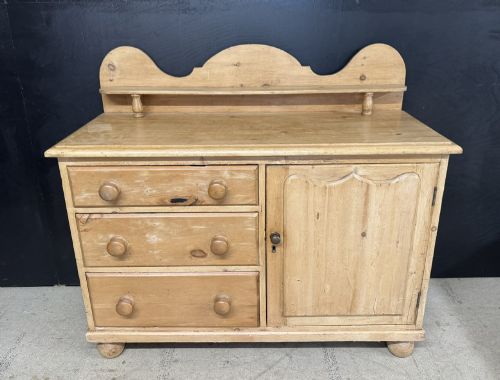
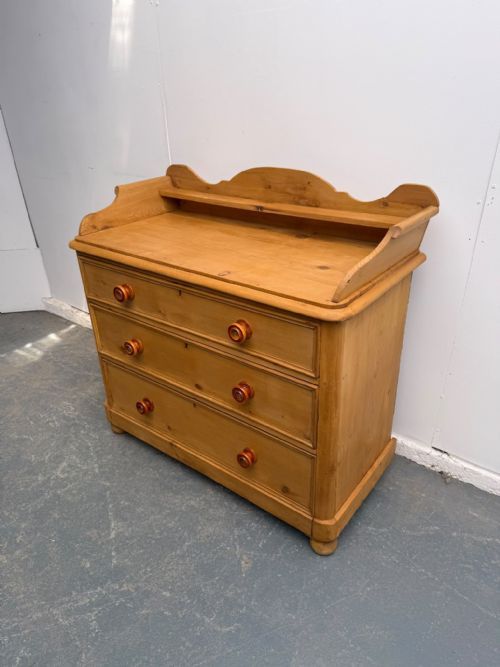
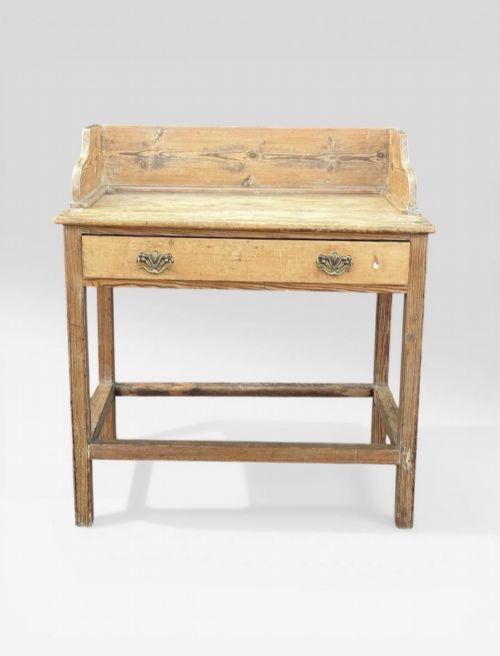
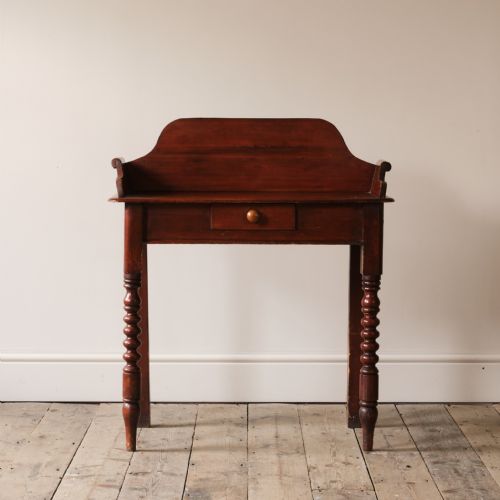
A victorian pine washstand gallery brings robust utility and honest charm to a room, offering practical surface space and a decorative rear splash guard.
Victorian Pine Washstand Gallery
When you search for a victorian pine washstand gallery, you are looking at functional nineteenth-century domestic furniture designed to hold washing basins and pitchers.
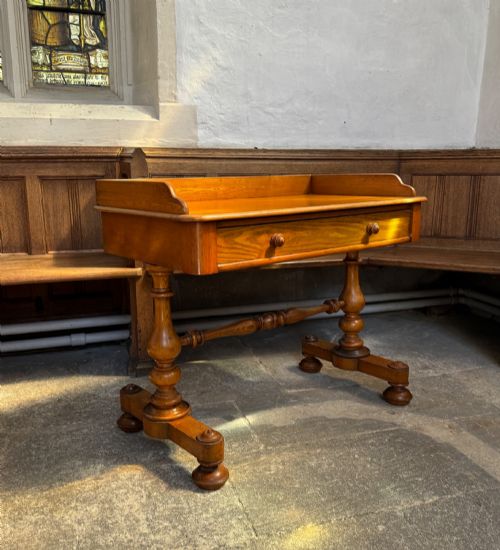
The pieces listed on this page encompass the Victorian period, 1880, and general nineteenth-century production, frequently crossing over in form with side tables and chests of drawers.
You are most likely to meet examples in standard pine or pitch pine, often featuring shaped, tiled, or simple raised gallery backs to protect the wall from splashes.
Materials and construction
These items are constructed primarily from solid pine and pitch pine, utilising traditional timber building methods suited to everyday domestic use.
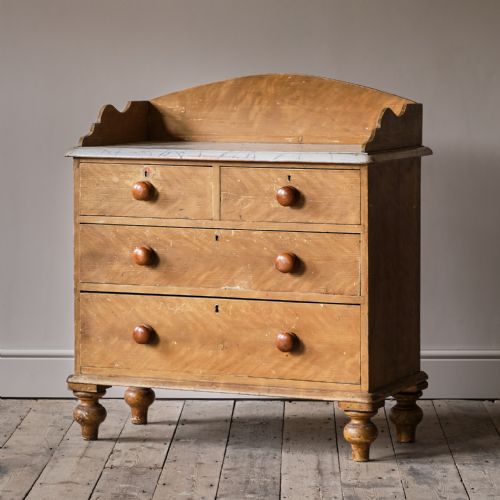
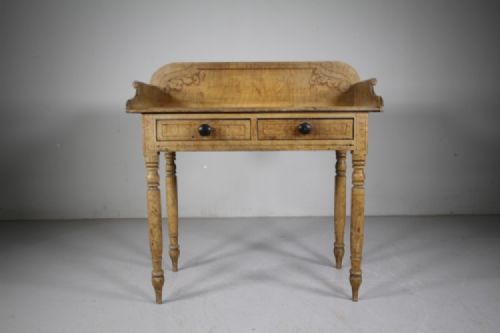
Surface treatments recorded in the evidence include waxed finishes, original paint, and grain finishes alongside painted faux marble tops and ceramic elements.
Some washstands retain evidence of their original morning routines through surviving spaces once meant to hold a matching jug and bowl.
Judging quality and character
Quality in these pieces rests upon the retention of original surface treatments, such as early paint layers, grain finishes, and faux marble detailing.
The sophistication of the timber, distinguishing standard pine from pitch pine, alongside the presence of intact tile gallery backs, separates simpler utility pieces from more decorative examples.
The Victorian Pine Washstand Gallery Glossary
- Gallery back
- A raised panel or shelf at the rear of a washstand or table designed to prevent water splashing against the wall. It frequently incorporates tiles or shaped woodwork.
- Pitch pine
- A dense, durable resinous softwood commonly utilised in nineteenth-century furniture for its strength and distinct grain pattern.
- Faux marble
- A decorative paint technique applied to simulate the appearance of stone, found on the tops of washstands to provide a moisture-resistant surface.
- Waxed finish
- A traditional method of treating timber surfaces with natural wax to nourish the wood and produce a soft sheen.
Victorian Pine Washstand Gallery: Frequently Asked Questions
What is a victorian pine washstand gallery used for?
Originally, these items provided a stable surface for holding a wash basin, jug, and personal washing equipment in nineteenth-century bedrooms.
Today, buyers repurpose them as decorative side tables, hall furniture, or distinctive bathroom washbasin stands.
How do I identify a 19th century washstand?
Look for construction details typical of the nineteenth century, including solid pine or pitch pine timbers and functional drawer configurations.
The defining feature is the rear gallery, which can be a simple wooden upstand, a shaped back, or incorporate ceramic tiles.
Are these washstands made of solid wood?
The pieces recorded in the evidence utilise solid timber construction, predominantly pine and pitch pine, built to withstand daily domestic wear.
This sturdy build accounts for their survival across the centuries into modern collections.
What finish do original washstands have?
Original finishes span waxed timber, aged grain finishes, and historic painted surfaces, sometimes featuring faux marble tops.
Surviving examples frequently show the honest patination of nineteenth-century use.